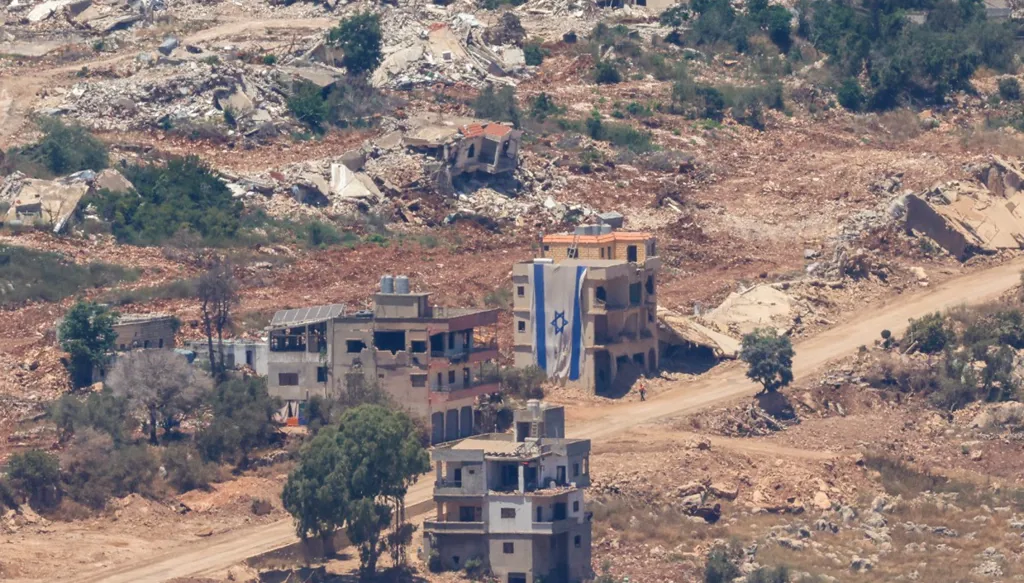
Leaks continue to emerge about Israeli plans to expand the war on Lebanon and occupy the cities of Sidon, Tyre and Nabatieh if Hezbollah launches military operations or intervenes in support of Iran should a confrontation with Tehran erupt. Some of these leaks may be serious, although plans are subject to change depending on developments on the ground and the political situation. This does not, however, change the fact that Israel is closely monitoring the Lebanese front, even if it is exaggerating Hezbollah’s capabilities and putting its forces on high alert for a potential war. Meanwhile, Hezbollah openly acknowledges that it is rebuilding its capabilities and does not rule out standing on the sidelines if war breaks out against Iran. This does not necessarily mean, however, that its support would amount to resistance against the occupation.
There is no doubt that Israel is preparing for a war that could include Lebanon if its strategy calls for action against Hezbollah, or if it seizes on any regional involvement by the group as an opportunity to expand its occupation and launch major strikes deep inside Lebanon. In 2026, Israel waged a devastating war that reached Beirut after Hezbollah came to Iran’s support. This means that the current status quo in southern Lebanon would not hold if a US-Iran war were to erupt, nor would the situation calm down even if a potential settlement were reached, particularly if Iran decided to open up and expand multiple fronts, including the Lebanese front, which Tehran considers the most useful in advancing its agenda as it once again links Lebanon to the Iranian track.
It has become clear that Israel is making preparations for war. A recent report by the Israeli newspaper Maariv that most of the Israeli army’s reserve forces had been transferred to the border with Lebanon raises questions about the timing of such a move and whether the Israeli army intends to advance into southern cities and impose a siege on the country. It also raises questions about whether Hezbollah is determined to pursue its Iran-oriented course.
Lebanon today is far from being protected against another Israeli war. It is also exposed on the international front, with no Arab or international safety net to help the state regain control over its decisions and spare the country further disasters. Despite intensive diplomatic activity and international contacts, the state continues to rely on the Americans to pressure Israel into refraining from expanding its operations. Washington, meanwhile, is taking a tougher stance towards Lebanon and pressing it to implement decisions aimed at bringing weapons under state control and take further measures against Hezbollah’s infrastructure. In this situation, Lebanon is left to its fate, caught between Israeli threats, American pressure and Iranian exploitation, while the country remains internally incapable of forging a unified national position that can help it overcome the dangerous phase engulfing the region.
The scenario outlined by the Israeli newspaper Maariv is no minor matter. Although it describes military plans, it reflects the direction a potential confrontation could take, including an expansion of Israeli operations, particularly if Hezbollah draws Israel into a devastating war that it wants and uses to raise the bar on its demands of Lebanon and consolidate its occupation of the Yellow Zone. This underscores the need for Hezbollah to change its approach, as well as for the state to reassess the course it has pursued in negotiations. Whatever form a potential war takes, and regardless of its scale or geographical scope, it makes it imperative for everyone to return to the path of the state, particularly Hezbollah, which is being called upon to hand over its weapons or, at the very least, leave the matter in the hands of the state, given that these weapons have effectively ceased to serve the purpose of resisting Israel.
Israel may not translate the military plans being discussed into action. However, the continuation of operations in the area adjacent to the Yellow Line keeps southern Lebanon under siege, puts pressure on the state and further drains the country’s resources. Israel is unlikely to send its forces back to occupy cities such as Tyre, Sidon and Nabatieh. Instead, it is more likely to launch a devastating war against them, lay siege to them and displace their residents. It will not repeat the 1982 invasion scenario, when its forces reached the capital, Beirut. Rather, it will gradually seize territory, consolidate its occupation, destroy villages and displace their inhabitants. Lebanon must beware of being drawn into a devastating war from which it would have no capacity to recover.
Disclaimer: The opinions expressed by the writers are their own and do not necessarily represent the views of Annahar