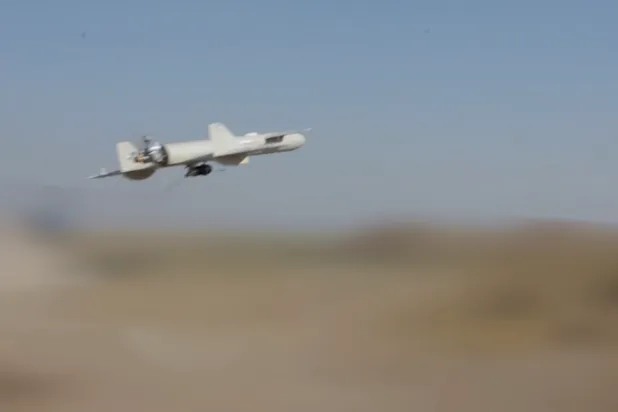
For hours, Sami Abu Moussa was unable to contact his older brother Bilal, who worked to secure the entry of aid into Gaza. As his anxiety grew, Sami received a call from one of Bilal’s colleagues, who told him that Israeli forces had shot his brother in the al-Mawasi area northwest of Rafah in southern Gaza. Aid security personnel at risk Bilal Abu Moussa was brought dead to Nasser Medical Complex in Khan Younis, southern Gaza, on July 14 after being struck by several bullets fired by Israeli drones and military vehicles stationed near areas where aid security personnel employed by private companies were deployed. Sami Abu Moussa told Asharq Al-Awsat that his brother helped secure aid for international organizations, including the United Nations Children’s Fund, UNICEF, and the United Nations Relief and Works Agency for Palestine Refugees, UNRWA. He said Bilal had worked for several months with a private company securing the entry of aid for Gaza’s residents. Trucks loaded with humanitarian aid on the Egyptian side of the Rafah crossing (AFP) Sami said his brother had repeatedly complained that Israeli forces deliberately fired at the security personnel and truck drivers. On July 20, an Israeli drone targeted a vehicle belonging to a private security company protecting aid allocated to the World Food Program, killing three Palestinian employees. The company later denied Israeli accusations that its employees had attempted to smuggle weapons. Rimal al-Sahra Security said the weapons carried by its personnel when they were targeted in al-Mawasi in Rafah belonged to the company and were intended to protect aid from theft. It said this was standard practice carried out under protection protocols agreed between international organizations and Israel. Summary executions Aid security personnel were not the only workers targeted. Truck drivers transporting aid from the Kerem Shalom crossing into Gaza also faced danger under tight security conditions, with any wrong movement potentially putting their lives at risk. Ahmed Nasser Isleem was the latest truck driver killed by Israeli forces in a border area in southern Gaza. His family said he was deliberately shot without cause on July 8 in what it described as a “summary execution.” FILE PHOTO: Security personnel guard trucks carrying aid as they arrive in Rafah, amid the ongoing conflict between Israel and Hamas, in the southern Gaza Strip January 17, 2024. REUTERS/Mohammed Salem/File Photo Ahmed’s brother, Khader Isleem, said he had received the usual permit to drive his truck to the Philadelphi area and return carrying aid. He said drivers underwent strict security checks before receiving permits and again upon arrival, but accused Israeli forces of deliberately targeting drivers, as they had done with his brother. Khader told Asharq Al-Awsat that Ahmed had been traveling in a convoy of trucks carrying food supplies for World Central Kitchen when one of the vehicles broke down. Ahmed got out to help the driver when a military jeep approached and soldiers ordered both men to raise their hands, Khader said. One of the soldiers then shot Ahmed directly in the head at point-blank range and without warning, he said. The Guardian cited other drivers traveling with Ahmed as saying the Israeli military jeep approached his truck and ordered him to get out. The soldiers also ordered other drivers out of their vehicles after one of the trucks broke down and severely beat them after forcing them to remove their clothes, according to their accounts. The drivers said one of the soldiers then killed Ahmed “in cold blood.” Israeli forces also killed two truck drivers inside Rafah in southern Gaza at the end of May in what was described as a summary execution. The drivers, Mahmoud Awad and Mohammed al-Hila, were inside their trucks when Israeli forces suddenly surrounded several vehicles and ordered them to get out. The forces had previously instructed the drivers to travel towards Gaza along a designated route. That was the initial account of the incident, but further details later emerged from drivers whose testimonies were relayed by Jihad Isleem, deputy head of the Private Transport Association in the Gaza Strip. The drivers said one truck had broken down, and another had moved to tow it after coordination with Israeli soldiers. The soldiers then opened fire directly at the drivers, killing both men in what Isleem described as a clear summary execution. He said their families and the association received conflicting information about their fate for more than two days before learning that they had been killed rather than wounded. The image reissued on 23 April 2026 shows the 2026 World Press Photo of the Year finalist by Mohammed Saber, EPA Images, depicting Palestinians climb onto an aid truck as it enters the Gaza Strip via the Zikim Crossing, 27 July 2025, in an attempt to get flour, during what the Israeli military called a ''tactical suspension'' in operations to allow humanitarian aid through. EPA/MOHAMMED SABER After the incident, the Israeli army said it had opened an investigation and changed its instructions for opening fire inside Gaza. The change, however, brought no tangible improvement. Since then, Ahmed Isleem has been killed, four truck drivers have been wounded and at least 16 others have been arrested or detained. Some were later released. On July 17, seven drivers were held at a military site in Rafah before being released. Several days ago, drivers and transport company officials joined a protest organized by the Private Transport Association against the continued targeting of humanitarian aid truck drivers carrying supplies through the crossings. Some drivers said they had been subjected to humiliating searches and beatings despite obtaining the required security permits in advance to travel to and from Gaza. They said the repeated targeting had reduced their ability to transport aid.