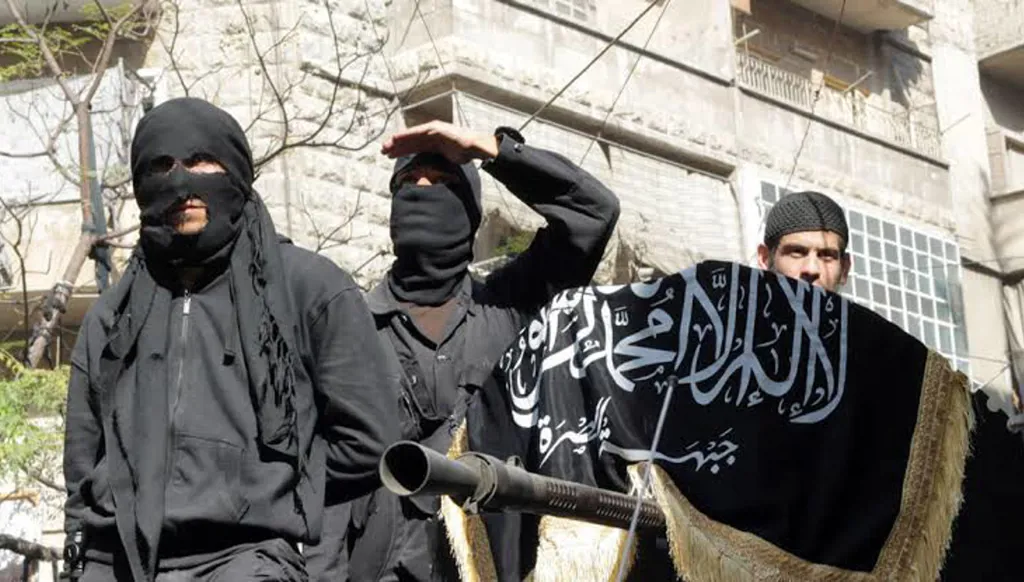
In December 2023, Israeli security forces arrested two young men in the Ras al-Amud area of East Jerusalem. According to investigators, they were found in possession of chemicals used to make explosives, a notebook containing bomb-making instructions, and an Islamic State flag. One was 19 years old and the other 20. They had spent days watching Islamic State sermons and videos of beheadings. Their plan was to load a truck with small gas canisters and detonate it near the Knesset, the Israeli parliament. Israeli media highlighted the incident on their front pages before the war in Gaza overshadowed it.
This was one example of a broader trend that has emerged over nearly three years. Since the Hamas attack on October 7, 2023, analysts and policymakers have focused on Hamas, Hezbollah, and other Iran-aligned members of the resistance axis. However, Islamic State has been more active against Israel during this period than it was before. Official Israeli reports on arrests made by security forces since 2014 indicate that Israel has thwarted more Islamic State plots since October 7 than during the previous nine and a half years combined. Between 2014 and 2023, Israel arrested 50 Islamic State members, compared with 46 arrests since October 7, 2023.
The cases have also become increasingly complex. Before the war, most arrests involved foreign fighters attempting to reach Syria or individuals involved in disseminating electronic surveillance material. Since October 7, 28 of the 46 plots have involved plans for attacks, compared with approximately 18 before the war. Few have paid attention to this activity, yet almost none of the planned attacks have succeeded, reflecting Israeli intelligence successes more than any restraint on the part of Islamic State.
These operations were not simply the work of lone sympathizers. This becomes evident when examining Islamic State networks abroad, particularly in Syria.
Near Mount Hermon, a cell of four men prepared nearly 100 explosives intended for use against Israeli soldiers, according to an American researcher based in Washington. Their leader was in contact with Islamic State operatives abroad. In the Arab-Israeli city of Tayibe, five men discussed the amount of explosives needed to blow up and destroy the Azrieli Towers in Tel Aviv, while also planning to detonate a car in a nearby shopping mall. Others in Acre, Be'er Sheva, and East Jerusalem prepared pipe bombs and purchased guns to attack soldiers, police officers, a bus station, and a nightclub.
So far, these operations have not translated into sustained violence. Before October 7, Israel thwarted five deadly attack attempts inspired by Islamic State, including a shooting in Hadera in 2022. Since then, there has been one fatal incident, in April 2024, involving the killing of 14-year-old Israeli Benjamin Ashi Mir by a Palestinian Islamic State sympathizer near the village of Duma.
A month before the October 7 operation, Israeli forces killed an Islamic State collaborator in the town of Abu Dis, outside Jerusalem, after he purchased weapons and opened fire on soldiers following his release from prison.
Three of the attempted attacks since October 7 were carried out by Israeli Arab citizens, rather than Palestinians from the West Bank or East Jerusalem. Nine of those involved were minors, including one aged 14. These cases included a hospital doctor in Be'er Sheva who pledged allegiance to the new 'caliph' after October 7, as well as a former Israeli soldier, aged 30, who was preparing to join Islamic State abroad.
In December 2025, Israeli security officials warned of 'an increased level of threat posed by the Islamic State organization and its supporters within Israel since the start of the war.'
In 2023, the Islamic State newspaper Al-Naba published an editorial calling for attacks against Jewish communities, places of worship, and embassies worldwide, urging young people in Gaza to prepare explosive belts.
In December 2023 and January 2024, Islamic State spokesperson Abu Hudhayfa al-Ansari called on Palestinians to abandon the 'Iranian and infidel Hamas' and target Israel's protectors, namely Arab governments and Gulf states hosting US military bases, as well as Jewish communities abroad.
Al-Naba explained the reasoning behind this approach, arguing that reaching Israel was extremely difficult because neighboring Arab countries protect it. The 2025 ceasefire in Gaza provided another reason. The newspaper portrayed the ceasefire as protection for the Jewish state and a decision not to attack it, telling Palestinians that 'jihad,' rather than national liberation, was their only path to salvation.
Islamic State presented itself as an uncompromising vanguard leading the 'coming religious wars.' While Hamas signed a truce, Islamic State portrayed itself as a group that remained committed to fighting Israel.
Some Islamic State sympathizers have successfully established connections with Syrians through TikTok, providing them with the materials needed to manufacture bombs and trigger detonators. They also recorded a video claiming to have attacked Tel Aviv.
Since 2025, Israel has pursued these networks beyond its borders, particularly in Syria, and has managed to capture several Islamic State operatives. In 2025, the Israeli army killed Muhammad Abdul Aziz Abu Zubaida in Gaza because he was the head of Islamic State's 'Palestinian Province.'
Gaza remains the darkest area, where Islamic State members have begun positioning themselves as an alternative to Hamas members fighting against Israel, urging them to distance themselves from the group.
The United States should treat Islamic State as a separate threat on the Palestinian scene and begin confronting it from Syria. Washington should pressure Syria's legitimate government to suppress Islamic State elements seeking to infiltrate Israel's borders.
Intelligence cooperation with Turkey and Jordan is also necessary to address this threat. Ultimately, arrests involve Arabs from within Israel on charges of belonging to Islamic State, and Arab leaderships should work together to confront the issue.
Disclaimer: The opinions expressed by the writers are their own and do not necessarily represent the views of Annahar.