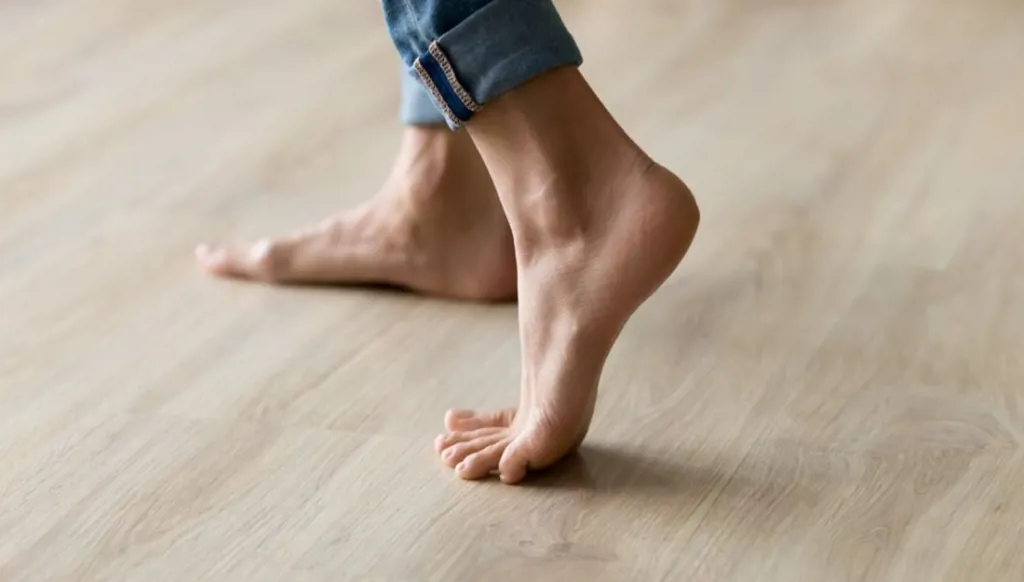
Taking off your shoes as soon as you get home is one of the simplest everyday habits for comfort. But walking barefoot raises questions about its potential benefits and risks.
Between cold floors, concerns about germs, and the possibility of bumping your toes against furniture, some may wonder whether it is better to keep their feet in shoes or slippers.
However, doctors and experts cited in a report published by “HuffPost” say that walking barefoot can be beneficial for the feet, provided it is done in moderation and under the right conditions.
Diabetic patients need to protect their feet (Pexels)
According to podiatrist Robert Kornfeld, walking barefoot means having the skin of the feet come into direct contact with the ground, without any layer in between. Socks, therefore, do not fall under this definition, as they can alter the way the feet move and interact with the ground.
He says that walking barefoot at home can help strengthen the deep muscles of the feet, which may weaken with age and with prolonged reliance on shoes.
These muscles play a key role in everyday movement, according to the specialist, who says he sees patients in his clinic with problems related to their reduced ability to move these muscles and perform movements that should come naturally.
Dermatologist Hannah Kopelman points to another benefit: allowing the skin to breathe, particularly around the toes. This helps reduce moisture and, in turn, lowers the risk of fungal infections, including athlete’s foot. Contact with different surfaces may also provide a sense of comfort and relaxation.
Walking barefoot is not suitable in every situation. Standing or walking for long periods on hard floors can put strain on the feet and increase the risk of plantar fasciitis, a painful condition affecting the tissue that runs from the heel to the toes.
Therefore, when standing for extended periods, such as while cooking or ironing, slippers with cushioned soles may be a more comfortable option. Slippery floors also increase the risk of falls, while stubbing your toes against furniture corners is a common household injury.
Foot ventilation helps reduce moisture (Pexels)
People with diabetes, neuropathy or circulatory problems should be particularly cautious, as minor wounds may go unnoticed and lead to serious complications. It is also advisable to avoid walking barefoot when eczema, psoriasis or an active fungal infection is present.
Walking barefoot is not inherently harmful. In a clean home with well-maintained floors, and in the absence of specific health problems, it may even be beneficial in the long term.
Ultimately, moderation and paying attention to the condition of your feet and the type of flooring are key to enjoying the benefits of this habit without exposing your feet to unnecessary risks.
Moderation and attention to foot condition and floor type are key to benefiting from this habit without exposing feet to unnecessary risks.
Thank you for subscribing to our newsletter