In the famous “Doctrine” revealed through interviews and summarised by American journalist Jeffrey Goldberg in the American magazine The Atlantic in 2016, former U.S. President Barack Obama advised the Gulf countries to approach Iran and share influence with it.
He justified the nuclear agreement he had signed with Tehran a year earlier by suggesting the position Iran deserved to occupy in the Middle East. Tehran gained recognition from this, believed it, and came to regard it as a definitive premise that later allowed it to announce control over four Arab capitals.
At the time, Tehran may have believed that, with the satisfaction of Obama-era America, it could dominate the region under an American umbrella. Observers will not lack evidence of that dominance, which Iran extended from Tehran to Beirut in the form of a “crescent,” creating arms, loyal followers, and spheres of influence in the region’s nearby and distant capitals.
As Iran clings today to its remaining cards in the Straits of Hormuz and Bab al-Mandab, while retaining the ability to mobilise its remaining militias across the region, as well as its nuclear obstinacy, it does so because these are tools of that dominance that Washington once accepted and which Tehran now relies on another administration in the White House to accept once again.
Nothing has changed in Iran’s ruling mentality. This mentality is not linked to individual leaders, some of whom have departed and others who may depart, but to a doctrine that draws on 1,400 years of history to promote dominance in the region as a noble goal justified by any means, however dirty they may be.
The goal in the regime’s ideology is not a temporary manoeuvre, but the secret of its survival, continuity, and guarantee against falling. While there is a flow of support from regional capitals keen to avoid that fall and position themselves to connect, align, and reach agreements with Tehran, the latter sees this as a path to empowerment without acknowledging Iran’s acceptance of being an ordinary state on equal footing with the countries and capitals of the region.
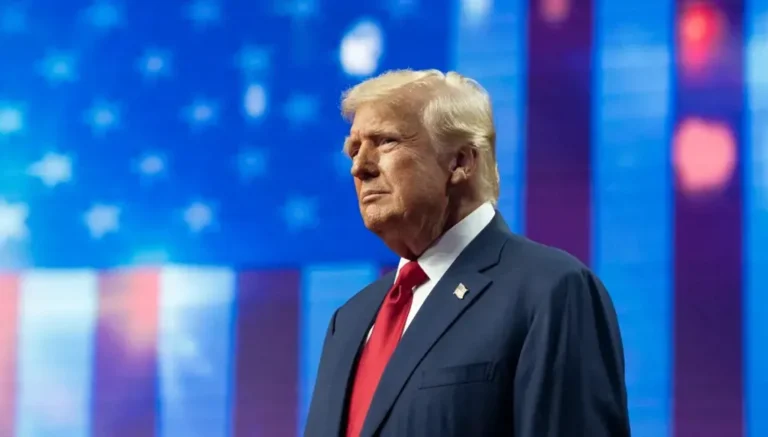
The problem for Tehran lies in Washington. The American capital is no longer what it was during the Obama administration. It counted on Obama’s Vice President, Joe Biden, for four years of presidency. But Washington has changed. It has left that era behind. It has turned against itself and against the “Doctrine” that produced the nuclear agreement. During Donald Trump’s first and current terms, it affirmed that this page had been turned and would never return.
Anyone contemplating the maps employed by Iran throughout the region, particularly in the Gulf and Red Sea corridors after its failed endeavour in the Mediterranean through Syria and Lebanon, can easily deduce its desire to remain a challenging factor in the region’s security and to shape its maps.
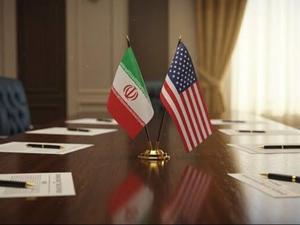
What has changed is that the United States has withdrawn Obama’s “blessing” and no longer accepts Iran as a partner in regional influence. While Trump constantly repeats that Iran is pleading for an agreement and is getting close to one, Tehran continues to seek, in any agreement, an American acknowledgment—even a Trumpian one—that it is not like the other countries of the region.
Tehran is drawing its conclusion from its disappointment. It is losing centers of influence in the region one after another. Trump holds the reins and has demonstrated in recent days his readiness to go far with military options that Iran had believed were off the table because of internal U.S. pressures.
Meanwhile, an alliance is forming between London and Washington, potentially extending within an Atlantic framework under the title “Strait Security,” which may force Iran to show signs of flexibility without being able to grasp that its dream of dominance has become an illusion fading into a bygone past.
Disclaimer: The opinions expressed by the writers are their own and do not necessarily represent the views of Annahar.
Thank you for subscribing to our newsletter