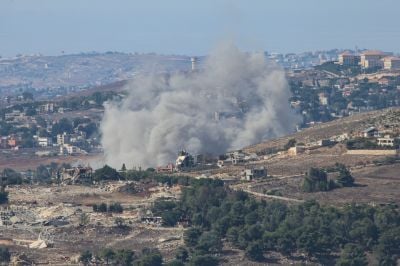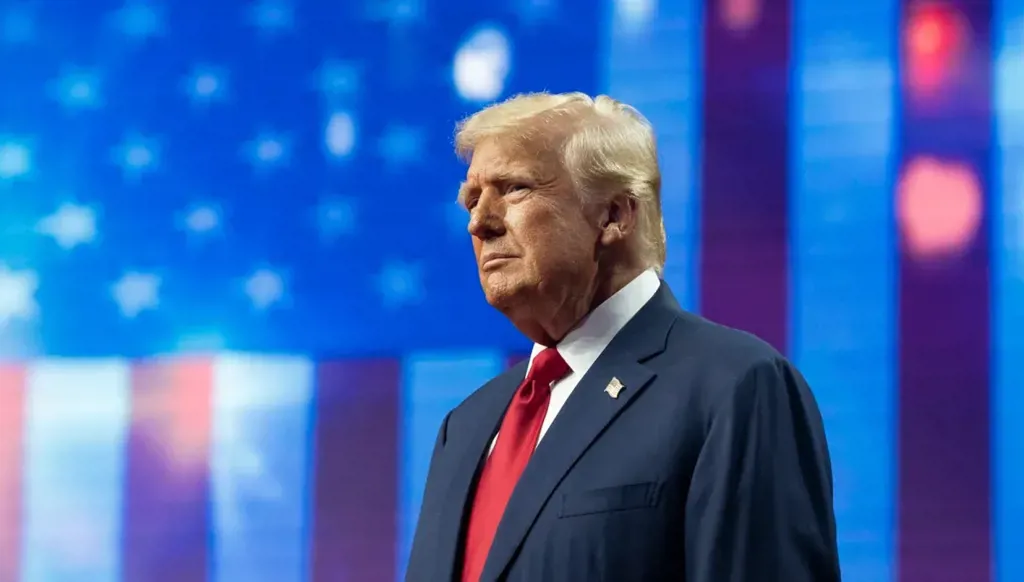
US President Donald Trump announced on Sunday that the United States had destroyed much of Iran's military capabilities but still had "one or two targets to deal with", while Tehran threatened to launch a counterattack if further strikes were carried out.
Trump stressed that negotiations with Iran to end the war were "going well, but as you know, they are not entirely trustworthy".
He reiterated that the United States was in no hurry to take offensive action, having already inflicted extensive damage on Iran's military capabilities and nuclear programme.
Speaking to reporters at his residence in Florida, Trump said: "We have eliminated their nuclear capabilities. There are still one or two sites we need to deal with, but we can get that done in 10 minutes", referring to "Pickaxe Mountain" in Isfahan Province, about 200 kilometres south of Tehran.
Media reports point to the possibility of a short, intense military campaign following Tuesday's US midterm elections.
The war erupted on February 28, when the United States and Israel launched joint strikes against Iran, which retaliated by targeting Gulf countries allied with Washington. In April, a ceasefire was reached, bringing nearly 40 days of intense bombardment to an end. A protocol agreement aimed at permanently ending the conflict was also concluded in June.
However, this fragile understanding collapsed entirely this summer, with the Strait of Hormuz remaining at the centre of the conflict. Iran claims the right to control this vital route for the transportation of hydrocarbons and regularly targets vessels entering it without its permission.
According to Iranian state television, the Iranian military reported that an oil tanker had "caught fire after hitting mines", while Washington maintains that it has cleared most of the mines from the area.
In Israel, Prime Minister Benjamin Netanyahu, speaking after the parliamentary elections, described the situation as a "once-in-a-lifetime historic opportunity" to bring down the Iranian government.
Earlier on Saturday, US Secretary of State Marco Rubio said that Trump had not yet decided whether to launch further strikes against Iran amid stalled talks to end the war, adding that the United States remained open to a diplomatic solution.
For his part, Iran's Supreme Leader Mojtaba Khamenei warned the United States and Israel on Saturday against launching new attacks, following threats to resume strikes after the US elections.
In a statement, Khamenei said: "If the enemies once again launch military or terrorist attacks, the armed forces of the Islamic Republic and the Iranian people will determine when they end and under what conditions."
The statement added that, during a meeting with senior military commanders, the Supreme Leader had issued "directives stipulating that every level and type of threat must be met with an immediate and effective response, without geographical restrictions".
Khamenei also ordered military commanders to update Iran's target list to include "all types of tangible and intangible assets belonging to the American-Zionist enemy".
Iran had previously warned that it might consider cutting undersea telecommunications cables running through the Strait of Hormuz.
As negotiations continue under the auspices of Qatari mediation, Iranian Foreign Minister Abbas Araghchi said that "Tehran sees no need, under the current circumstances, to meet with the American side".
Araghchi, according to Iran's official news agency IRNA, said: "Iran's conditions are clear. Meanwhile, the mediators are continuing their consultations regarding these conditions."