The US midterm elections and the pressure they place on Trump and his administration add new dimensions from which Iran draws signs of leniency and coexistence with the Houthi growth.
The activities of the Houthi group in Yemen are reviving Iran's hopes of reinvigorating all its loyal factions in the region.
While the Iraqi government sets the first of October as a date to begin a complex, gradual process of monopolizing weapons for the state and receiving weapons from factions that agreed to this principle, and while the Lebanese government continues to repeat and affirm that it is working on monopolizing weapons for the state and criminalizing Hezbollah's weapons as a deviation from the norm, the resurgence of the Houthi situation in Yemen may suggest the transience of the state claims in Baghdad and Beirut.
This revival is enhanced by the messages issued by Washington, through the voice of US President Donald Trump himself, in dealing with what the region considers non-state militias and what US laws deem terrorist groups listed on American lists.
The mere expression by the occupant of the White House of his readiness to dialogue with Hezbollah (though he pretends it would be through the Lebanese state), as well as his declaration of communicating with the Houthi group, listening to their requests, and believing in what they promise in terms of safety in the Bab al-Mandab Strait, grants these "groups" legitimacy of existence and continuity, and even a basis for dialogue and negotiation with the world's strongest state.
The Houthi phenomenon and its implications of a reversal in the value structure within the international system may merely express a defect within the system and serve as a front for the conflict among its poles.
The positions issued by major countries like Russia and China are ambiguous, through which they contemplate the course of power balances, without any firm condemnations that might be perceived as undermining the Iranian partner's human resources in the region.
However, what is issued by Western capitals, foremost among them Washington, suggests an absence of decisiveness in preventing the rehabilitation of mini-states, and even considering them a matter of course within this Middle East, and fundamentally a structural part of its alphabet.
The US midterm elections and what they impose on Trump and his administration in terms of electoral positions add additional dimensions from which Iran draws symptoms of leniency and coexistence with the Houthi tumor.
While it is true that after those elections the discourse, tone, vocabulary, and headlines in Washington may change, the language of de facto used by Iran in the Strait of Hormuz extends to establish the same de facto in the Bab al-Mandab Strait.
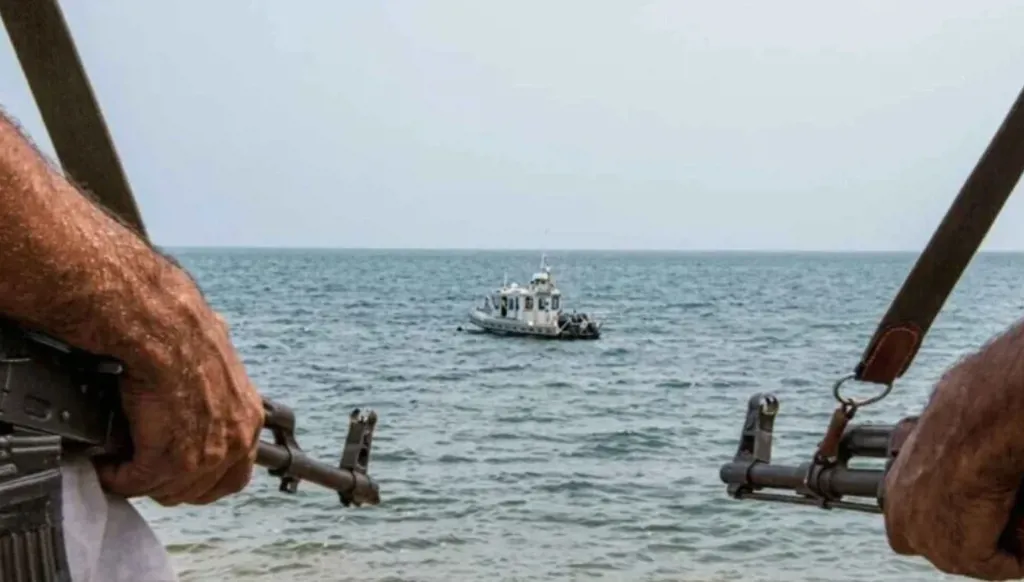
If Trump reassures Iran and its Houthis by the absence of any military intervention in Yemen as long as the Houthis only target ships of countries the group disapproves of, Tehran is banking on an expansion it hopes Washington will acknowledge, recognizing the Houthis' right to block and open the strait according to Tehran's taste and mood.
The Houthis communicated with Washington. The United States received the contact, listened, and responded, as Vice President J.D. Vance informs us. He says, "We are concerned about the Houthis' seizure of the Perim Island in the Red Sea and are closely monitoring the situation."
He then reassures America that Washington held direct talks with the Houthi group. Subsequently, Trump decided not to act to prevent Iran from seizing a second strait after gaining control of the first.
The Houthis reached out to Cairo, but Egypt rejected the group's request for coordination that would facilitate navigation and alleviate congestion at the Suez Canal. Cairo rejected the matter due to what it represents in terms of recognizing militias that Egypt refuses to acknowledge or deal with wherever they exist.
Conversely, Washington, which found it easy to support the region's "Spring" days with democrats, now finds it easy to digest dealing with the militia tumors rejected by the region's capitals just as they rejected that "Spring."
The matter suggests constants that Washington considers part of the tools of their trade that can be meddled with and manipulated under the guise of deals and loathsome realism.
Disclaimer: The opinions expressed by the writers are their own and do not necessarily represent the views of Annahar.
Thank you for subscribing to our newsletter