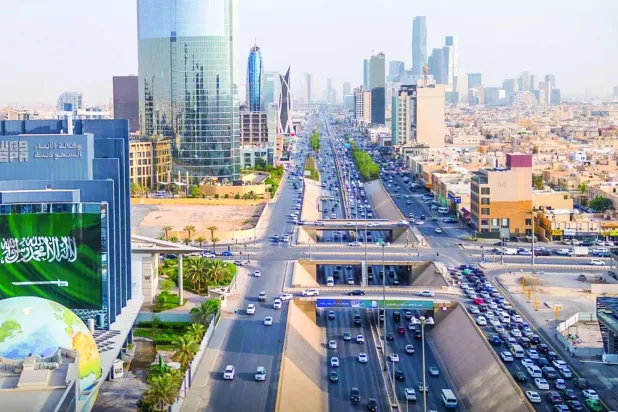
The International Monetary Fund’s outlook for the Saudi economy points to promising prospects for recovery and growth, despite pressures from regional disruptions affecting energy production, trade flows and supply chains. While the Kingdom’s GDP is expected to be affected in 2026 by a decline in oil and gas activity, non-oil activities are proving more resilient. The economy is projected to rebound strongly in 2027 as energy production gradually returns to normal and security and trade conditions improve. The IMF’s Regional Economic Outlook, issued in October 2026, places Saudi Arabia among the major economies of the Middle East, North Africa, Afghanistan and Pakistan region, at a time when the region is grappling with the repercussions of conflicts and disruptions to energy supplies and global trade. Temporary Growth Contraction, Non-Oil Activities Remain Resilient The report forecasts that Saudi Arabia’s real GDP will contract by 3.3 percent in 2026, reflecting a decline in hydrocarbon-sector activity during the first half of the year amid disruptions affecting energy production, shipping and regional supply chains, particularly those linked to the Strait of Hormuz and Bab al-Mandab. By contrast, the Kingdom’s non-oil activities have demonstrated resilience and performed relatively better than the energy sector, supported by sustained investment momentum and economic diversification programs associated with Vision 2030. In the tourism sector, the Kingdom recorded the smallest decline in hotel occupancy rates compared with other countries directly affected by regional tensions, reflecting its relative ability to sustain tourism and services activity under the current circumstances. Strong Rebound Expected in 2027 Despite the contraction expected in 2026, the IMF projects a strong rebound in the Saudi economy the following year, with real GDP forecast to grow by 7.9 percent in 2027. The recovery is linked to the gradual return of energy production to normal levels, greater stability in security and trade conditions, and an improvement in global supply chains. Over the medium term, the report projects Saudi real GDP growth to stabilize at around 3.6 percent by 2031, reflecting a return to a more stable growth trajectory following the volatility expected during the current period. Inflation and Monetary Policy On prices, average inflation in Saudi Arabia is estimated at around 2.7 percent in 2026 before stabilizing at approximately 2 percent in subsequent years, according to the projections cited in the report. Factors including subsidies, price controls and fiscal discipline have helped contain inflationary pressures and maintain relative price stability compared with several other economies in the region. On monetary policy, Gulf central banks, including Saudi monetary authorities, have taken steps in line with moves by the US Federal Reserve, with the aim of supporting financial market stability and limiting potential inflationary pressures. Fiscal Resilience and Capacity to Absorb Shocks Saudi fiscal policy in 2026 is characterized by discipline and prudence, while retaining room to direct spending toward strategic priorities, including infrastructure development, improving spending efficiency and supporting long-term structural reforms. According to the report, the Kingdom also entered the period of regional disruption with comfortable reserves and fiscal buffers, helping it absorb temporary shocks that could affect the current account and official reserves. These fiscal buffers are particularly important amid heightened regional and global uncertainty, providing greater capacity to withstand volatility while continuing to invest in economic priorities. Artificial Intelligence Investment in technology and artificial intelligence is one of the areas in which Saudi Arabia, alongside other Gulf countries, is seeking to expand its presence. The report examines announced investments in AI infrastructure and data centers, which, according to figures cited in the report, exceed 5 percent of GDP. These investments are expected to contribute to stronger productivity and growth over the medium term. At the same time, structural reforms remain an important factor in strengthening the economy’s ability to withstand external shocks by increasing labor-market flexibility, investing in human capital and diversifying non-oil exports. The report also points to the progress made by Gulf Cooperation Council countries in diversifying their merchandise exports over the past two decades, underscoring the importance of continuing efforts to broaden the production and trade base and reduce dependence on traditional sources of income. Taken together, these trends underscore the importance of economic diversification and investment in new sectors in strengthening Saudi Arabia’s ability to weather the repercussions of current disruptions while preserving its medium-term growth prospects.