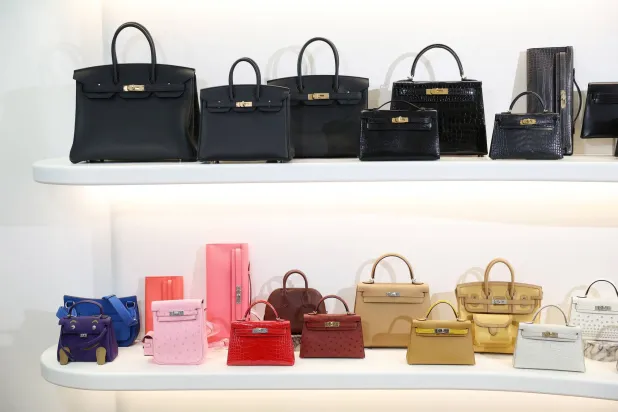
Birkin bag maker Hermes on Thursday posted slightly weaker third-quarter revenues than analysts expected as ready-to-wear sales turned negative for the first time in years amid what Hermes called a "challenging" economic context. Hermes's miss, which follows LVMH's downbeat quarterly sales update earlier this month, looked likely to further unsettle investors about the company's resilience in the face of a wider luxury sector slowdown. Hermes finance chief Eric du Halgouet told journalists in a call that the Chinese market, Hermes' single-largest, was "very difficult", but added he remained confident on long-term prospects and would keep investing in the country. Quarterly sales rose 4.3% year-on-year in currency-adjusted terms to €4.10 billion ($4.61 billion), slightly below an expected growth rate of 5.2% from analysts polled by Visible Alpha. It was the weakest quarterly sales growth rate since early 2020, when Hermes had to shut down boutiques globally due to the pandemic. Quarterly sales of Hermes's leather goods division, which makes its famous Birkin and Kelly handbags, rose 10.8%, while sales at the company's ready-to-wear and accessories division, accounting for over a quarter of quarterly sales, declined by 2% from last year, Reuters reported. Du Halgouet said the contraction in ready-to-wear was only due to weak Chinese demand while the division kept growing in all other regions. Hermes shares are down 36% since the start of the year. Analysts have flagged a growing sense among investors that Hermes's historically high stock-market valuation, resulting from a decade of strong growth, may move closer to industry averages as the pace of its expansion is slowing. The brand's famous Birkin handbags have become more available on the second-hand market and so have lost some of their appeal, several resellers told Reuters, suggesting Hermes's scarcity-driven business model could be coming under pressure. The Birkin's desirability remains "intact," du Halgouet said, adding the company would stick to its rhythm of increasing overall production volumes by around 6% in the coming years.