As Beirut seeks to strengthen state authority, Hezbollah's renewed pledge to Iran's new Supreme Leader underscores the enduring influence of Tehran over the group's strategic direction.
The exchange of messages between Hezbollah and Iran's new Supreme leader Mojtaba Khamenei was not merely an internal organizational occasion within Iran’s axis. The party sent a message announcing the renewal of "pledge and allegiance" to Khamenei, addressing him as "leader and guide", while their reply confirmed that Hezbollah would remain a cornerstone in the "resistance" project, calling for the continuation of "jihad" against Israel.
Under normal circumstances, this exchange might not go beyond being an internal communication between the Iranian leadership and its Lebanese ally. This time, however, its timing gives it a political significance surpassing the protocol for congratulatory exchange.
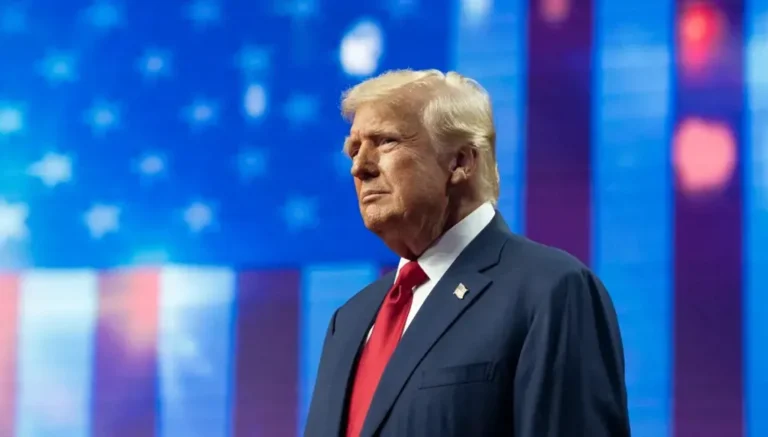
The two messages came just days after President Joseph Aoun met US President Donald Trump in Washington, at a time when discussions had resumed about launching a new political path to reinforce the Lebanese state's authority, through implementing the framework agreement that has slowly started underway despite Iran's rejection and Hezbollah's objection.
In his speech following the meeting, President Aoun proposed an approach to addressing the issue of Hezbollah's weapons inspired by the experiences of the Irish Republican Army in Northern Ireland, and the Revolutionary Armed Forces of Colombia (FARC), considering them as two models for armed movements transitioning to political work and from weaponry to state authority.
At the core of this proposition was a wager on the possibility of producing a Lebanese solution that would gradually lead to the state monopolizing decisions of war and peace. Yet, the exchanged messages between Hezbollah and the Iranian leadership appeared to carry a completely different message.
In its message, Hezbollah did not only congratulate Mojtaba Khamenei. It also described him as "leader and guide", considering his election as "continuation of the blessed path" of Imam Khomeini and Ali Khamenei, before openly declaring: "We renew our pledge and allegiance to you, and we will steadfastly walk with you on this blessed path."
In contrast, the reply attributed to Khamenei confirmed that Hezbollah is part of the "resistance" project, and its support is a part of the Iranian strategy.
The debate may remain around Mojtaba Khamenei's character itself, or around the nature of his public appearance, but the content of the messages leaves little room for speculation. References to the "leader and guide" and "pledge and allegiance" do not describe a political alliance between equal partners, but rather a relationship of authority and leadership declared by Hezbollah itself and confirmed by the Iranian side.
This allegiance does not reveal a shift in Hezbollah's identity because the party has never concealed its commitment to the principle of the Wilayat al-Faqih, nor has it ever claimed that its strategic reference is exclusively Lebanese. The novelty is not with the party itself, but in the political significance acquired by these messages at this timing.
This issue is no longer about launching an internal dialogue or reaching a Lebanese settlement, but rather the nature of the authority to which Hezbollah's strategic decision ultimately refers. If the party declares that the "leader and guide" is the supreme reference and renews the "pledge and allegiance", while the Iranian leadership affirms that the party is part of its regional strategy, then any Lebanese discussion regarding weapons or the decision of war and peace inevitably clashes with a preceding question to all discussions: where is the final decision made?
Thus, the messages not only address Hezbollah’s adversaries but also everyone who bet on the possibility of reaching an internal Lebanese understanding that returns the strategic decision to state institutions.
The significance of this scene increases when read in its political context. The allegiance and the Iranian response came as Lebanon, with American and international support, tries to launch a new path to strengthen its sovereignty and implement the framework agreement. In contrast, Iran rejects this path, while Hezbollah opposes it. Therefore, it is difficult to separate the timing of the messages from this reality or ignore that they appear as an affirmation that the final reference remains outside Lebanese borders.
There is another equally important paradox. The exchanged messages talk about "jihad", "resistance", and "steadfastness", but do not address the cost Lebanon paid resulting from this model. There is no mention of the economic collapse, or the Arab and international isolation, or the wars that drained the country, or the diminishing state authority, or the costs borne by the Lebanese due to a major portion of the military and political power being linked to leadership outside their borders.
Thus, the event does not reveal a new shift in Hezbollah's identity as much as it re-asks the question of Lebanese sovereignty in sharper tones. The messages clearly state, regardless of the expected clarity, that the leadership is singular, the reference is singular, and the allegiance is declared.
The question it imposes on the Lebanese remains: if the strategic decision is so frankly defined as linked to an external reference, where do the limits of internal dialogue end, and where do the decisions not made in Beirut begin?
Disclaimer: The opinions expressed by the writers are their own and do not necessarily represent the views of Annahar.
Thank you for subscribing to our newsletter