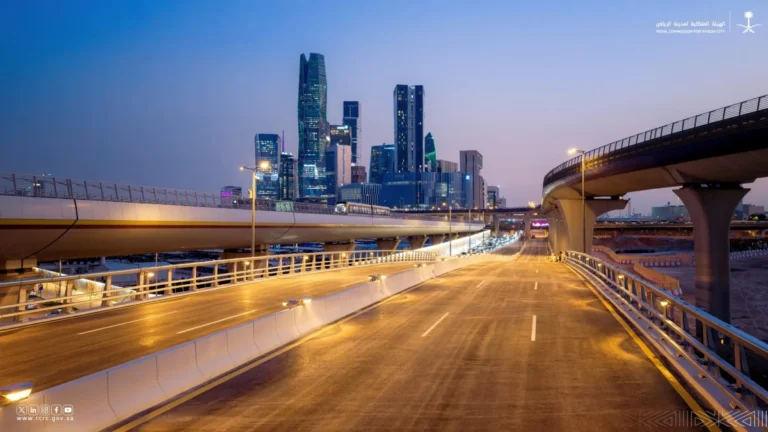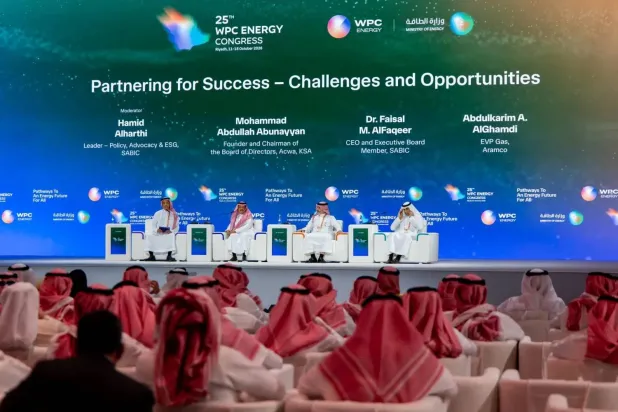
Green hydrogen, artificial intelligence and strategic partnerships took center stage at the World Petroleum Congress in Riyadh, as sessions mapped the energy sector’s future amid rapid technological and industrial change. Progress on clean energy projects, led by the NEOM Green Hydrogen Project, now 96% complete, intersected with the challenge of cutting emissions from transport, which accounts for about 30% of global energy demand. The discussions highlighted a widening agenda: developing energy sources and reshaping how energy is produced and used to improve efficiency and sustain supplies. Saudi Aramco said it plans to increase gas sales by 80% by 2030 compared with 2020 and 2021 levels, and to build and start operating six to seven gas and liquefied gas facilities between 2025 and 2027. Decarbonization Transport and logistics account for about 30% of global energy demand, Saudi Vice Minister of Transport and Logistics Services Rumaih Al-Rumaih told a conference session. Decarbonization is a long journey that requires a broader energy mix, he said, stressing the need for available, reliable, affordable and safe supplies. The Saudi Green Initiative provides a framework for reaching net-zero emissions by 2060, with transport playing a major role, Al-Rumaih said. Saudi Arabia is expanding public transport and cutting urban emissions to meet its commitments, he added. The Riyadh Metro network spans 187 kilometers and has 85 stations. Green hydrogen National Development Fund Governor Abdulaziz Al-Arifi said the fund had provided financing and strategic support for the NEOM Green Hydrogen Project alongside local banks and other entities and organizations. That support helped advance one of the clean energy sector’s leading projects, strengthening investment opportunities and local content, he told the conference. ACWA Power Chairman Mohammad Abunayyan said local resources, knowledge and expertise accounted for about 90% of those used in new projects. He reaffirmed the company’s commitment to expanding investment and overcoming challenges on the ground in major global markets such as China. At the same session, Saudi Aramco Executive Vice President of Gas Abdulkarim Al-Ghamdi discussed operational readiness and supply chains. Resource localization under the company’s iktva program had reached levels ranging from more than 75% to 90%, he said, offering strong protection against external disruptions. Saudi personnel and technological integration are the two pillars of sustained gas-sector growth and future resilience, he said. Artificial intelligence A panel at the 25th World Petroleum Congress explored how energy powers artificial intelligence, how the two sectors interact and how AI can sharpen decisions, improve operations and raise energy efficiency. Speakers said development of the energy and electricity sectors under Vision 2030 aims to meet demand and attract investment, including in AI data centers that need reliable, competitively priced electricity. The approach involves anticipating sectors’ needs and connecting them with investors. Speakers stressed the need to integrate infrastructure, data, technology and human expertise, drawing on Saudi Arabia’s strengths to develop solutions and bring them to global markets. Smart meters AI can improve forecasts of electricity loads and demand and detect grid faults early, helping planners respond faster, speakers said. Smart meter data can track consumption, forecast bills, show electricity use by appliance and flag unusual usage. In oil and gas exploration and resource development, particularly drilling, AI can analyze data in real time and combine engineering models with geological information. This can speed up decisions, improve accuracy, shorten the gap between planning and execution, enhance safety and support risk assessments and investment decisions. To expand these applications, companies must deliver tangible business value and integrate the tools into operations, speakers said. They must also ensure data quality and timely collection, train personnel to assess outputs and keep people involved in final decisions, while using digital tools to reduce risks.