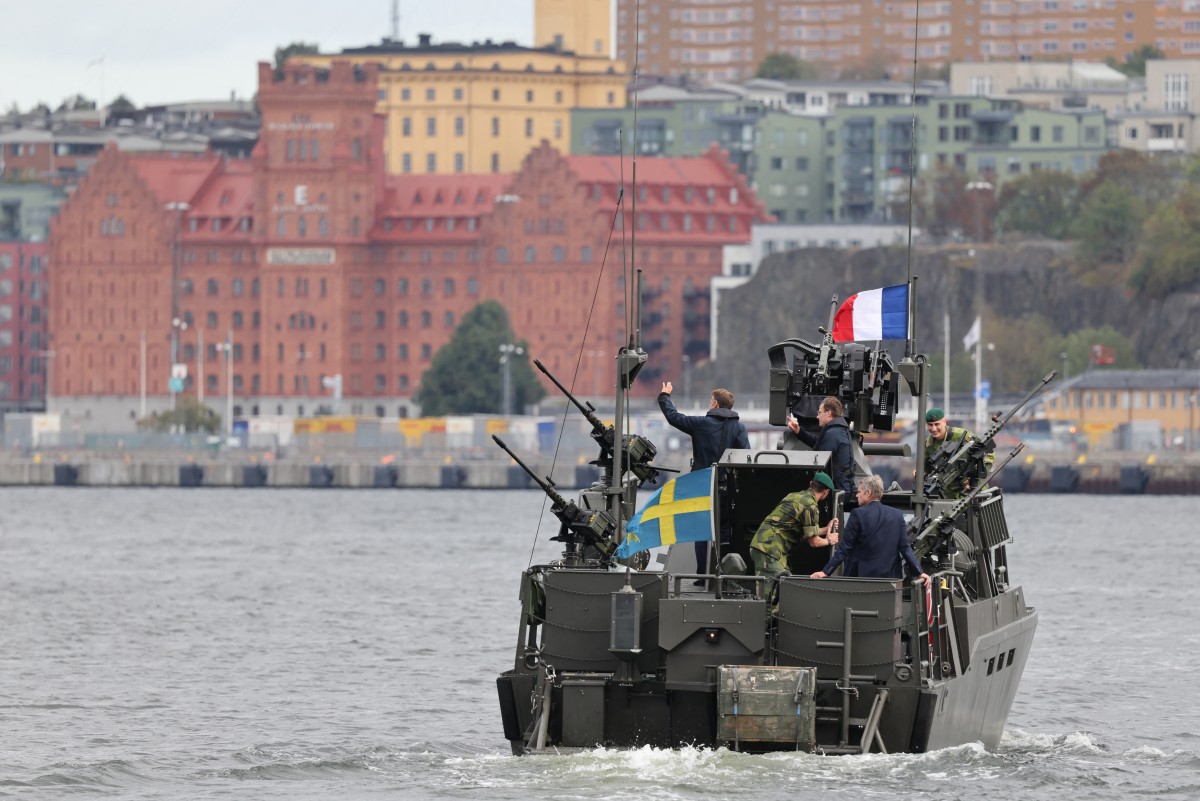
ALBAWABA- France has deployed aircraft carriers and supporting naval assets to the Middle East to protect its partners and help safeguard freedom of navigation through the Strait of Hormuz, as disruptions continue along one of the world’s most important energy routes.
French Foreign Ministry spokesperson Pascal Confavreux said freedom of navigation through the strait remained a priority for Paris. He said France was maintaining a military presence in the region to protect its partners and was in contact with all parties to help reduce tensions.
Confavreux also said France was preparing a new UN Security Council resolution aimed at safeguarding navigation through the strait. Paris is working with the United States and other partners on the initiative, which seeks to establish an international mechanism to protect commercial shipping while avoiding further escalation.
France has repeatedly stressed that any effort to secure the waterway should be defensive and consistent with international law. Paris has also called for a diplomatic solution to the wider confrontation with Iran and for Tehran to meet its international obligations concerning its nuclear program.
#AGNU - Déclaration du @G7 sur le détroit de Bab el-Mandeb et les droits et libertés de navigation pic.twitter.com/fx1DajEfOk
The Strait of Hormuz has faced severe disruption since the outbreak of the US-Iran conflict earlier this year. Vessel traffic has fallen sharply, with only 17 commodity vessels crossing the strait over one recent weekend, compared with a pre-war average of about 125 vessels a day.
France has been working with Britain and other partners on a multinational initiative to maintain maritime security. French officials have described the proposed mission as focused on protecting commercial shipping and restoring freedom of navigation rather than forcibly reopening the waterway. Paris has also discussed alternative supply routes with Gulf states as part of efforts to reduce the global economic impact of the disruption.
France has also sought wider international participation. During talks at the UN General Assembly this week, Foreign Minister Jean-Noël Barrot called on India to cooperate on protecting navigation through both the Strait of Hormuz and the Bab el-Mandeb, describing the issue as crucial to stability and prosperity in Europe and Asia.
The proposed UN resolution comes after earlier efforts to establish an international framework for maritime security failed to secure sufficient support, with Russia and China raising objections. Paris is now seeking broader backing for a text focused specifically on protecting commercial navigation and global energy supplies.
The French initiative comes as Iran has indicated that it could reopen the Strait of Hormuz within a week if Washington reduces military pressure and lifts its blockade of Iranian ports, adding a potential diplomatic avenue to the military and maritime efforts to restore shipping through the waterway.
Dr. Mansour Al-Maswari is Postdoctoral Fellow at Columbia University-Global Center, Amman. A Yemeni academician with a Ph.D. in English "Comparative Literature" and two MA degrees, one in political science and the other in English, Dr. Al-Maswari possesses more than 17 years of extensive experience in university-level teaching, research, research reviewing, bilingual translation, and copy-writing...
Subscribe to our newsletter for exclusive updates and enhanced content