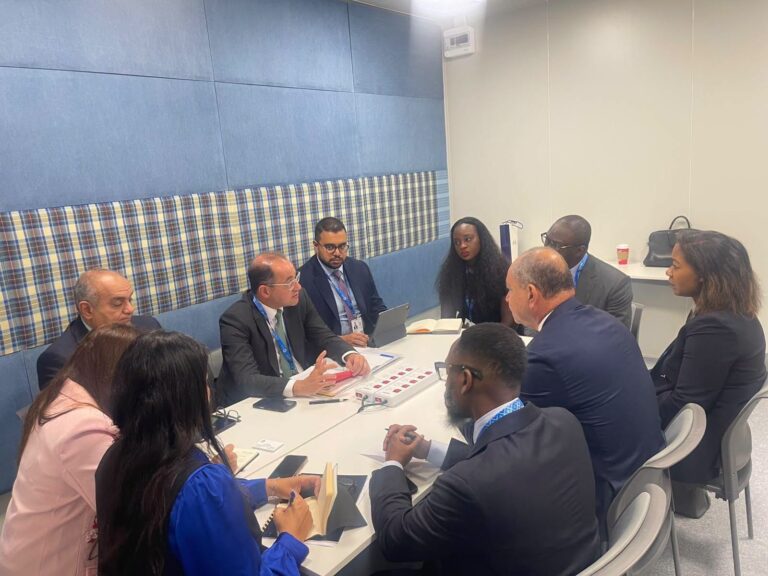
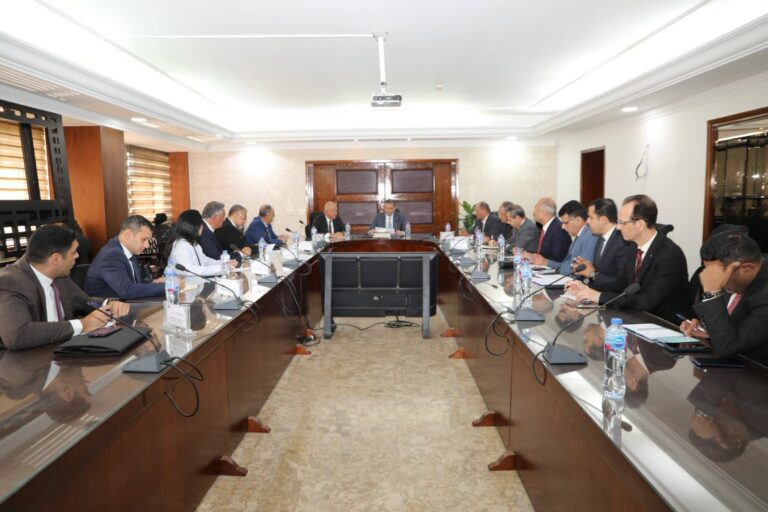
The national oil production strategy stood at the centre of talks this week between President Abdel Fattah El Sisi and Minister of Petroleum and Mineral Resources Karim Badawi. The Egyptian leader also met Claudio Descalzi, chief executive of Italian energy company Eni, to review the group’s activities and investment plans in the country. During the meeting, Minister Badawi presented the ministry’s five-year production strategy. It rests on seismic surveys, advanced technologies, new contractual frameworks, and the development of discoveries that have yet to enter production. Egypt’s 2026 exploration programme alone targets more than 100 oil and gas wells. This forms part of a wider plan to drill around 480 exploration wells over the next five years, backed by investments exceeding $5.7 billion. The strategy aims to double oil and condensate output while strengthening Egypt’s position as a regional hub for petroleum product trading, gas liquefaction and exports. At its heart, the drive is straightforward, aiming to step up exploration to raise domestic production and reinforce energy security. The government is also working to rebuild investor confidence. It has cleared overdue payments to foreign partners and continues to meet current obligations on time, steps that are expected to encourage international companies to expand their presence in Egypt. Continued commitment Descalzi reaffirmed Eni’s long-term commitment to Egypt. The company’s total investments in the country have now reached around $8.5 billion. Eni plans to continue its programme across its concession areas, covering exploration, development and production in several regions, including the Mediterranean and the giant Zohr field. In the coming period, the company intends to drill around 30 exploration wells and 200 development wells. This work is expected to support higher oil and gas output and accelerate the development of new resources. Egypt’s strategic location and existing infrastructure give it a clear advantage, energy specialists say. The country already possesses extensive systems for transporting, processing, storing and trading energy, including LNG facilities at Idku and Damietta, a wide gas transportation network, and significant oil storage and refining capacity. These assets form a solid foundation for Egypt’s ambition to become a fully integrated regional energy hub. Linking Cyprus’ Cronos field One of the most important projects supporting this vision is the plan to connect Cyprus’ Cronos gas field to Egypt’s existing infrastructure. Descalzi highlighted the project’s significance, describing it as a potential model for regional co-operation in the gas sector. The arrangement would allow Cyprus to use Egypt’s processing and LNG facilities, with the gas liquefied and re-exported to international markets. Agreements between the two countries are already in place. The co-operation aims to make fuller use of Egypt’s capabilities and could generate additional economic value while strengthening energy security across the Eastern Mediterranean. Denise West discovery Another significant development is Denise West, discovered in April 2026 during an offshore drilling campaign that began in October 2025 in the Temsah concession. The field holds around 56.6 billion cubic metres of gas and 130 million barrels of condensates in place. Its strategic value lies in the possibility of rapid development by tying it into existing infrastructure. Eni is working with partners BP and the Egyptian General Petroleum Corporation to reach a final investment decision in the coming months, with the goal of starting gas production within two years. Zohr, still the largest gas field ever discovered in the Eastern Mediterranean, remains central to Eni’s wider programme of exploration, development and asset management in Egypt. “New natural gas discoveries could provide a major boost to domestic production,” petroleum engineering professor, Ramadan Abul Ela, told The Gazette. They, he added, could also reduce Egypt’s reliance on imported gas and ease pressure on the energy import bill. Maximising value Egypt’s strategy extends beyond simply raising oil and gas output. It also seeks to extract greater economic value from its energy resources. The government is investing in refining, processing, storage and trading, while expanding gas liquefaction and re-export activities. The Ministry of Petroleum plans to upgrade existing refineries and implement six projects with investments exceeding $4 billion. These projects are expected to increase domestic production of petroleum products, raise value added, and help reduce the country’s fuel import bill. Egypt is, meanwhile, working to make fuller use of its crude oil and petroleum product storage, transportation and trading capabilities, alongside the continued expansion of gas infrastructure and LNG facilities. Taken together, these measures are steadily reinforcing Egypt’s position as an integrated regional energy hub, supporting higher domestic production, attracting fresh investment, and maximising the economic return on the country’s oil and gas resources, expert said. Professor Abul Ela called for intensifying both exploration and the development of existing finds. “We also need to make a better use of current infrastructure and advanced technologies,” he added. The post Egypt pushes to double oil output, strengthen regional hub role appeared first on Egyptian Gazette.