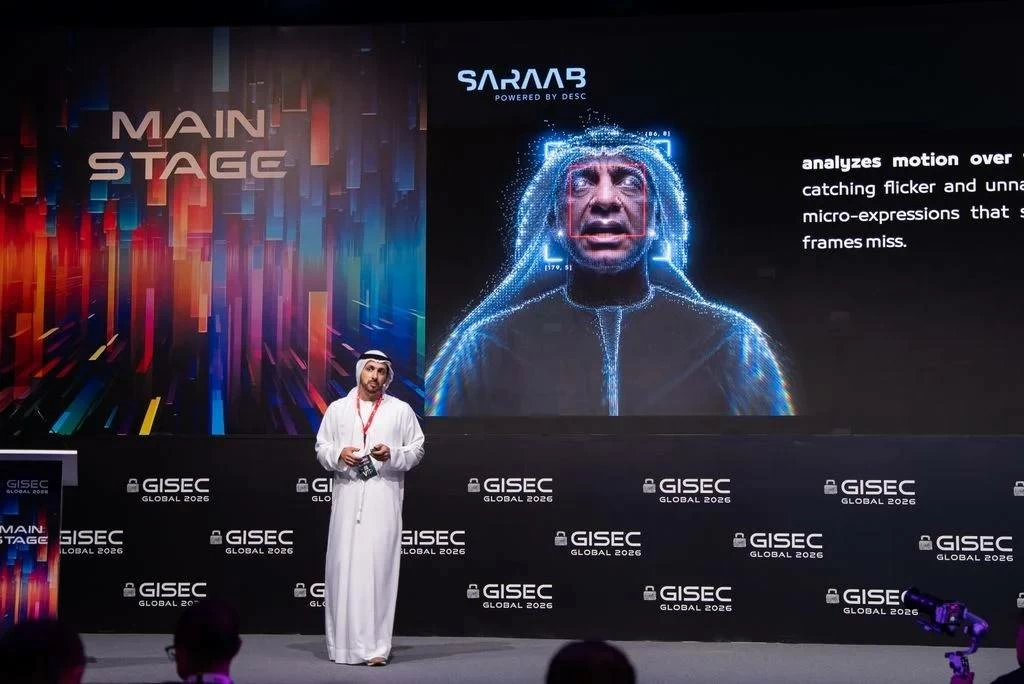
Dubai: The Dubai Electronic Security Center (DESC) has developed an Emirati artificial intelligence model capable of detecting deepfake videos with an accuracy of up to 91 per cent, while analysing videos as short as seven seconds, in a move aimed at strengthening the ability to verify digital content amid the rapid development of artificial intelligence technologies.The model, named "Saraab", is the first open-source AI model for detecting deepfakes developed by a government entity in the Arab region. It was fully developed by an Emirati team at DESC.The centre officially launched the model on September 16, 2026, during the opening day of its participation in GITEX Global 2026 at the Dubai Exhibition Centre in Expo City Dubai.According to the centre, the model was developed in response to the growing capabilities of artificial intelligence and deepfake technologies, and the challenges they pose to trust and digital security as it becomes increasingly difficult to distinguish between authentic and manipulated visual content.DESC said Saraab achieved an accuracy rate of up to 91 per cent in detecting deepfakes and recorded 89 per cent accuracy when tested on data it had not previously encountered during training.According to comparative tests conducted by the centre, the model recorded the highest accuracy among the open-source models included in the evaluation.One of Saraab's key technical features is its ability to detect deepfakes in videos as short as seven seconds, compared with other open-source models included in the centre's tests, which require clips of at least 15 seconds for analysis.The capability is particularly significant given the widespread use of short-form videos across digital platforms and social media channels.The model will be made available through the Hugging Face and GitHub platforms, enabling artificial intelligence engineers, cybersecurity experts and researchers to test it, build on it and contribute to its further development.According to DESC, making the model open source is intended to support research and development by allowing researchers, developers and cybersecurity specialists to help enhance its capabilities.The centre said the development of Saraab reflects its efforts to build local technological capabilities and solutions that anticipate emerging cyber threats and employ artificial intelligence to strengthen cybersecurity and serve the community.'Don't Be Scammed' campaignIn parallel, DESC is participating in Cybersecurity Awareness Month during October 2026 through the launch of the "Don't Be Scammed" campaign.The initiative aims to help community members identify sophisticated fraud methods and recognise warning signs before responding to suspicious requests under the message: "Take your time. Check. Don't be scammed."Throughout October, the campaign will present scenarios inspired by real-life situations, including identity theft, fraudulent calls and messages, suspicious links, and the use of artificial intelligence to manipulate voices, images, documents and videos.The campaign highlights how modern fraud techniques increasingly use familiar voices, messages that appear to come from trusted sources, official-looking documents and realistic videos that can be difficult to distinguish from genuine content.The campaign's central character is "Yado Salama", an Emirati grandmother who helps raise awareness of common fraud techniques and encourages people to verify information through reliable sources before responding to suspicious requests.The initiative also includes four competitions with total prizes worth Dh230,000, targeting content creators, university and college students, members of the public, and security operations centre teams in both government and private sector organisations in Dubai.According to DESC, the competitions combine creativity, artificial intelligence, technical skills and content creation to encourage wider community participation in promoting cybersecurity awareness.Details of the competitions and registration requirements are available through the campaign website, dontgetplayed.ae.In addition to digital outreach, the campaign includes interactive field experiences, events and activities designed to help the public learn about fraud techniques and cybersecurity risks throughout October.