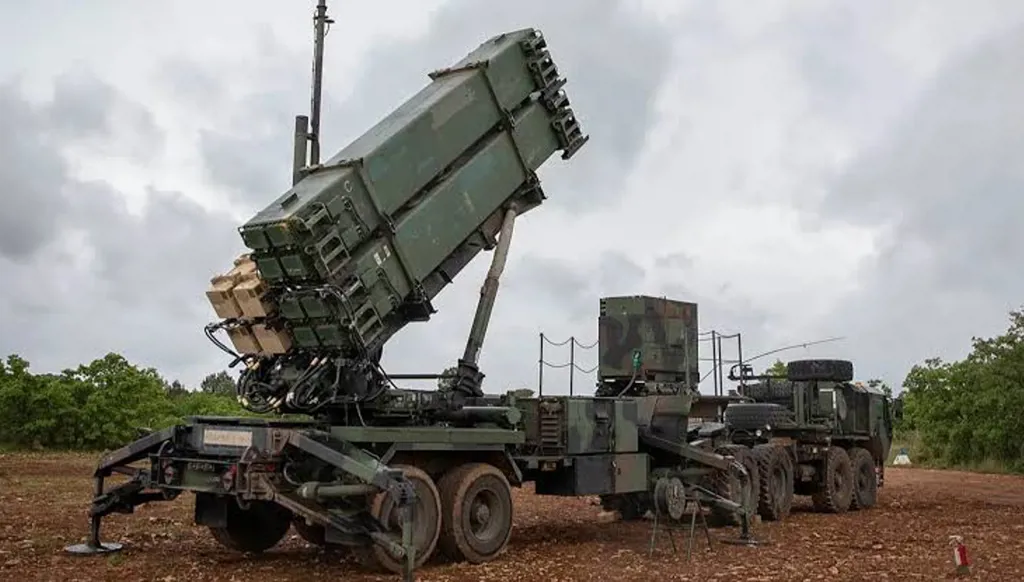
The United States possesses the world's most powerful military, but even its vast arsenal has limits. A new report by a US government watchdog has raised concerns over the dwindling American missile stockpile, particularly two of Washington's most important weapons: Patriot interceptor missiles and Tomahawk cruise missiles. With tensions with Iran persisting, could this shortage influence Washington's next military decision?
These concerns emerged following the release of a report by the US Government Accountability Office (GAO) on November 19, which warned that the 2026 war with Iran, alongside the military assistance Washington provides to its allies, had exacerbated the shortage of munitions.
The report specifically highlighted Patriot interceptor missiles and Tomahawk cruise missiles, both of which are pillars of the US arsenal. Beyond the dwindling stockpile, the office identified a deeper problem: the Pentagon lacks a comprehensive strategy to coordinate munitions production, funding, and the needs of the armed forces. The report called for a long-term approach to ensure better coordination of efforts to replenish the stockpile.
The exact scale of the shortage remains difficult to determine, as detailed figures on missile stockpiles are classified.
In a letter to the Washington Post, the office's director explained that the problem had existed for years but had worsened significantly since February 2026.
In an interview with Annahar, military analyst Riad Kahwaji said the shortage of Patriot missiles was a "chronic problem due to enormous global demand," particularly in Ukraine and the Gulf countries. He added that the US military also relies heavily on the system to protect its bases.
To address the shortage, manufacturing companies have developed a "comprehensive plan to form partnerships with facilities inside and outside the United States to increase production and ensure supply chain security."
As for Tomahawk missiles, Kahwaji noted that "their production has been slow," but manufacturers have recently taken steps to "enhance the production capacity of assembly lines," while facing penalties for delivery delays.
The two missile systems serve different purposes in US military operations.
Patriot systems are defensive weapons designed to intercept incoming missiles, particularly ballistic missiles, and protect military bases, cities, and strategic infrastructure.
By contrast, Tomahawk missiles are long-range cruise missiles primarily launched from warships and submarines. They can strike targets more than 1,600 kilometers away without exposing American pilots to enemy air defenses.
Their strategic importance became particularly evident during the 2026 war with Iran. According to the International Institute for Strategic Studies (IISS), US forces launched at least 1,000 Tomahawk missiles during the war, accounting for approximately one-third of their pre-war stockpile.
Estimates of Patriot missile consumption point to a similar level of depletion. During the first 39 days of the campaign, between 1,060 and 1,430 interceptor missiles were used, representing approximately 45 to 61 percent of the pre-war stockpile.
More recent estimates suggest that the United States has now consumed around two-thirds of its Patriot missile stockpile.
These figures illustrate the scale of munitions required to sustain modern warfare, where missiles fired within minutes may take years to replenish.
Despite concerns over dwindling stockpiles, he argues that "the shortage has not reached a point where the United States is unable to wage war."
He noted that Washington traditionally maintains a strategic reserve of Tomahawk missiles sufficient to fight two wars simultaneously, giving it considerable room for military maneuver.
Speaking to Annahar, Kahwaji said that "the United States still has a notable number of Tomahawk missiles," adding that the shortage "will not hinder any plans for another round with Iran."
He also believes that recent efforts to increase production capacity have helped address the problem.
However, Kahwaji points out that repeated warnings about ammunition shortages also have a domestic political dimension in the United States. He argues that such reports are often leaked "to pressure lawmakers to pass new laws injecting more funds into the defense budget."
With Democrats nearing control of Congress, Kahwaji expects a political showdown over the Trump administration's proposed defense budget for next year, which amounts to $1.1 trillion.
"This issue will spark many debates and a significant battle in Congress," he said.
The number of missiles remaining in US warehouses may not determine the outcome of the next confrontation with Iran, should one occur. Yet behind Washington's formidable military power lies a lesser-known reality: every missile fired must eventually be replaced.
As the Pentagon prepares for potential overseas conflicts, it faces another challenge at home, where developments in factories, on production lines, and in the halls of Congress may have an impact equal to those on the battlefield.