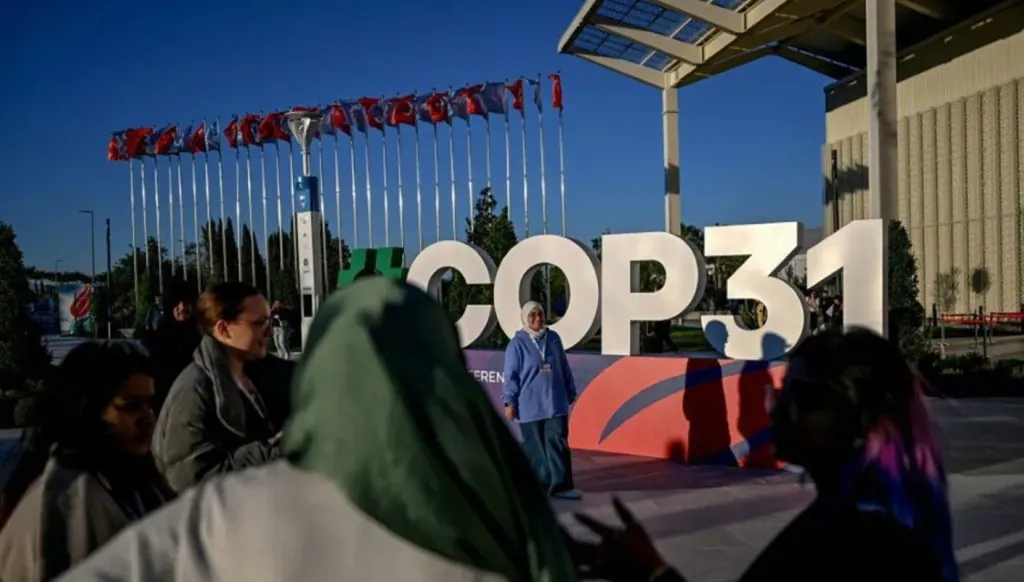
The work of the United Nations Climate Change Conference (COP31), held in the Turkish city of Antalya, extended into Saturday, despite being scheduled to conclude on Friday evening. Participating countries remain divided over several key issues, most notably the future of fossil fuels and funding for developing countries to address the impacts of climate change, as efforts continue to reach consensus on the final resolutions.
The conference was supposed to conclude on Friday, but negotiations failed to overcome existing disagreements, prompting the conference presidency to extend consultations. A general session was held for participating delegations to adopt a set of technical decisions, without addressing the most controversial texts.
Conference President Murat Kurum stated, "We are close to the finish line, but we haven't reached it yet," setting Saturday morning as the time to resume sessions and committing to present a new compromise proposal during the day.
Positions taken by several countries reflected the extent of divisions in the negotiations. On Friday evening, around 12 countries, including France, Panama and the Solomon Islands, issued a letter emphasizing the need for the final statement to include a "clear transition away from fossil fuels."
An initial draft agreement presented earlier in the week included calls to accelerate efforts to phase out fossil fuels, alongside measures addressing financing and climate-related scientific data.
However, a revised and more concise version presented on Thursday by Australia and Turkey, which share the conference presidency, made no direct reference to oil, gas or coal, energy sources whose combustion is a major cause of greenhouse gas emissions. The change drew objections from environmental advocacy groups.
The new draft called for steps to increase the share of electricity in the global economy, viewing this as a means of enhancing energy security and reducing emissions that contribute to global warming.
Brazilian Minister in charge of climate change Aloizio Lopes Pereira de Melo acknowledged that the negotiations had failed to satisfy participating parties, saying: "At this stage, no one feels satisfied."
By hosting the conference, Turkey seeks to make progress towards increasing electricity's share of total global energy demand from around 20% currently to 35% by 2035.
However, this direction has raised reservations among some countries, as the draft contains no explicit provision stipulating that increased electricity production should come from clean energy sources rather than coal and gas, potentially allowing greenhouse gas emissions to continue.
The negotiations are taking place as expectations for major breakthroughs continue to fade amid geopolitical tensions, particularly the implications of the Iran war and the oil price crisis, as well as persistent divisions over how to address the climate crisis.
Funding for developing countries remains one of the major unresolved issues in the negotiations. These countries are demanding that developed nations, which bear historical responsibility for significant greenhouse gas emissions, provide the resources needed to help them confront and adapt to the impacts of climate change.
In this context, Ghanaian Environment Minister Zanetor Agyeman-Rawlings said, "We did not come here to beg," adding that the African continent would not accept an outcome limited to announcements without the resources needed for implementation.
Meanwhile, European countries had made clear before the conference that they did not intend to increase financing allocated for this purpose, indicating that they expected to fulfill their previous commitments.
Disagreements have extended beyond fossil fuels and financing to the timeline for publishing reports by the Intergovernmental Panel on Climate Change (IPCC), the leading scientific authority in this field.
Dozens of countries are calling for upcoming IPCC reports to be published before the global stocktake scheduled for 2028, which aims to assess international efforts to reduce emissions. Other countries, including Saudi Arabia and India, are seeking to delay their publication until 2029.
The proposed draft also expresses "deep concern" over the world's growing proximity to the 1.5-degree Celsius global warming threshold above pre-industrial levels, established by the 2015 Paris Climate Agreement as a vital target for limiting the impacts of global warming.
As consultations continue, attention is turning to the final version to be proposed by the conference presidency, amid questions over whether an agreement can be reached that balances demands for phasing out fossil fuels with developing countries' financing priorities, as the gap between climate pledges and the ability to implement them continues to widen.