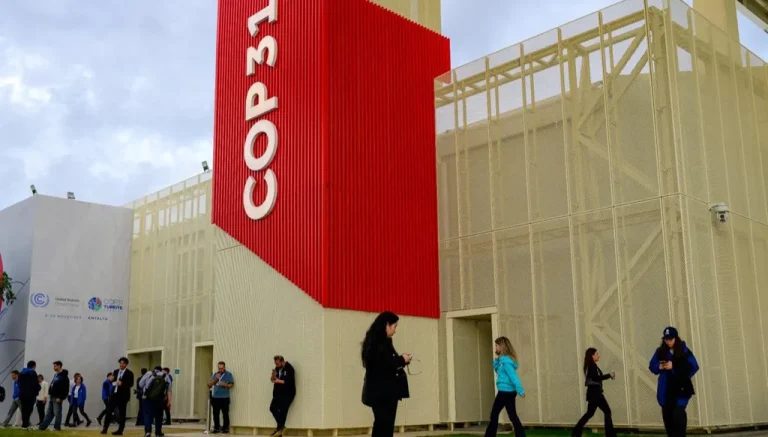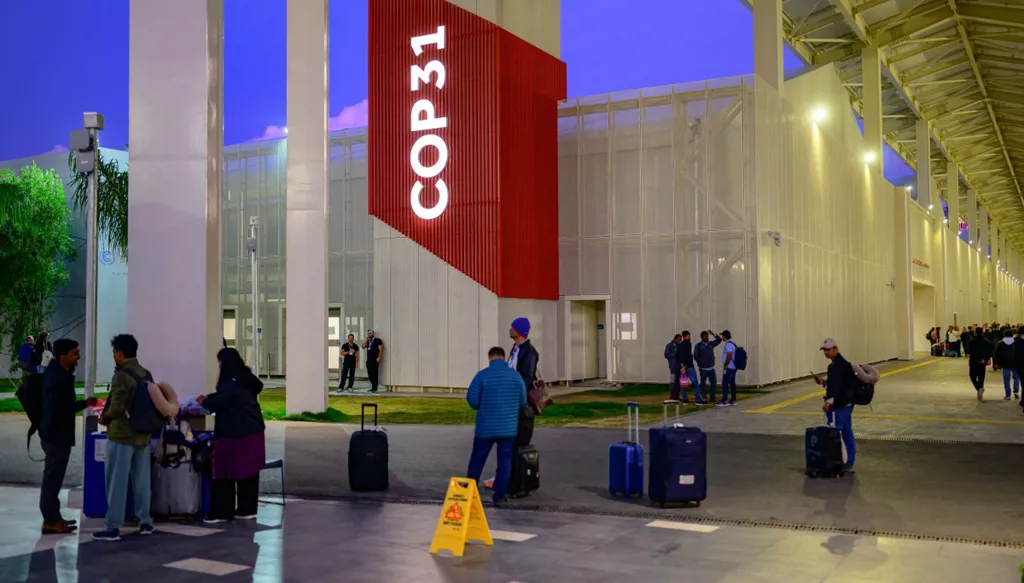
The presidency of the United Nations climate conference, COP31, presented a new draft agreement at the last minute on Sunday, once again omitting any explicit reference to fossil fuels and suggesting that efforts to overcome a major obstacle to reaching consensus may have failed.
The new proposal, released late following additional work, retained a call to increase the share of electricity in the global economy but, like the previous draft, made no mention of fossil fuels.
Countries are struggling to reconcile their differences at the annual conference, held this year amid rising energy prices and geopolitical tensions stemming from the war in Iran.
The deadlock over fossil fuels, a primary cause of global warming and one of the most contentious issues in the COP31 talks, threatens to derail efforts to reach a final agreement in Antalya.
The revised proposal put forward by Turkey and Australia, the host countries of the climate conference, refers to a previous agreement reached in 2023 on transitioning away from fossil fuels, without explicitly mentioning them.
It includes a proposal to increase electricity's share of total final energy consumption to 35% by 2035, alongside efforts to expand the use of clean energy.
Amid pressure over fossil fuels, Turkey and Australia have proposed a transition towards electric power as a way to reduce emissions that contribute to global warming and strengthen energy security.
However, critics argue that replacing technologies that directly burn fossil fuels, such as diesel vehicles and gas-based heating systems, with electric alternatives should go hand in hand with a shift towards renewable energy.
The text also calls for accelerating the development of carbon capture and storage technologies, which remain controversial and are promoted by the fossil fuel industry.
This proposal faced strong opposition in earlier drafts from countries that pointed to its high costs and limited success in reducing emissions.
Meanwhile, Turkey's Minister of Environment and Climate Change and COP31 President Murat Kurum said during a late-night plenary session: “We believe we have presented a text that all parties can agree upon.”
He added that the conference would reconvene on Sunday morning to approve the agreement, saying he believed concerns over fossil fuels and financial assistance for developing countries to adapt to climate change had been addressed.
Delegates have until 03:00 GMT to raise objections to the agreement, with a session scheduled for 06:00 GMT to begin its approval.
This year's conference is the first since the United Nations Environment Program confirmed that global temperatures are on course to exceed the 1.5-degree Celsius threshold, a limit that all nations agreed more than a decade ago to strive to stay below, given the significant increase in severe weather events expected beyond this level.
Against this backdrop, environmental organization 350.org expressed disappointment over the draft's failure to explicitly mention fossil fuels, while encouraging the use of carbon removal technologies.
Sarah Shaw, the organization's Director of Campaigns and Networks, criticized carbon capture processes designed to remove carbon dioxide before it reaches the atmosphere, saying: “Carbon capture is one of the biggest scams in the era of exceeding the (earth's temperature rise) threshold, and our leaders are on the verge of falling victim to it.”
Shaw added that the draft agreement opens the door to further developments in fossil fuels.