Regional pressure, military calculations and the outline of a possible agreement have prompted Washington to pause a new offensive, even as the conflict remains on the brink of further escalation.
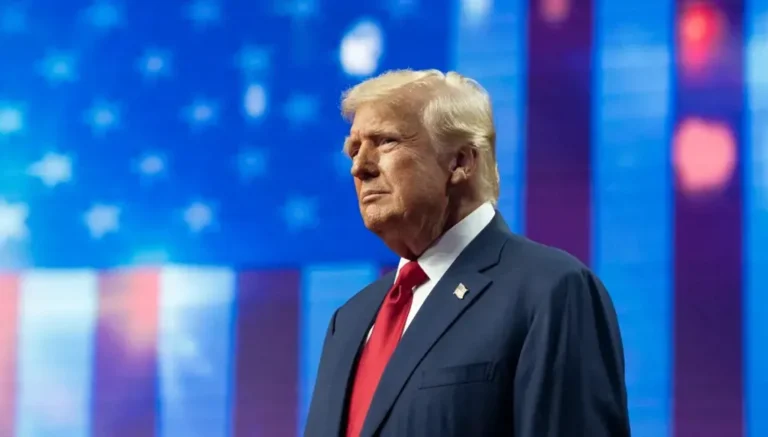
U.S. President Donald Trump attributed his decision to postpone new strikes against Iran to requests from Tehran and countries in the region, as well as to what was described as the emergence of the outline of an agreement under which Iran would immediately reopen the Strait of Hormuz without any restrictions, in addition to its willingness to quickly conclude a nuclear deal.
Is there really a last chance for diplomacy before a major conflagration? Or did Trump deliberately escalate his rhetoric—speaking of strikes that, according to him, would be the largest since World War II—in order to pressure Iran back to the negotiating table? Or was he genuinely preparing to resume the war on a large scale, with Israel also taking part?
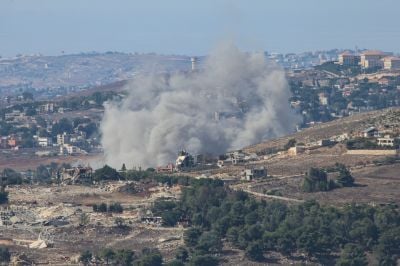
This is not the first time Trump has raised the level of his threats to such an extent before backing down at the last moment. However, with time running short, he appeared compelled to take action, whether through war or politics, to find a way out of the conflict before the midterm elections, if possible. That is why he said the new U.S. strikes were intended to force Iran to surrender. U.S. media outlets outlined several possible scenarios, including joint U.S.-Israeli strikes on Iranian energy facilities, possibly over the weekend, targeting oil refineries and power plants.
At the height of the threats, the U.S. news website Axios reported that Saudi Crown Prince Mohammed bin Salman urged Trump during a phone call to de-escalate and refrain from launching the strikes.
Before Trump backed away from the air campaign he had been preparing to launch, Iran issued a series of warnings through its diplomats and military commanders, threatening to destroy infrastructure in neighboring countries and Israel. Foreign Minister Abbas Araghchi held phone calls with the foreign ministers of Saudi Arabia, Turkey, Pakistan, the United Kingdom, and India. Meanwhile, Nour News, the outlet affiliated with Iran's Supreme National Security Council, warned that "everything will burn until it turns to ashes."
In addition, Iran was planning to involve its regional proxies in responding to the new round of U.S. attacks, with the aim of raising the cost of the war for Trump.
President Donald Trump raises a thumbs-up as he departs from the presidential aircraft upon his arrival at Morristown Municipal Airport in New Jersey, July 31, 2026. (AFP)
It is worth noting that Iran has expanded the scope of the confrontation in recent weeks. The Houthis have carried out attacks on Saudi oil tankers and announced a blockade of the Kingdom's ports on the Red Sea, while a drone targeted a U.S.-owned floating liquefied natural gas platform at Egypt's Damietta Port near the Suez Canal. As a result, oil prices climbed back above $90 a barrel.
Beyond the economic concerns, Trump's decision to hold off on launching new strikes against Iran cannot be separated from reports of differing views within the U.S. military leadership. Chairman of the Joint Chiefs of Staff General Dan Caine warned that the U.S. military's stockpile of interceptor missiles was being depleted.
Meanwhile, CENTCOM Commander Admiral Brad Cooper argued that a new two-week U.S. bombing campaign would be enough to significantly reduce Iran's missile-launch capabilities, leaving the remaining U.S. interceptor missile inventory sufficient. Cooper also supports escalating the conflict further, including the possibility of ground operations to increase pressure on Iran.
However, reservations about the military option emerged in recent days from the commander of U.S. forces in Europe, General Alexis Grynkewich, who sent a confidential memorandum to the Pentagon that The Washington Post was able to review. In it, he warned that the United States does not have sufficient naval forces to continue protecting Israel against the ballistic missile attacks it could face in the event of a wider war. U.S. European Command plays a central role in coordinating military operations in the Mediterranean, and for years U.S. destroyers have formed part of Israel's defensive umbrella.
With no tangible signs of progress in political contacts, the conflict, now in its sixth month—continues to swing between rounds of escalation followed by periods of fragile calm, with no viable off-ramp in sight that would allow either Trump or Iran to emerge without losing face.
Disclaimer: The opinions expressed by the writers are their own and do not necessarily represent the views of Annahar.
Thank you for subscribing to our newsletter