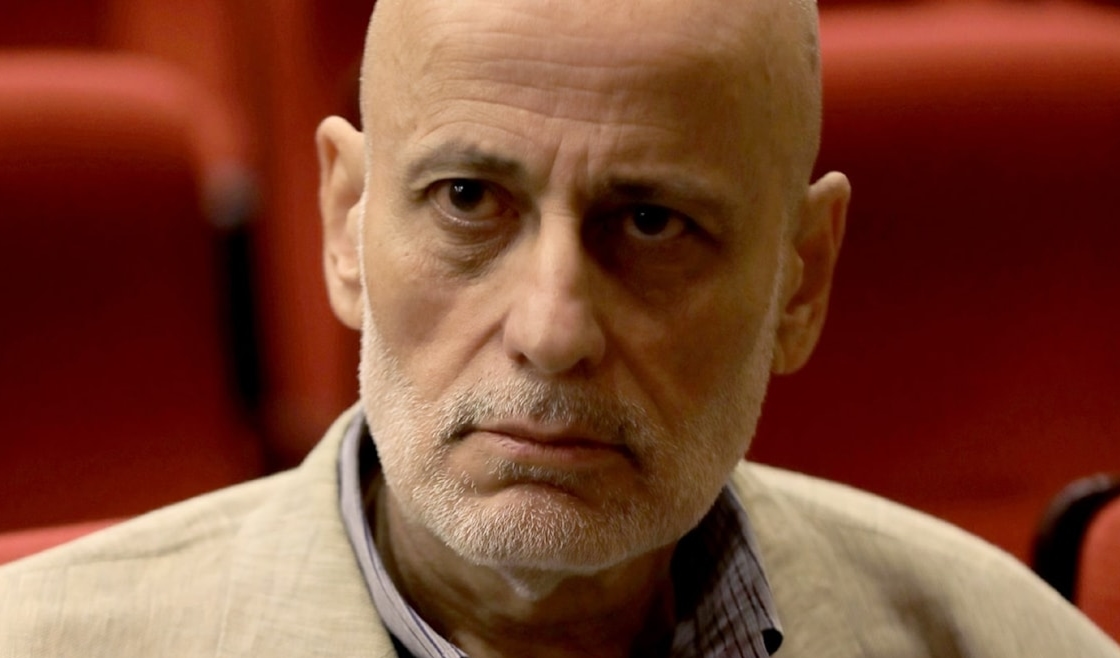
Interview with Mohammad Dargham, head of the Union of Southern Beirut Suburbs Municipalities Two wars and two years have not been enough for the Lebanese state to establish even a basic compensation mechanism for people whose homes and property have been damaged. A draft prepared by the previous government remains shelved, while discussions have focused almost exclusively on temporary housing allowances. The Union of Southern Beirut Suburbs Municipalities has received just $2 million to repair buildings that threaten public safety, along with a promise of another $9 million. Meanwhile, the state continues to leave compensation and reconstruction to Hezbollah and local municipalities. The union has consequently launched infrastructure rehabilitation and repair projects to facilitate residents’ return as quickly as possible. Al-Akhbar spoke with union head Mohammad Dargham about the situation and the work completed since the Israeli war paused. Q: Hezbollah has announced a new mechanism to support people displaced by the 2024 and 2026 wars through housing allowances. Where does the state’s compensation mechanism stand? Dargham: The state has yet to establish a mechanism to compensate those affected by either war. The only assistance people have received was a one-off housing payment covering three months, following the attack on the eve of Eid Al-Adha last year. Officials have not agreed on the scope or timeline of a compensation mechanism. Discussions remain limited to monthly rent allowances, with proposed payments of either $500 or $250, excluding furniture. We have told officials that $250 is unfair and that such rents are virtually nonexistent in the southern suburbs, but we have received no response. The state has failed to fulfill its obligations. The previous government had drafted a mechanism proposing $55,000 for each completely destroyed housing unit, regardless of size, in addition to housing allowances. The draft was carried over to the current government and discussed four times. Environment Minister Tamara Al-Zein was tasked with revising it, incorporating comments from Social Affairs Minister Haneen Al-Sayyed. No decision has been taken. Q: Have you completed the survey of destroyed homes and those rendered uninhabitable? Dargham: After the war, we formed a team to receive housing assistance applications and complete the required information, processing around 100 applications daily. We completed the survey of housing units destroyed or rendered uninhabitable in the 2024 war, identifying 11,400 units. Two weeks ago, we submitted the figures, including property and housing unit numbers, to the Higher Relief Council. It informed us that the files had been transferred to the Social Affairs Ministry for a decision. The 2026 files have also been completed but have not yet been submitted, pending verification. These lists exclude heavily damaged units that can be repaired, because our priority is to restore buildings wherever possible. Q: How many homes require repairs, and what is the estimated cost? Dargham: There are two categories. The first covers 10,768 housing units in Beirut and Mount Lebanon requiring structural repairs, at an estimated cost of $92 million. Of that, $56 million relates to the 2024 war and $36 million to the 2026 war. The second category comprises around 2,482 units requiring partial demolition of their buildings, with costs potentially reaching $70 million. Q: How much funding have you secured for repairs? Dargham: The 2024 budget allocated $12 million to the Higher Relief Council to repair buildings damaged in that year's war, but none of it was disbursed. Then came the 2026 war. After the fighting ended, we met Prime Minister Nawaf Salam and raised the issue of buildings at risk of collapse. Around 22 buildings required urgent intervention at an estimated cost of $2 million. The money was eventually transferred to us, alongside a promise of another $9 million to repair buildings damaged in the 2024 war. We have also sought to secure $30 million to $35 million for the Higher Relief Council in the 2027 budget. We do not yet know how much will be allocated. We understand that nobody will provide the entire amount at once, so we are tackling projects incrementally, according to priorities. Q: Can you afford to wait for funding, given the risk of building collapses and the approaching winter? Dargham: There is no immediate crisis in this regard. Only around five buildings remain at risk of collapse, and none is inhabited. The real problem is that some commercial tenants refuse to leave the buildings that need to be demolished. At the Zaghloul building, for example, a confectioner refused to vacate the premises. We have no authority to remove him by force. In such cases, we write to the governor, who can request security assistance to evacuate those refusing to leave. We have used this procedure before. Q: What about compensation for furniture, businesses, vehicles and the families of those killed? Dargham: The official mechanism under discussion covers rent allowances only. It excludes furniture, commercial establishments, machinery and cars. This is fundamentally different from the arrangements after the July 2006 war, when a mechanism was established promptly and compensation was paid, including to the families of those killed. Each destroyed housing unit received $45,000, with Hezbollah covering the remaining costs from its own funds. Today, none of that is in place. We are struggling just to secure an official mechanism and a clear legal basis. Once that exists, the details can be addressed more easily. Q: Hezbollah’s new housing assistance scheme could increase demand for apartments and drive rents higher. Do you have a plan to control prices? Dargham: We are facing a crisis, but this concerns private property and the principles of supply and demand. Setting mandatory rents requires a law or decree that the state must enact and enforce. As a local authority, we cannot assume that responsibility without a clear legal framework. Imposing fixed rents could also lead some property owners to stop renting out their apartments, worsening the shortage. Any measure must balance tenant protection with the need to keep housing available. Q: How has the union dealt with infrastructure damage? Dargham: Given the scale of the Israeli assault, the state should have declared a state of emergency in the southern suburbs. Its failure to do so left municipalities repairing infrastructure that the state itself should have addressed. As a union, we restored the infrastructure, while Électricité du Liban (EDL) helped repair damage to the electricity network. We began preparing for the work during the assault and started repairs as soon as the war ended. The work continues to this day. We contracted private companies and subsequently referred the contracts to the Legislation and Consultations Commission, where they are now under review. We have received the first approval and are waiting for the rest. But regardless of the legal procedures, the union will not receive a single penny from the state for the infrastructure work we have completed. Under the state's procedures, the government is supposed to carry out this work itself. That was impossible given the slow pace of its institutions and the emergency conditions we faced. Q: What is the status of rubble removal? Dargham: We have completed around 95% of the cleanup in the southern suburbs. The Costa Brava landfill is no longer accepting rubble. The remaining debris is being collected in the Mreijeh area while we await a decision on where to transport it. We have a disposal plan that we will announce when the time comes. Inspections and tests have found no hazards. A report by the National Council for Scientific Research confirmed that the rubble contains no hazardous chemicals. An environmental impact study conducted by the Ardi company at the request and under the supervision of the Environment Ministry also found that the material was not contaminated. The Lebanese Army's engineering regiment is responsible for collecting and handling munitions. Q: How representative was the rubble sampling? Dargham: We cannot conduct a comprehensive survey. That would be an impossible demand. We also cannot deny that we made some mistakes, particularly by mixing solar panels with rubble. We could not separate every material with 100% accuracy, as that would have delayed the cleanup. Our priority was to clear and remove the debris as quickly as possible so residents could return to normal life. Nevertheless, we are sorting materials wherever possible. Residual waste will remain, and it will be up to the consultant to identify a disposal site in coordination with the Environment Ministry. Q: Why not crush and recycle the rubble for road paving and construction? Dargham: We were not operating according to the World Bank's approach because we were dealing with an emergency. Our priority was to clear the suburbs of rubble as quickly as possible. The World Bank proposed recycling and selling the debris, but could we afford to wait for buyers? And where could we find a property capable of receiving all this material? What we managed to do was clear and sort the rubble, recovering material for use in filling the Costa Brava landfill. Q: Are you planning reconstruction that avoids repeating previous building violations? Dargham: Our priority is to return every resident to their home without reproducing the previous violations. But this is a sensitive issue that falls outside our responsibility. It must be addressed through the mechanism the state ultimately adopts. Under normal circumstances, owners of illegally built units receive financial assistance on the condition that they vacate the premises. During a war, however, applying that rule could be unjust. How can residents be prevented from returning to an illegally built unit while other violations remain in place? This is an edited translation for an interview published in Arabic.