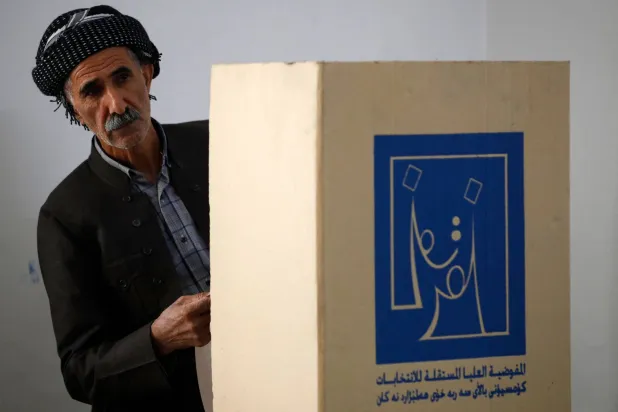
Positive signs have emerged in Erbil and Sulaymaniyah indicating that an agreement leading to the formation of a new government in the Kurdistan Region of Iraq may be nearing, after the process was delayed for nearly two years by disputes between the region’s two historic political rivals, the Kurdistan Democratic Party (KDP) and the Patriotic Union of Kurdistan (PUK). A PUK leader told Asharq Al-Awsat, speaking on condition of anonymity, that “talks are underway these days with the KDP and have begun on a clear basis between the two sides,” noting that “some details still require further consultation.” The latest understanding between the two parties is based on “maintaining the presidency of the Kurdistan Region and the premiership for the KDP, with their deputies going to the PUK, along with the speakership of parliament,” according to the PUK leader. He added that his party “requires, in order to preserve the historic distribution of posts, that the two deputy positions be granted new powers that expand the partnership in governing the region.” Regarding the allocation of key portfolios in the new cabinet, the leader said that “the PUK will receive the finance and Peshmerga portfolios, while the oil and interior ministries will go to the KDP.” In the parliamentary elections held in October 2024, the KDP came first with 39 seats in the Kurdistan Region Parliament, followed by the PUK with 23 seats. The PUK subsequently allied with the New Generation Movement, which won 15 seats, in an effort to balance the scales in negotiations over forming a government with its historic rival. Elected lawmakers were required to choose the new parliament speaker, deputy speaker, and secretary in a single session held on December 2, 2024. The session was limited to the swearing-in ceremony. Since then, parliament has remained inactive because of disputes between the two main parties. ‘Basis for Understanding’ An atmosphere of optimism is emerging from within the KDP camp. KDP leader Dlawar Faiq told Asharq Al-Awsat that reports of an emerging basis for understanding were “close to being accurate, but no agreement has been reached yet,” particularly because “neither party has made any official announcement about it.” KDP leader Abdul Salam Barwari also told Asharq Al-Awsat that “dialogue between the two parties is continuing, with a serious willingness this time to form the government.” Last Saturday, Kurdistan Region President Nechirvan Barzani said that “efforts are underway aimed at enabling the Kurdish political parties to reach positive results,” noting that “the two parties are continuing to hold meetings, and we hope these efforts will culminate in understandings that serve the interests of Kurdistan and all its components.” Since the Kurdistan Region’s parliamentary elections in October 2024, efforts to form a new government have stalled amid disputes between two camps of competing parties seeking greater influence over the anticipated cabinet. Demands and Conditions This time, emerging parties such as the New Generation Movement have entered the political competition and become part of the alliance landscape. However, the KDP and PUK continue to dominate the political process in the region. The PUK-New Generation alliance, which holds 38 of the 100 seats in the Kurdistan Region Parliament, is demanding half of the cabinet, a proposal rejected by the KDP. The KDP argues that the seats held by other parties will give it the advantage, while nevertheless saying it does not object to its historic rival participating in government formation on a fair and balanced basis. Members of the KDP have floated the possibility of holding new elections unless the PUK agrees to its demands, while some PUK members have raised the possibility of “near-independent rule for Sulaymaniyah from Erbil.” PUK spokesperson Karwan Gaznayi said at a news conference in Sulaymaniyah on Sunday that his party “remains committed to its demands regarding government formation, but its doors remain open to reaching an understanding.” Gaznayi added that a meeting between Kurdistan Region Prime Minister Masrour Barzani and his deputy, Qubad Talabani, had been “positive,” but had not produced an agreement on forming the new government. The distribution of posts was also not discussed at the meeting, he said, stressing that the PUK’s alliance with the New Generation Movement remains in place. ‘Balanced Government’ PUK leader Ahmed Al-Harki told Asharq Al-Awsat that a meeting of the party’s Political Bureau last Saturday and another meeting of its Leadership Council the following day reaffirmed the need to continue consultations and seek an understanding over the formation of the new government. He stressed that the government should be balanced and that no side should monopolize power. PUK leader Soran Al-Daoudi told Asharq Al-Awsat that “the past few days have seen rapprochement with the KDP, as both sides have demonstrated their desire to reach an understanding and then agree on a balanced cabinet.” “Nevertheless, forming the government requires further effort and pressure to achieve this as soon as possible,” Al-Daoudi added.