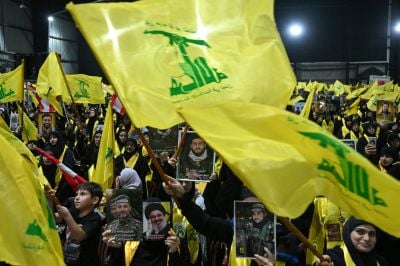
Bahrain is escalating its crackdown on citizens since the US-Israeli war on Iran began, targeting broad segments of the population under the pretext of solidarity with Tehran. The authorities appear determined to retaliate against religious figures who rejected the kingdom's indirect involvement in the war. The latest sign is the largest mass trial of Shiite religious leaders in the country's history. On Monday, Bahrain's High Criminal Court sentenced 69 people to prison terms ranging from 15 years to life. The defendants include 60 Shiite clerics and nine religious reciters. Authorities are holding 56 of them, including 47 clerics and all nine reciters. The court also sentenced 13 clerics in absentia, including Sheikh Isa Qassim, an exiled cleric in Iran, who received a life sentence alongside 63 others. Five clerics received 15-year prison terms. The defendants faced several terrorism-related charges, including “forming a terrorist group to overthrow the constitutional order” and promoting Iran's doctrine of Wilayat Al-Faqih through mosques and local religious gatherings. Authorities had scheduled the verdict for November 22 but suddenly brought the hearing forward to Sunday night. The Bahrain Prisoners Affairs Authority revealed details of the proceedings based on testimony from a cleric sentenced to life. The cleric described the judge, Jassim Al-Ajlan, and his team as “visibly confused”. “At the start of the session, the judge picked up a paper, called out several names and briefly announced that those defendants would receive 15-year sentences, while all the others would be sentenced to life. He then hurried out of the courtroom with his team,” he said. The authority said that “the scene reflected how the verdicts had been predetermined and how the proceedings lacked even the most basic standards of a fair trial”. Jaafar Yahya, head of the Bahrain Prisoners Affairs Authority, told Al-Akhbar that “the unjust verdict against a group of clerics can be appealed through the judicial system and taken to the Court of Cassation, but this process would take a very long time.” He stressed that “the judiciary under this system will yield no results unless international human rights, political and diplomatic pressure is brought to bear on the authorities to change it. Otherwise, the political system will insist on upholding the verdict and keeping the clerics off the streets and behind bars.” Human rights groups have documented abuses against prisoners, including holding them in undisclosed locations, interrogating them without lawyers, blindfolding them, keeping their hands tied for prolonged periods, forcing them to stand, depriving them of sleep and other mistreatment during court proceedings. Ibrahim Al-Aradi, head of the political office of Bahrain's February 14 Coalition, described the ruling against the clerics as “a politically scripted verdict, decided from the moment they were arrested on May 9.” He said the authorities wanted to impose the harshest sentences on the Shiite community because “the case is directly linked to regional developments and the war on Iran.” He warned that “these verdicts will further inflame public anger.” He said the authorities had tried to defuse tensions over the past week by postponing the ruling, originally scheduled for November 8, to November 22, only to issue it unexpectedly ahead of the new date. The political council of the February 14 Youth Coalition said the verdicts reflected “the authorities' descent into a state of delusion in their assessment of events and regional changes,” adding that they could no longer coexist with popular and religious leaders who reject normalization and alignment with the US and Israel. It said the trial was part of the government's effort to “prove its allegiance by opening an internal front against Shiite clerics and their symbols,” seeking to pressure Iran and besiege its supporters in “the sacred battle to defend their land and dignity.” Sheikh Isa Qassim said “Bahrain and its people do not want the current ruling regime, which imposes itself by force and inflicts grave injustice on everyone, young and old.” He accused the authorities of seeking to silence “the voice of awareness, pride, dignity and freedom,” and bury “the words that guide people toward truth, courage and sacrifice” in the depths of prisons. The Arabian Peninsula Opposition Meeting said “what is happening in Bahrain can no longer be treated as a judicial matter detached from its political context, or as rulings against individuals whose consequences end at the courtroom doors.” It said the case raised fundamental questions about “the relationship between power and society, the state and its citizens, and law, justice and freedom of belief.” The group described the verdicts as a dangerous development requiring serious political and human rights scrutiny. Human rights groups, including the Bahrain Institute for Rights and Democracy (BIRD), also condemned the sentences. BIRD advocacy director Sayed Ahmed Alwadaei told Al-Akhbar that the charges against the prisoners centered on “links to Iran, promoting the doctrine of Wilayat Al-Faqih, and seeking to replace the constitutional system.” Commenting on the verdicts in a post on X, Al-Wadaei wrote, “These individuals are casualties of the conflict. We condemn this deeply unjust verdict. This prosecution has torn religious leaders from their congregations and left families living under threats, fear and uncertainty.” He described the sentences as “an attack on the faith and identity of Bahrain’s Shia community, carried out through the courts.” He added that “a judiciary that fails to confront credible allegations of torture makes itself an instrument of persecution. These sentences deepen the injustice.” He called on Bahrain's allies, particularly Britain and the US, to publicly condemn the persecution of Shiites and demand the release of those “arbitrarily detained”. Human rights groups have documented abuses against prisoners, including holding them in undisclosed locations, interrogating them without lawyers, blindfolding them, keeping their hands tied for prolonged periods, forcing them to stand, depriving them of sleep and other mistreatment during court proceedings. They also reported that they were forced to sign lengthy statements without being allowed to read them. This is an edited translation of an article originally published in Arabic.