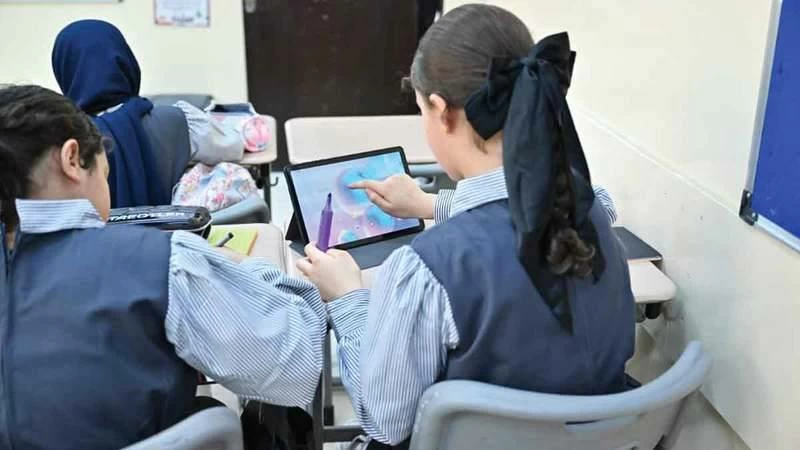
Abu Dhabi: Private schools that apply the British and American curricula have imposed new cybersecurity controls, with the aim of tightening control over students’ use of the Internet, analysing usage patterns, intervening early to monitor dangerous digital behaviours, documenting and recording cyber incidents, in addition to tightening the rules of electronic communication for teachers. These include comments on social media sites, with the aim of reducing bullying, phishing, access to inappropriate content, and protecting the data of the school community.
Specifically, private schools in Abu Dhabi informed parents via email that they have implemented a number of new precautionary measures to protect students from cyber risks and ensure their overall safety.
These measures include implementing an awareness programme suitable for all students of all ages that covers the benefits of technology and promotes awareness of cyber risks and the impact of digital habits on their security and safety (such as the impact of the duration of use of digital devices), appropriate filtering and monitoring systems for monitoring students’ internet use on school devices and systems, periodic analysis of students’ internet use and cybernetic violations to identify potential negative trends or problems, implementation of a protocol to identify and support students who appear to be developing risky, excessive, or illegal digital habits, in addition to conducting regular training sessions for staff and students to promote awareness of cybersecurity threats and best practices.
Digital incidents
The schools clarified that they will monitor, record, and document any digital incident immediately upon its occurrence for follow-up and investigation. This includes incidents resulting from the inappropriate use of digital technology by a member of the school community, such as violating the school's responsible use policies, accessing inappropriate content, engaging in inappropriate behaviour, making inappropriate communications, cyberbullying, and any other violation of school regulations in the online environment.
They noted that when a digital incident occurs during school hours or in environments governed by the school's digital policies, interventions will be implemented to provide support to students and staff, and the school will report the incidents to educational authorities and cooperate with law enforcement in investigations when necessary. Parents were urged to monitor their children's use of digital devices outside of school hours and on school premises to ensure safe and appropriate digital behaviour.
Teachers' accounts
The schools indicated that they are closely monitoring all official and unofficial school communication channels (newsletters, social media, and parent communication groups with the school) regularly to ensure compliance.
They reiterated their warnings to teachers against using school-issued email addresses to create accounts on social media platforms, and urged them to use the highest possible privacy settings, not to identify themselves as affiliated with the school except on professional social media platforms (such as LinkedIn), and to assume that content posted through these accounts, including online reviews and comments, is publicly visible and searchable, regardless of privacy settings.
They also stressed the importance of good conduct, ensuring that content shared through these accounts is appropriate, consistent with the school's cultural considerations policy, and does not amount to bullying, harassment, discrimination, or intimidation, in addition to ensuring that no confidential school-related information is shared through these accounts.
In the same context, administrators in private schools, Ahmed Salem, Ammar Othman, and Maisoun Al-Haddad, confirmed that schools are obligated, according to the digital protection policy, to establish a secure and robust digital infrastructure, and to ensure the application of relevant cybersecurity controls, which include defining and implementing a role-based access control system to ensure that users obtain the appropriate permissions, applying encryption to transmitted and stored data to protect sensitive information, using modern firewalls (security system), and intrusion detection and prevention systems to protect against unauthorised access, regularly monitoring and auditing network traffic to detect unusual patterns, and installing and updating antivirus and anti-malware software on all devices managed by the school.