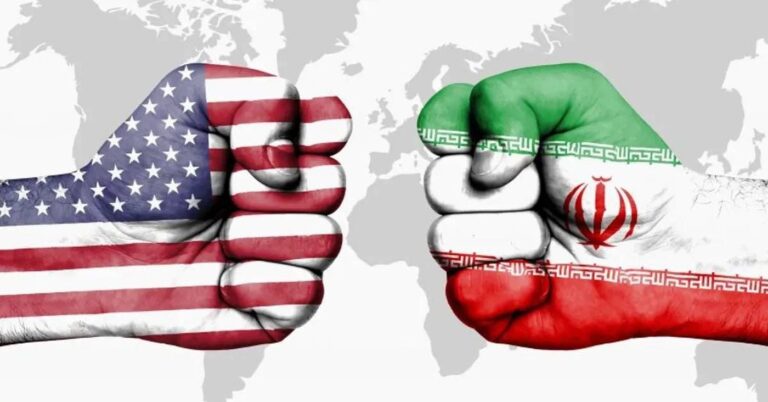
For the first time, U.S. President Donald Trump has announced his intention to hold off on launching strikes against Iran for now, citing what he said were appeals from countries in the region. However, the circumstances surrounding his position this time differ from similar moments in recent months.
The announcement came after Trump met at the White House with Qatari Prime Minister and Foreign Minister Sheikh Mohammed bin Abdulrahman, the first foreign guest he received following the crushing defeat suffered by Republicans in the November 3 midterm elections.
It was reported that the Qatari official, whose country is considered a key mediator in efforts to resolve the conflict, brought a new proposal aimed at bridging the gap between Washington and Tehran. The initiative seeks to gradually build trust between the two sides and eventually bring them back to the negotiating table.
One key difference this time is that U.S. Vice President J.D. Vance is taking charge of the Iranian issue. Known for opposing the war from the outset and advocating for a peaceful settlement to the nine-month-old conflict, Vance could benefit from the growing pressure on Secretary of War Pete Hegseth to resign. Hegseth was among the strongest advocates of military options and remains in favor of resuming strikes.
That pressure gained new momentum after Republican Representative Thomas Massie, known for opposing Trump, submitted a request in the House of Representatives to initiate impeachment proceedings against Hegseth over his role in the Iran War and the attacks on boats in the Caribbean. The White House claims the boats belonged to drug smugglers, while others view the attacks as extrajudicial executions.
Although such efforts face an impasse, as they require approval from two-thirds of the Senate — an unlikely outcome even after the majority shifts to Democrats in January — the move is seen as another moral blow to Trump and an indication of the escalating efforts by war opponents to hold those responsible for instigating the conflict accountable.
Nevertheless, Trump continues to maintain a balance between advocates of a settlement and supporters of war by agreeing to give mediators more time. This has been reflected in a sense of relief in oil markets, with prices falling to around $90 per barrel.
At the same time, Trump has maintained the reinforced maritime blockade under Operation “Iron Gate” to cut off supply routes Iran uses from the Caspian Sea and through land crossings with neighboring countries. Military preparations have also continued, with the American aircraft carrier “Roosevelt” and its combat group docking at the port of Singapore on Sunday on their way to join two other carriers currently in the region. A new batch of Marines is also expected to bolster U.S. forces assigned to missions in the Middle East.
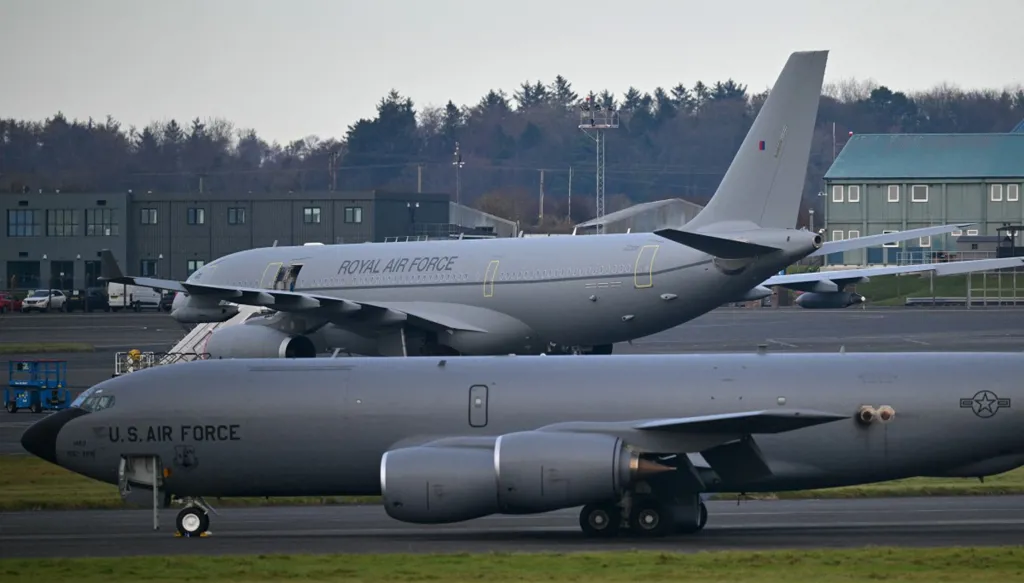
In anticipation of possible Iranian attacks, the United States relocated refueling aircraft from the Mildenhall base in Britain on Sunday. Two months ago, Washington also moved bombers from the Fairford base in Britain. London accused Tehran of attempting to target the base, an allegation Iran denied.
Over the past months, Trump has built his strategy around making the world anticipate an imminent strike on Iran, only to hesitate and give diplomacy another chance. He appears to be seeking an exit from a conflict that lacks popular support in the United States and that contributed to a historic Democratic victory in the midterm elections.
In other words, Trump appears to have chosen to extend a state of neither war nor peace, thereby prolonging the conflict.
Disclaimer: The opinions expressed by the writers are their own and do not necessarily represent the views of Annahar.