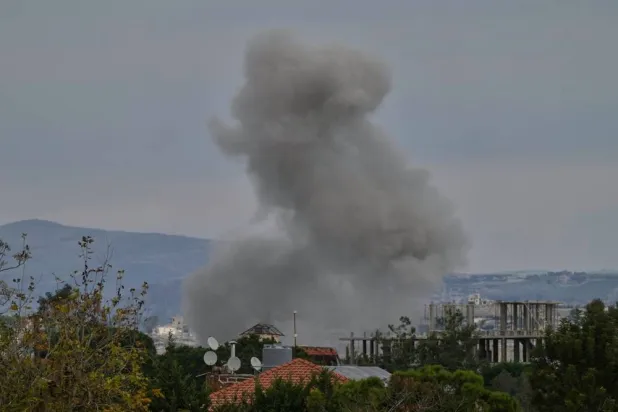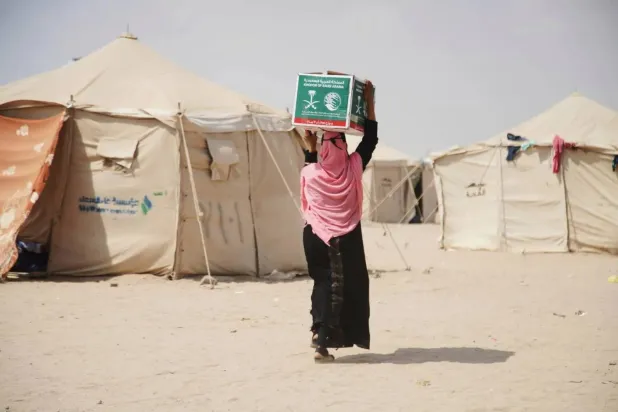
The Yemeni government has stepped up diplomatic efforts to confront Houthi attacks on civilians, urging the United Nations Security Council to take concrete measures to halt the assaults and hold those responsible accountable. Meanwhile, a human rights report revealed that nearly 1,500 civilians had been detained or abducted on roads leading to the Taiz governorate. The developments come amid warnings of a worsening humanitarian crisis as the siege of the city continues. In a letter addressed to UN Secretary-General Antonio Guterres and Security Council President Ambassador Sanita Pavļuta-Deslandes, the Yemeni government warned of continued military escalation by the Iran-backed Houthi militia, including missile, shell and drone attacks targeting residential neighborhoods and civilian gatherings in the interim capital Aden and the governorates of Lahj and Taiz. The letter said Aden came under missile attack on the evenings of Nov. 11 and 13, while shelling targeted the Kharaz refugee camp in Lahj province on Nov. 12, killing a Somali refugee woman. The government said the attack threatened refugee safety and exposed vulnerable groups to serious risks. Calls for accountability The Yemeni government held the Houthis fully responsible for the attacks and the resulting casualties and damage, saying the latest incidents were not isolated but part of a series of assaults in recent weeks targeting Aden International Airport, healthcare facilities, public markets and residential neighborhoods. The government also accused the group of targeting civilians and civilian infrastructure in Saudi Arabia, as well as international shipping lanes. It said deliberate attacks on civilians and civilian infrastructure, along with indiscriminate strikes, constituted serious violations of international humanitarian law and amounted to war crimes, requiring those responsible to be held accountable and victims to receive justice and compensation. The government urged the Security Council to explicitly condemn the attacks, pressure the Houthis to halt them immediately, comply with their obligations under international law and take measures to prevent further assaults. It warned that continued attacks on residential areas and refugee camps demanded an international response that went beyond statements of concern and condemnation to concrete action to protect civilians, refugees and displaced people and end impunity. The government also called for full implementation of relevant Security Council resolutions, especially provisions concerning the cessation of military escalation and arms embargoes. It stressed the importance of strengthening cooperation between the Yemeni government and UN member states, including information-sharing, technical assistance and capacity-building, to prevent weapons, ballistic missiles, drones, their components and military technology from reaching the Houthis. 1,477 civilians abducted or detained Separately, the Taiz Human Rights Center reported that 1,477 civilians had been subjected to arbitrary detention or abduction at Houthi-controlled checkpoints in southern and western Taiz between Nov. 14 and 18. The center said in a report that 830 civilians were detained for hours, interrogated and subjected to searches of their mobile phones, while another 446 were forced to sign so-called "returnee forms." A further 201 civilians were abducted and taken to undisclosed detention facilities, the report said. The center held the Houthis fully responsible for the safety of those detained or abducted, demanding that the militia disclose their whereabouts and release them immediately. It also called for an end to arbitrary detention, forced searches of mobile phones and the practice of compelling civilians to make statements or sign documents under duress. The center urged the UN and international human rights organizations to intervene urgently to safeguard civilians' freedom of movement and hold those responsible for the violations accountable, as restrictions on travel along roads and access routes to the city intensify. Taiz Governor Nabil Shamsan discussed the repercussions of the continuing Houthi siege with European Union Ambassador to Yemen Patrick Simonnet during a video call, highlighting rapidly deteriorating living conditions and shortages of essential supplies. Shamsan outlined the challenges facing residents as a result of road closures and restrictions on the delivery of food, medicine and fuel supplies. He warned of the consequences for the humanitarian situation as food and medicine stocks dwindle and the water crisis worsens.