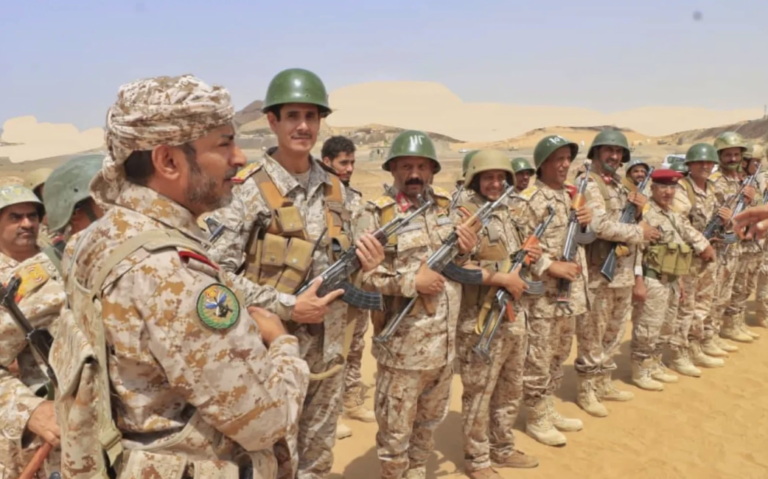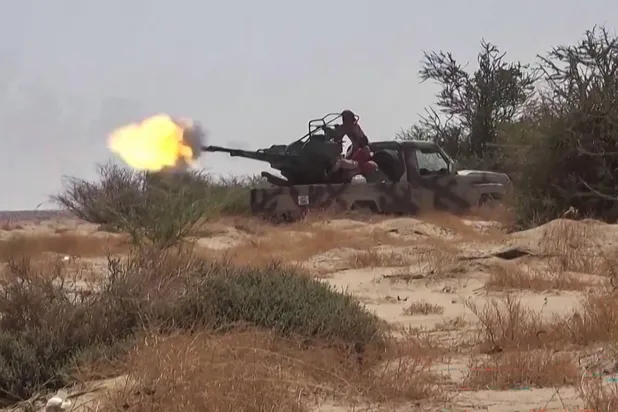
The Yemeni government has expanded community support for the armed forces and frontlines by mobilizing various social groups and provinces to participate in backing fighters and providing essential supplies to the frontlines. Nayef Al-Bakri, Minister of Youth and Sports and head of a committee for popular support and government backing for the armed forces, told Asharq Al-Awsat that the committee operates under the directives of Chairman of the Presidential Leadership Council Dr. Rashad Muhammad Al-Alimi, council members, and the prime minister. The committee aims to organize and activate popular support for the armed forces and fighters across various frontlines, which includes providing food, petroleum products, fuel, and essential materials needed for fighters to maintain their positions, he added. The committee includes representatives from several ministries, including Interior, Defense, Social Affairs, Transport, Health, and Industry. A broader committee includes representatives from more than 15 provinces, aiming to unify popular efforts and strengthen the state of mobilization. Several provinces, including Socotra, are preparing to dispatch relief convoys to battle areas, Al-Bakri revealed. Community support encompasses the health sector through blood donations and backing provincial blood banks. Various social groups have become part of the support system, he went on to say. Taiz, Hodeidah, Lahij, Dhale, Marib, Al-Jawf and Shabwa are priority frontlines, the minister said. Taiz is witnessing a "decisive battle," he stressed. On whether the support committee would handle preparing youths to join the frontlines, Al-Bakri explained that the responsibility for recruitment is the responsibility of military authorities. The minister said that the Iran-backed Houthi group is threat to Yemen and regional stability, especially in light of its "attempts to undermine the security of navigation and regional waters." He stressed that Saudi Arabia stands as the primary supporter of Yemen, a role that encompasses all economic, political, and military sectors, in addition to relief and development aid. Al-Bakri was optimistic that the Yemeni armed forces would make progress on several fronts, including in Taiz, Kahbub, and Shabwah.