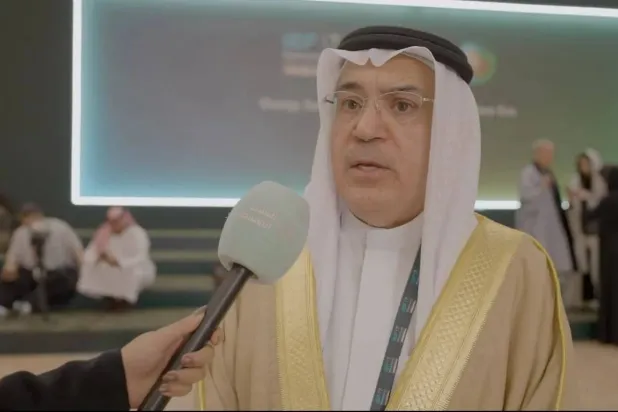
As gold prices climbed to record levels in 2026 and its role as a tool for hedging and portfolio diversification grew amid rising global debt and continued economic and geopolitical uncertainty, Saudi Arabia has emerged as one of the markets undergoing rapid transformation in the gold sector. This has been driven by growth in investment and consumer spending, as well as the expansion of tourism and financial activity. Andrew Naylor, the World Gold Council's Head of Middle East and Public Policy, believes these shifts are strengthening the Kingdom's position among the region's major gold markets and creating new opportunities for sector growth in the coming years. In an interview with Asharq Al-Awsat, Naylor said gold has entered a phase in which its role extends beyond its association with immediate crises, as its importance as a strategic asset in investment portfolios continues to grow. Global gold demand, including over-the-counter trading, reached about 1,269 tons in the second quarter of 2026, while demand in the first half of the year rose 2 percent year on year to 2,522 tons. The value of demand reached a record level of about $380 billion. Andrew Naylor, the World Gold Council's Head of Middle East and Public Policy (World Gold Council) These levels come amid strong gains in gold prices during the year. The metal's average price under the London benchmark reached $4,506 per ounce in the second quarter, a significant increase from its level in the same period last year, despite falling from the record level recorded in the first quarter. The price movement reflects continued investor demand for gold as geopolitical risks intersect with interest rate expectations, currency fluctuations, and elevated debt levels. Gold received an additional boost in August amid growing concerns about US debt levels, particularly after the US Treasury Department announced that it would double buyback operations for longer-term bonds to at least $4 billion per operation. The announcement on August 19 coincided with declines in Treasury yields and the dollar, while gold jumped more than 3 percent in a single session, signaling continued investor sensitivity to developments in the US debt market and fiscal policy. Global Economic Risks Naylor explained that gold's importance has increased amid continued geopolitical and economic uncertainty worldwide, noting that investors are not reacting only to individual events, but to an environment characterized by growing and persistent risks, from geopolitical tensions to uncertainty over inflation and interest rates and volatility in currency markets. He added that gold continues to play a role in diversifying portfolios, preserving value, and strengthening their ability to withstand volatility, pointing out that concerns over rising global debt levels and their sustainability have become factors supporting interest in gold. These factors come as recent US inflation data showed that price pressures persist, with annual inflation, as measured by the Personal Consumption Expenditures index, holding at 3.7 percent in July, slightly above market expectations. The persistence of inflation above the Federal Reserve's 2 percent target increases the importance of the path of interest rates and the dollar for gold's performance, as markets await new signals on US monetary policy. Naylor noted that gold's appeal does not rest on a single factor, explaining that geopolitical developments are one of the drivers, but interact with a broader set of economic, financial, and investment factors. Investment Maintains Its Momentum Despite some moderation in investment demand following a strong start to the year, global demand for gold bars and coins remained at elevated levels, while over-the-counter demand, particularly in Asian markets, continued to support the market. Naylor said investment may remain one of the main drivers of demand in the coming period, as investors seek to diversify their portfolios and hedge against a broader range of risks. He added that continued geopolitical tensions could provide additional support for demand, but their impact will depend on how they interact with the broader economic and financial environment, including trends in inflation, interest rates, and currencies. Asia Leads Demand Asked which regions are best positioned to drive global demand, Naylor said Asia will remain a key market driver, with China and India, along with Middle Eastern markets, continuing to play an important role in investment and jewelry demand. Demand for gold bars and coins in China reached about 107 tons in the second quarter, compared with 50 tons in India, indicating continued investment interest despite the impact of higher prices on some consumer segments. He explained that rising prices can alter the composition of demand across different categories, with investment products tending to show greater resilience than jewelry during periods of rising prices. The Gulf Strengthens Its Role At the Middle East level, Naylor said geopolitical developments have contributed to increased interest in gold, but investor behavior in the region also reflects a broader trend toward portfolio diversification and hedging against economic and financial volatility and currency risks. He added that Saudi Arabia and the UAE continue to strengthen their positions as financial and wealth management centers in the region, supporting long-term demand for gold. He stressed that the Gulf plays a vital role in the global gold market, benefiting from its geographic location, trade networks, and advanced infrastructure in refining, logistics, and trade. He noted that the development of financial markets and economic growth in the region are creating scope for this role to expand further in the coming years, as the region has moved beyond its traditional role as a consumer market for gold to assume a larger role in global trade and flows. Saudi Arabia... An Expanding Market Regarding the Saudi market specifically, Naylor said the Kingdom is attracting growing attention amid ongoing economic transformations, the expansion of investment activity, and higher levels of consumer and tourism spending. These factors are supporting its position as one of the important gold markets in the region. He added that initiatives linked to Vision 2030, particularly the development of the tourism, retail, and entertainment sectors, along with population growth and evolving spending patterns, are providing a supportive environment for the long-term development of the gold and jewelry sector. He believes that the growth of tourism and consumer activity in the Kingdom could open new opportunities for the jewelry sector, while the development of financial markets and private wealth supports the investment side of demand. Central Banks Regarding central banks, Naylor noted that official demand has become one of the structural factors supporting the market, with central banks adding 289 tons to their reserves in the second quarter, bringing total purchases to 345 tons in the first half of the year. Although these levels are below the exceptional rates recorded during some earlier periods, they remain strong by historical standards and reflect the continued preference of central banks for gold as a strategic reserve asset. This comes as discussions intensify around diversifying global reserves, currency risks, and monetary policies, giving official demand for gold a long-term dimension that extends beyond short-term price movements. The continuation of this demand, alongside growing investment and consumer demand, gives the Saudi market an opportunity to benefit from these shifts, particularly as tourism grows, the retail sector develops, and the investor base expands. This does not mean that the Kingdom is competing with the world's major centers for gold trading or refining. Rather, domestic economic transformations are enabling it to strengthen its role as an important regional center for gold demand, investment, and related services. Thus, the story of gold in Saudi Arabia is not only about rising global prices, but also about a broader shift in the nature of demand, where investment intersects with tourism, consumption, and the development of financial markets, at a time when investors globally are seeking assets capable of diversifying portfolios and preserving value amid a more volatile economic environment.