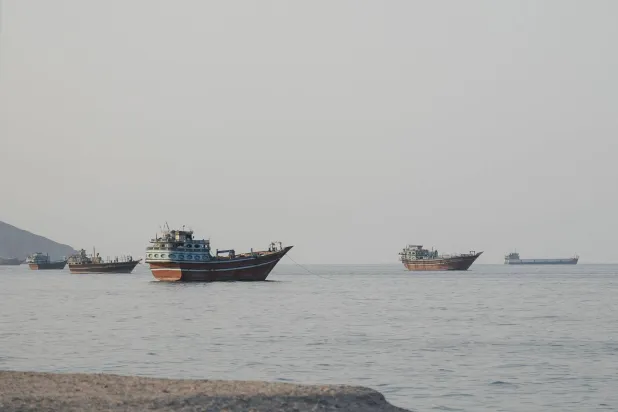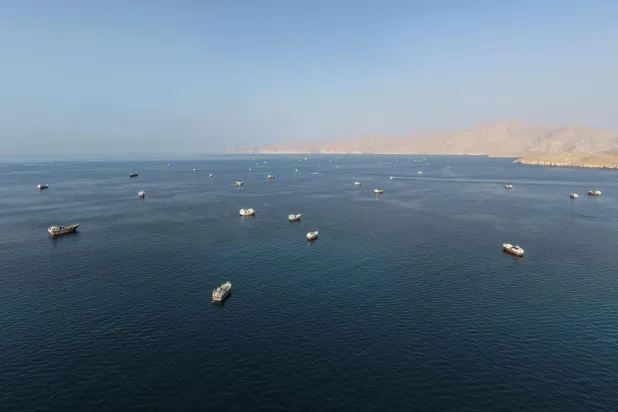
The World Bank said Tuesday that if the Middle East conflict subsides by the end of this year, regional growth excluding Iran is projected to rebound to 7.8% in 2027. In a report titled “From Divide to Opportunity: AI, Jobs, and Growth,” the Bank said that regional output is projected to contract by 2.1% on average in 2026, after expanding 3.3% in 2025. The report on the economic update on Middle East, North Africa, Afghanistan & Pakistan reveals a sharp deterioration compared with its April forecasts. At that time, the Bank projected that the region's economies, excluding Iran, would grow by 1.8 percent in 2026, while it expected the economies of the Gulf Cooperation Council (GCC) countries to expand by 1.3 percent. But growth expectations for the region have been revised downward by approximately 3.9 percentage points compared with the April forecast. Meanwhile, the outlook for GCC economies has shifted from 1.3 percent growth to a 4.3 percent contraction, representing a deterioration of 5.6 percentage points. Hormuz Upends Gulf Calculations This shift reflects the widening scope of the shock since April, as the repercussions of the closure of the Strait of Hormuz and the disruption of energy exports continue to unfold, with the effects spreading to trade, tourism, logistics services, and financial markets. The World Bank expects the economies of GCC countries to contract by an average of 4.3 percent in 2026, compared with growth of 4.4 percent in 2025. This marks a notable departure from traditional energy crises, in which rising oil prices typically boost the revenues of energy-exporting countries. In the current crisis, however, the disruption of oil shipments through the Strait of Hormuz has constrained producers' ability to export crude oil, making higher prices insufficient to offset the impact of reduced export volumes. In contrast, oil-importing economies have shown greater resilience, with the World Bank forecasting their growth rate to rise to 4.3 percent in 2026, compared with 3.9 percent in 2025. The repercussions of the conflict are not confined to the energy sector. They have also spread to tourism, aviation, and logistics services, while disruptions in shipping have increased import costs and placed additional strain on supply chains, particularly affecting food prices. A man walks with shopping bags in a local souq down town Riyadh, Saudi Arabia, May 31, 2025. REUTERS/Hamad I Mohammed Saudi Arabia Maintains its Recovery Path As for Saudi Arabia, the World Bank expects real GDP per capita, which is projected to stand slightly above its 2019 level in 2025, to fall below that benchmark in 2026 before the economy benefits from a recovery in hydrocarbon production and exports as the shock recedes. On the fiscal front, the World Bank estimates that the Kingdom's budget deficit will reach 6.6 percent of GDP in 2026, before narrowing to 3.7 percent in 2027. The Bank also expects an improvement in the current account balance, with the deficit declining from 1.4 percent of GDP in 2026 to 0.9 percent in 2027. These projections suggest that the most significant impact of the conflict will be concentrated in 2026, while financial and external indicators are expected to improve in the following year as hydrocarbon production and exports recover. A general view of the skyline in downtown Manama, Bahrain, June 22, 2025. REUTERS/Hamad I Mohammed Poverty Rising Across the Region In fragile and conflict-affected economies, the latest shock is compounding pre-existing vulnerabilities. The World Bank notes that poverty in the Middle East and North Africa, Afghanistan, and Pakistan is becoming increasingly concentrated in fragile and conflict-affected settings. The region accounts for roughly 14 percent of the world's population living in extreme poverty, making it second only to Sub-Saharan Africa. It is also the only region in the world where poverty levels remain above their pre-pandemic levels. In 2024, some 14.3 percent of the region's population lived on less than $3 a day, compared with 10.4 percent globally. Meanwhile, 26.9 percent lived on less than $4.20 a day, compared with 18.9 percent worldwide. The World Bank expects these negative trends to persist through 2026, with poverty becoming increasingly concentrated in conflict-affected and fragile economies, where displacement, weak labor markets, and the erosion of assets and basic services make recovery more difficult. Strong Recovery Possible if Conflict Eases The World Bank believes the region is capable of achieving a strong recovery if the intensity of the conflict declines by the end of 2026. Excluding Iran, the report projects regional growth to reach 7.8 percent in 2027, driven primarily by a rebound in hydrocarbon production and exports. However, the recovery will not be automatic. The effects of damaged infrastructure, postponed investments, and the depletion of fiscal buffers could continue to weigh on growth long after the immediate shock has subsided. Ousmane Dione, the World Bank's Vice President for the Middle East and North Africa, Afghanistan, and Pakistan, said: “Protecting vulnerable households, restoring productive capacity, and investing in more resilient energy and transport infrastructure will be critical to ensuring that a temporary shock does not leave lasting losses in human capital, growth prospects, and living standards.” “Countries that are able to build up resilience and capacity now will be well positioned to take advantage of the opportunities of the future, particularly in artificial intelligence,” he added. Kuwaitis at Shaheed park in Kuwait city. AFP Artificial Intelligence: An Opportunity for Growth Alongside the repercussions of the conflict, the report highlights a long-term transformation that could reshape the region's economies: the rise of artificial intelligence (AI). According to Roberta Gatti, the World Bank's Chief Economist for the Middle East and North Africa, Afghanistan, and Pakistan, AI could enhance the productivity of 13 to 20 percent of jobs across the region, while fewer than 10 percent of jobs face a near-term risk of automation. The report suggests that AI's primary impact in the region is likely to come through higher productivity rather than job losses, with workers and businesses that are able to adopt these tools effectively standing to benefit the most. However, realizing these gains will require addressing a number of structural obstacles that continue to limit the spread of technology. These include the underrepresentation of the region's languages and data in global AI systems, low levels of AI adoption, gaps in human capital and infrastructure, and the limited dynamism of the private sector. Regional Cooperation The report notes that regional cooperation could be one of the most important avenues for maximizing the benefits of AI, particularly given the varying levels of technological capacity across countries in the region. Leading countries such as Saudi Arabia and the United Arab Emirates could share their expertise in AI model development and governance with other regional economies, while middle-income countries could contribute local talent and data resources. More fragile economies, meanwhile, could benefit from what the report describes as "small AI" solutions: low-cost technologies designed for specific purposes that can operate on basic mobile devices. These tools could help improve essential public services and support local businesses. The report concludes that the region's ability to overcome the current shock will depend not only on the recovery of oil production and exports, but also on addressing structural weaknesses and investing in infrastructure and human capital. Such efforts would enable artificial intelligence to become an additional driver of productivity, economic growth, and long-term development.