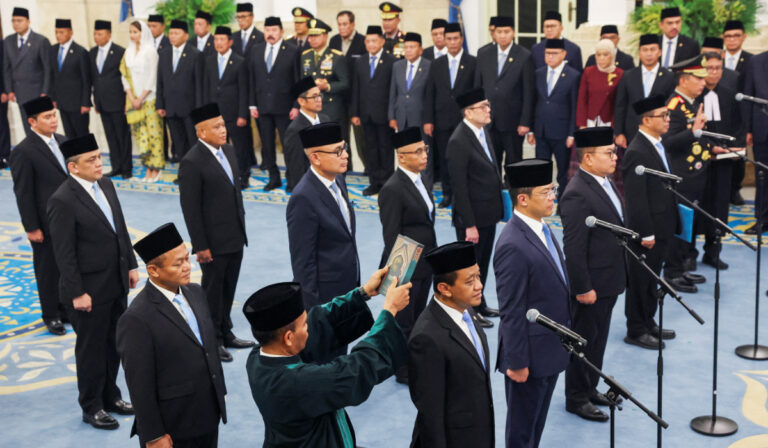
LONDON: Ethiopia on Thursday closed its embassy in the Eritrean capital, Asmara, and ordered 10 Eritrean diplomats to leave within 48 hours.
Addis Ababa accused Eritrea of “direct and indirect acts of hostility and belligerence” that pose “a direct threat to Ethiopia’s national security.”
Eritrea’s response was swift. Its foreign ministry called the move “absurd” and said that it “has no option but to reciprocate in kind and sever all diplomatic ties,” warning of “all the negative corollaries that this entails.”
The rupture ends a cold peace that had been fraying for some time. Addis Ababa frames it as a hostile campaign involving Eritrea, Sudan and Egypt. Those countries dismiss the accusations as baseless and tied to Ethiopia’s internal wars and its quest for sea access.
The standoff sits at the intersection of the Nile dispute, Sudan’s civil war and an increasingly contested Red Sea. Together they create the potential for a new front in the Horn of Africa, with implications for Arab states.
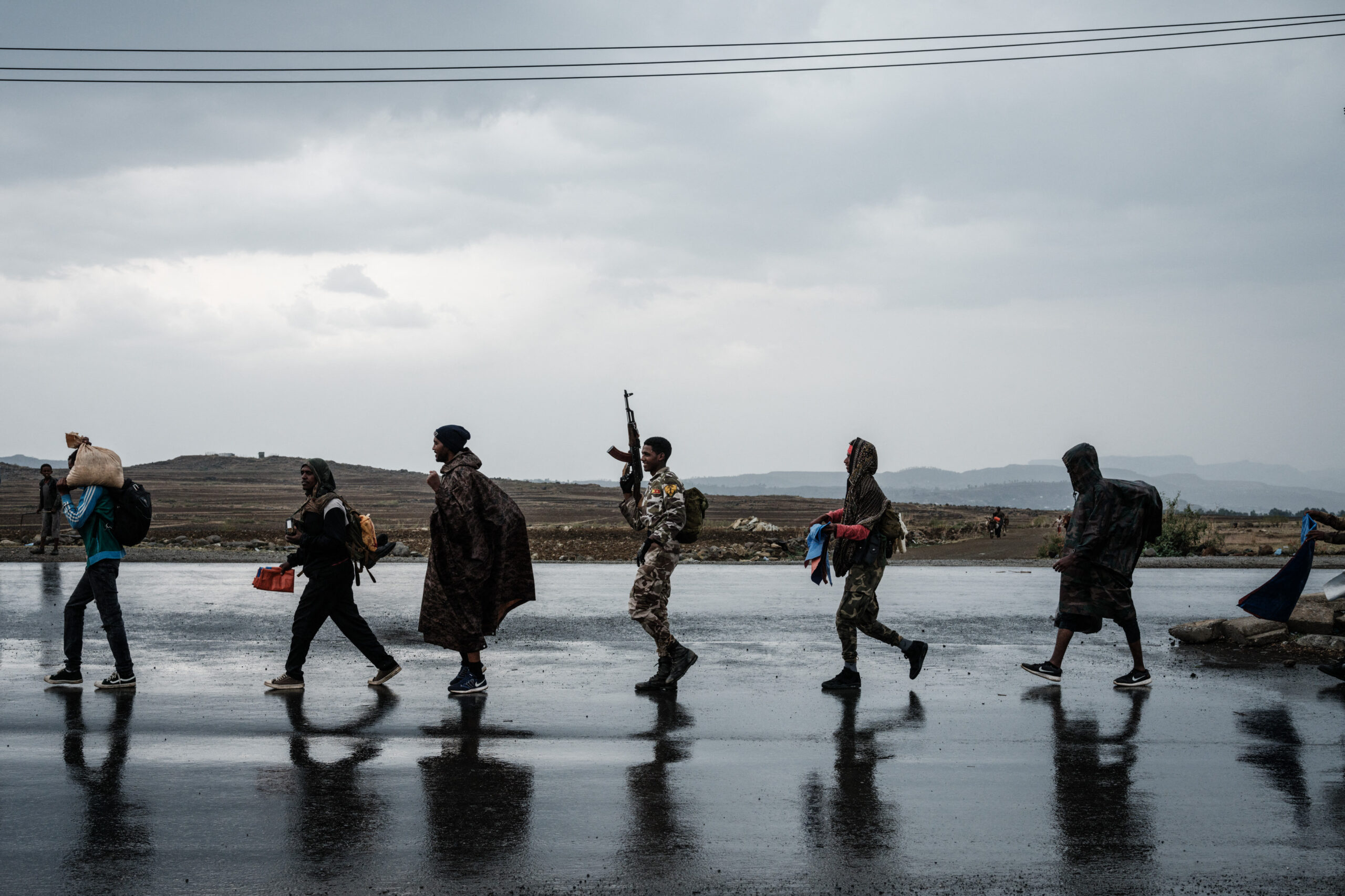
The break came hours after powerful explosions were heard overnight in Addis Ababa, including near military headquarters. It also followed a week of fighting in the north between the army and a new alliance of armed groups, which includes forces from the Tigray People’s Liberation Front, or TPLF, and allies across Tigray, Afar and Amhara.
Ethiopian Army Chief Field Marshal Birhanu Jula has accused Eritrea, Sudan and Egypt of supporting these forces. All three deny involvement. Sudan, in turn, accuses Ethiopia of backing forces hostile to Khartoum, which Addis Ababa denies.
It is a dramatic reversal from 2018, when Ethiopian Prime Minister Abiy Ahmed restored relations with Eritrea after two decades of hostility. The border reopened and separated families were reunited, with the rapprochement helping Abiy to earn the 2019 Nobel Peace Prize.
The latest hostilities are the most serious since the Pretoria agreement ended the Tigray war in 2022, in which an estimated 600,000 people died.
There is so far no evidence of an Eritrean role in the latest fighting, though experts say that it is plausible. In a statement to the BBC before ties were severed, Eritrea’s Information Minister Yemane Gebremeskel denied involvement, accusing Ethiopia’s governing Prosperity Party of blaming neighbors to divert attention from its domestic problems.
The two countries were allies in the 2020-22 war, when Eritrean troops fought alongside federal forces against the TPLF. Relations have since deteriorated, chiefly over Ethiopia’s push for direct access to the Red Sea, which it lost when Eritrea became independent in 1993.
“The 2018 thaw rested on a shared adversary more than a shared agenda,” Lesley Anne Warner, a visiting scholar at the Carnegie Endowment for International Peace and a former US State Department official, told Arab News. “Abiy and Isaias (Afwerki, president of Eritrea) normalized relations while both viewed the TPLF as a threat, and that logic held through the 2020 war, when Eritrean forces fought alongside the federal army.
“It unraveled when Pretoria excluded Eritrea from a settlement it had helped fight for, and Asmara concluded that peace in Tigray left it exposed. Red Sea access then turned a strained partnership into a strategic dispute.”
Abiy has repeatedly called sea access essential to Ethiopia’s long-term economic and security interests. He has not ruled out force, including the seizure of the Eritrean port of Assab.
“The Tigrayan offensive into Afar underscores, for the second time in under a decade, why Abiy treats sea access as existential,” Warner said. “Ethiopia’s trade runs through a single corridor to Djibouti, and that corridor crosses territory that armed actors can contest.”
Abiy has described the loss of Ethiopia’s coastline as a historical “mistake” that will be corrected. Warner said that rhetoric is widely understood in Asmara and elsewhere as aimed at Assab.
“Each time it is threatened, the case for diversifying access gets stronger,” she said, explaining that “that logic is layered on a longer grievance given the country’s’ shared history.”
For Mirette Mabrouk, a senior fellow at the Middle East Institute, access is a major demand for Abiy. “He has said repeatedly they want to have a navy and build up their naval capacity, which is kind of strange for a landlocked country,” she told Arab News.
More than 90 percent of Ethiopia’s imports and exports pass through Djibouti’s ports, at a cost of billions of dollars a year. Hence, Mabrouk said, “Eritreans are worried that (Addis Ababa) is going to try and invade their territory again.”
The Red Sea handles roughly 15 percent of global maritime commerce and nearly 30 percent of container traffic. It is already under strain after the renewal of Yemen’s civil war and the Houthis’ advance around Bab Al-Mandab, the chokepoint between the Arabian Peninsula and the Horn of Africa. That has renewed fears that conflicts on the two shores could converge.
Ethiopia has also escalated with Egypt, declaring at least one Egyptian diplomat persona non grata on Thursday and giving him 48 hours to leave. Addis Ababa accuses Cairo of backing its opponents or obstructing its Red Sea bid, and portrays Egypt as a “strategic spoiler” bent on keeping Ethiopia landlocked, linking the Grand Ethiopian Renaissance Dam — or GERD — dispute directly to Red Sea politics.
Egypt, Sudan and Ethiopia have been locked in a water-diplomacy battle for more than a decade over the Grand Ethiopian Renaissance Dam, a $5 billion project on the Blue Nile whose reservoir is roughly the size of Greater London. Ethiopia sees it as vital to its economic growth and energy sovereignty, while Egypt and Sudan view it as an existential threat to downstream flows and to Egypt’s annual Nile share of 55.5 billion cubic meters.