Add as preferred on Google
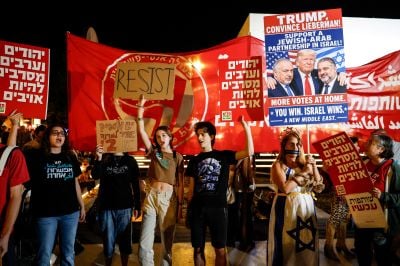
Protesters rally against the government and call on the opposition to form a government with Arab parties following last week’s parliamentary elections in Tel Aviv, Israel, on Oct. 31, 2026. (Credit: Jamal Awad/Reuters)
Add as preferred on Google Time is running out. As Israeli President Isaac Herzog begins official consultations with party leaders Wednesday, Nov. 4, to designate a member of parliament to form the government, Gadi Eisenkot faces a delicate balancing act. Neither he nor Benjamin Netanyahu has secured a majority. The former chief of staff can, however, hope to become prime minister by adding the Arab parties’ 19 seats to the 48 won by his “change bloc.” Such a coalition would total 67 seats, including the two Arab groups — the conservative Ra’am party, led by Mansour Abbas, and the Joint List. Delve deeper The impossible alliance? Arab parties confront Israeli opposition’s red lines A shift dictated by arithmeticOn Monday, the main opposition leaders announced that they intended to nominate the former chief of staff to form the next government.... You have reached your article limitStay informed about a Middle East in crisis.Subscribe for $0.5/month for the first 3 months. Subscribe now Log in This article is only available to L’Orient Today subscribers. Subscribe now Log in Create a free account to continue reading this article. You’ll also receive The Morning Brief, our must-read daily digest of Middle East news. Opt out anytime Email Address Password Email Address Password I would like to receive special offers from L'Orient Today as well as selections of the best articles. Register By creating an account, you agree to the terms and conditions of use and our privacy policy. Register Or register with: Facebook
Already have an account? Login here