Two years after the assassination of Hassan Nasrallah, the party’s remaining military capabilities are only part of the story. The deeper challenge lies in the mounting crises facing its own people after the wars of support for Gaza and Iran.
It has often been shown that the estimates, information and assessments of Hezbollah’s adversaries regarding the true extent of its strength after the devastating Israeli strikes it suffered as a result of the two wars of support it launched in the name of Gaza and Iran have not fully matched the reality of its remaining capabilities. This margin of discrepancy still exists, widening or narrowing according to developments on the ground and in the military sphere, and according to assessments of the party’s capabilities based on the precedents of its wars with Israel. But this is not the case when it comes to other fundamental criteria, such as the reality of its relationship with what has come to be called the party’s “environment” or, more accurately, its “people,” a term that more directly captures the sentiments of its supporters, members and sympathizers within its orbit.
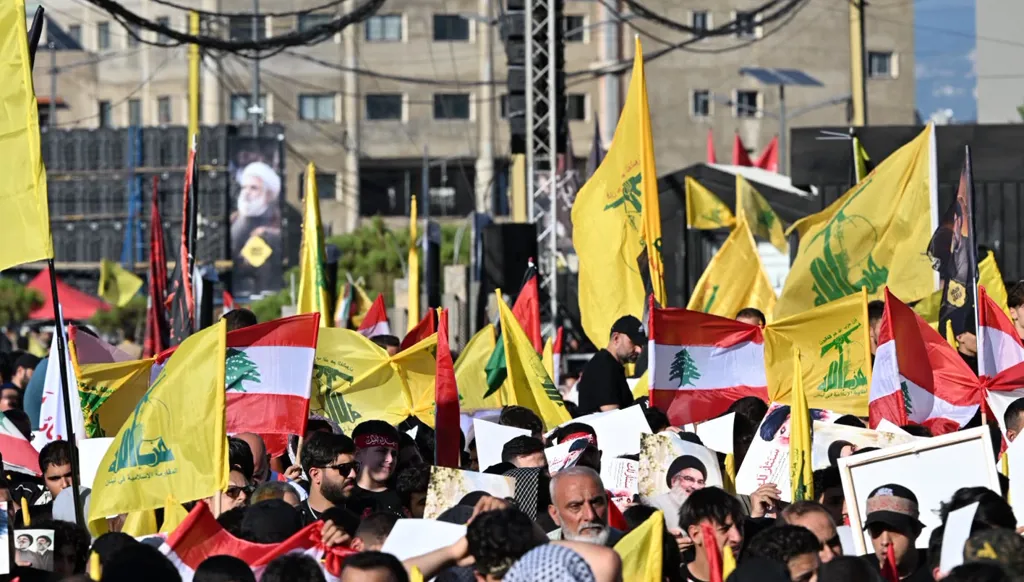
This particular aspect is the key factor that must now be addressed, before considerations relating to the party’s size, combat capabilities, remaining arsenal and other structural aspects. Hezbollah was founded on the doctrine and reality of its ties to Iran, to the point that this affiliation became its primary identity, rather than its identity as a Lebanese faction. Two years after the catastrophic shock that shook the party to its foundations and sent it reeling with Israel’s assassination of its historic leader, Sayyed Hassan Nasrallah, its repercussions cannot be reduced to the image the party sought to make the sole focus of the scene: thousands gathering, clinging to and venerating its symbols as an implicit display of strength intended to show that the party remains powerful. None of this can any longer conceal realities too grave to be hidden behind a mass gathering, no matter how adept the party may still be at mobilizing people.
As the party commemorated its two former secretaries-general, particularly through the symbolism of venerating Sayyed Nasrallah, it seemed impossible to conceal its worst crisis: the way it has dealt with the crises of its own people, first and foremost and before any additional challenge it may face, whether militarily with Israel or internally with the authorities and Lebanon’s political, social and sectarian forces. The crises that have accumulated among Hezbollah’s people following the two wars of support are no longer the kind that totalitarian parties built on all-encompassing ideologies, parties with coercive tendencies within their societies, or extremist religious movements that conceal their one-sided domination behind a religious façade can simply cover up. They reflect an escalating internal catastrophe brought about by suffering that cannot be endured for much longer. On the anniversary of its leader, Hezbollah is recording what would be an unprecedented toll in human losses: more than 10,000 fighters and military field cadres killed in the two wars, amounting to the near-decimation of its professional cadres, along with tens of thousands of wounded. Its leadership structure has also been shaken by an unprecedented structural earthquake, prompting the leadership of Iran’s Islamic Revolutionary Guard Corps, the party’s direct leadership, to become directly and fully involved, on an unprecedented scale, in leading the party on the ground in Lebanon and the south.
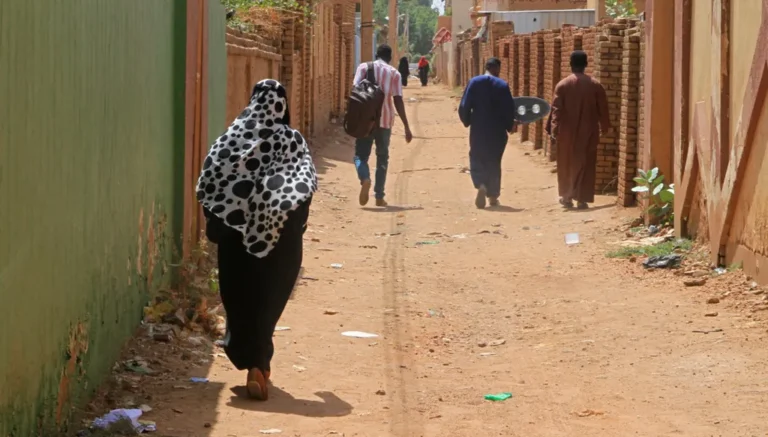
And while the repercussions within the party of the devastating, crushing strikes that preceded and followed Nasrallah’s assassination are difficult to quantify, their “counterparts” can be readily seen in the worst and most serious consequences suffered by the south and its people during the escalating Israeli war on southern territory. This came in the form of a devastating occupation the south had never witnessed in all its previous experiences of Israeli occupation, either in terms of the brutality of the destruction inflicted on the south or on Lebanon. The numbers of displaced southerners who can no longer even identify the places where their homes once stood are frightening. So too are the numbers of those now scattered amid the misery of deprivation and displacement, having lost hope of returning home, as well as those grappling with the unspoken question of what the wars of support for others have brought upon them in terms of devastating calamities. Who, then, will conceal the party’s crisis among its own people? And will the “weapons” it has left, along with blaming the state and accusing everyone else of treason, be enough?
Disclaimer: The opinions expressed by the writers are their own and do not necessarily represent the views of Annahar
Thank you for subscribing to our newsletter