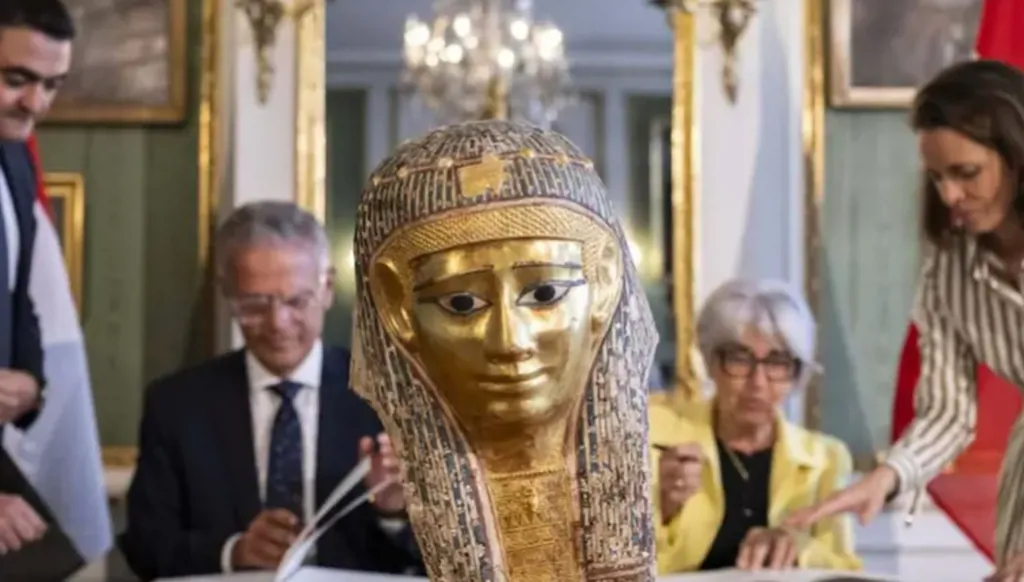
Arab antiquities embody the memory of peoples and serve as the primary witnesses to their historical identity and their inherent right to shape their own past. They go beyond the superficial view of them as mere silent stones that preserve heritage. Yet thousands of Arab antiquities have found their way into museums and private collections outside their countries of origin as a result of colonialism, illicit excavations, and illegal trafficking, and sometimes through sales prompted by complex political and economic circumstances. This raises a fundamental question: Who owns the past? Is legal ownership enough to justify keeping an artifact abroad, or does historical justice have a different say?
From a legal standpoint, not all antiquities held abroad are subject to the same rules. A distinction must be made between an artifact that legitimately left its country of origin in the past, one looted during an occupation, and another smuggled during wartime or sold on the basis of forged documents. Therefore, proving that an artifact is of Arab origin is not enough to claim its return. Its provenance, the circumstances under which it left the country, the applicable law, and the availability of evidence establishing ownership by the state or the affected party must also be determined.
The 1970 UNESCO Convention is one of the most important international instruments for prohibiting the illicit import and export of cultural property. The 1995 UNIDROIT Convention on Stolen or Illegally Exported Cultural Objects also provides a mechanism for seeking the return of cultural property that has been stolen or illegally exported, subject to its conditions. However, these two conventions do not automatically resolve all disputes, as their application depends on when an artifact left its country of origin, the obligations of the states concerned, and the non-retroactive nature of certain provisions.
The 1954 Hague Convention also establishes protections for cultural property during armed conflict, while the Fourth Geneva Convention of 1949 prohibits pillage in occupied territories. In practice, restitution may be pursued through the courts, diplomatic negotiations, or settlements with museums and the institutions or individuals holding the artifacts. In this context, old excavation records, photographs of artifacts, and expert testimony are particularly important, alongside export documents and proof of the transfer of ownership, legally known as the chain of custody.
Experiences in Lebanon, Syria, Egypt, and Jordan show that the restitution of antiquities is not merely a political slogan, but a legal and diplomatic process requiring documentation, funding, and international cooperation.
In Lebanon, the Ministry of Culture announced in 2024 the recovery of an ancient head depicting the Phoenician god Eshmun after it appeared at an auction in Munich, Germany. The artifact was listed in the records of the Directorate General of Antiquities and was found to have been stolen from the site of Byblos in 1981. Inventory records, diplomatic contacts, and cooperation with German police helped secure its return, highlighting the central role of documentation in establishing ownership and supporting restitution claims.
Lebanon relies on the 1933 Antiquities Law, as amended, Law No. 37 of 2008 on cultural property, and international agreements to combat smuggling. The unauthorized export of antiquities is subject to legal prosecution, with penalties potentially including imprisonment for up to three years, fines, and confiscation of the artifacts, depending on the nature of the offense and the applicable legal provision.
In Syria, archaeological sites, including Palmyra, have been subjected to looting, destruction, and smuggling throughout the years of conflict, while the authorities continue to pursue the recovery of cultural property. In 2026, Syrian authorities announced the recovery of 22 antiquities that had been on loan to the Arab World Institute in Paris since 2010 and could not be returned following the severing of relations between the two countries. The collection included artifacts associated with the museums of Damascus, Aleppo, and Palmyra.
This case highlights the legal and diplomatic complexities that can accompany the restitution of antiquities, even when they originally left their country under a legitimate loan agreement. Loan agreements and official documentation are therefore essential in determining the obligations governing their return.
In a related development, Egyptian authorities announced in 2025 the recovery of 25 antiquities from the United States following three years of efforts that included coordination with the New York District Attorney's Office. Egypt also announced the recovery of another 36 artifacts from the United States, including Coptic and Syriac manuscripts and a stone inscription dating back to the Eighteenth Dynasty of the pharaohs.
These cases underscore the importance of tracing the provenance of antiquities and investigating the circumstances under which they changed hands, as well as activating international judicial cooperation mechanisms. Such efforts go beyond political claims and rely on legal procedures supported by evidence.
In Jordan, the Department of Antiquities announced the recovery of a collection of artifacts from the United States that had belonged to a doctor who lived in Jordan during the 1960s. The collection included pottery vessels, jars, glass bottles, bracelets, and beads. Cooperation between the collector's family and the Jordanian authorities helped secure the artifacts' return, providing an example of how restitution can be achieved through voluntary cooperation, even when the items had been in private possession since before stricter heritage protection laws were enacted.
The issue, however, does not end once an artifact crosses the border back into its country of origin. There are costs associated with legal expertise, archaeological analyses, and ownership documentation, in addition to shipping and insurance, followed by restoration and secure storage. The state receiving the artifacts back bears a significant share of these expenses, while the holding country or international institutions may contribute funding and technical assistance, depending on the circumstances of each case.
Ultimately, the restitution of Arab antiquities is a legitimate cultural and legal right when the grounds for the claim can be established. It is also a long-term financial and administrative responsibility. The real challenge lies not only in returning an artifact to its homeland, but also in restoring its story to its people and ensuring that it is never looted again.