From Hassan Saeed Al-Karmi’s linguistic warning to today’s political discourse, inaccurate terms can distort reality and confuse the public.
In August 1979, the “World of Knowledge” series published a book titled Straight Thinking and Crooked Thinking. In this book, there is a note from its translator, the great linguist Hassan Saeed Al-Karmi, known to millions through his famous BBC Arabic radio program, “Qawl Ala Qawl.” He possessed a refined linguistic sense and was highly proficient in Arabic.
His words in the introduction caught my attention. He said that the Arabic language, with all its richness, eloquence, and breadth, suffers from a relative lack of control over several modern terms that originated in different cultural environments, causing the recipient to become confused when trying to understand the text.
I did not understand his words at the time as a slight against Arabic, nor do I see them that way today. All languages are affected by scientific, political, and intellectual shifts. Some languages create terms to interpret certain meanings, and these terms are then transferred into other languages, leaving the translator struggling to find the closest equivalent and, in the process, sometimes losing the precise meaning for the recipient.
I recall this observation whenever I follow political discussions in the media about our general issues, particularly political ones. The problem often lies not in the lack of words, but in the precise use of terms, so that a word becomes a cover that conceals the truth rather than revealing it. Differences may also arise among users because they have not agreed on the meaning of a particular term.
Therefore, a “clarifying note” is often used to specify the intended meaning, except in writing or speaking in the media, where there is neither the time nor the space for such a “clarifying note,” and terms are consequently used haphazardly.
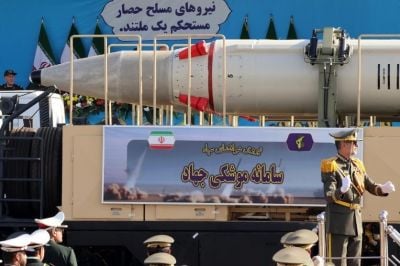
I give examples of what has been occupying my mind lately, especially with the recent escalations and wars in the region, and with some countries suffering attacks by missiles and drones. You listen, for instance, to what a speaker says on screen and hear them make a significant political judgment in a single sentence, only to discover that the term they used does not actually fit reality. Yet the recipient accepts it because it comes from an “expert,” or from someone who is supposed to be one.
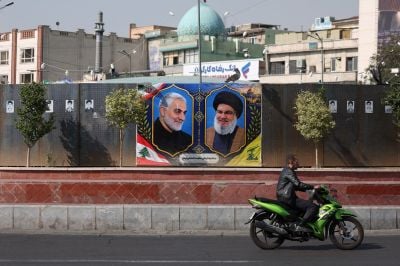
Someone said a few days ago that “the Iranian government is democratically elected.” I paused more at the phrase than at the person who said it. The question is not: Are elections held in Iran? The question is: Is the existence of elections enough to describe the system as democratic?
When dissecting the current Iranian experience, no citizen can nominate themselves as they wish, nor can they reach presidential or parliamentary competition without passing through a stringent oversight system that determines who has the right to run and who does not, even when the person in question is influential, as was the case with the exclusion of Ali Larijani from previous presidential elections. The selection process begins before voting even starts. Can the ballot box alone be sufficient evidence of “democracy,” even relatively, in the commonly understood sense?
The speaker also failed to notice that none of the former presidents are entirely free in their country: all are under “house arrest,” and none are allowed to travel abroad. There are also no legal guarantees in political trials.
The same applies to another discussion we heard recently from some Iraqi brothers, who proudly said that Iraq enjoys a democracy unparalleled elsewhere. Here too, I believe that the problem is not one of intent, but of inaccuracy in the use of the term.
Is democracy merely periodic elections, or is it an integrated system based on the rule of law, judicial independence, accountability, the alternation of power, media freedom, and the protection of public wealth? Most importantly, is everyone allowed to run for office, and is the goal of the system to achieve the interests of the majority of people? If these elements are absent, what value does the ballot box have if it leads to a monopoly of influence, the passage of corruption deals, the weakening of state institutions, the impoverishment of citizens, and involvement in futile wars?
Elections may produce a government, but they do not necessarily produce good governance. The difference between means and ends is significant. Therefore, using the word “democracy” to describe any system that merely holds elections is akin to calling a puddle of water left by rain in the desert “a sea.”
This is not the only issue. In our political and media discourse, there are dozens of terms that we use without scrutiny. We speak of “resistance,” “legitimacy,” “sovereignty,” “state,” and “militia,” as if everyone means the same thing by them, while each of these terms carries different legal, political, historical, and linguistic implications.
When concepts become confused, judgments about realities become confused as well. Speaking, for instance, about “militias” is not the same as speaking about “armed and hired gangs.” Likewise, referring to “Hezbollah” or “Ansar Allah,” titles detached from their substance, can be misleading in terms of meaning.
For this reason, it is not enough for a media professional to have a beautiful voice or a good presence on camera. Media is a responsibility before it is a means of influence. The viewer or reader deserves to receive scrutinized and accurate terms, not to have them turned into repeated slogans until they lose their meaning.