From the United States to Brazil and Israel, a striking political pattern has emerged: accusations of election fraud and questions about electoral fairness when results do not favor those in power. But how have these accusations evolved into a political tool? And what do the experiences of Donald Trump, Flavio Bolsonaro, and Benjamin Netanyahu reveal?
Election campaigns are not limited to competition between candidates and political platforms. They also test the losing side's ability to acknowledge the results and accept the transfer of power. In recent years, several political leaders have questioned the integrity of elections, either before results were announced or after signs pointed to their defeat.
Three notable cases illustrate this trend: Donald Trump's refusal to concede defeat to Joe Biden in 2020, Brazilian candidate Flavio Bolsonaro's questioning of the electronic voting system before his defeat in 2026, and accusations by the Likud party, led by Benjamin Netanyahu, against Arab parties over alleged election manipulation in Israel in 2026.
Despite their different contexts, these cases raise a common question: When does contesting election results shift from a political and legal right to an attempt to undermine confidence in those results?
In November 2020, Trump lost the U.S. presidential election to Democrat Joe Biden. However, he refused to concede defeat and launched a widespread campaign alleging voter fraud and manipulation of the election results.
Widespread accusations: Trump alleged electoral fraud, focusing on key states he had lost by narrow margins.
Legal battle: His team filed lawsuits challenging the results, but courts rejected several challenges, and no evidence was presented of widespread fraud sufficient to overturn the outcome.
Justice Department's stance: Then-U.S. Attorney General William Barr stated that investigations had not uncovered fraud on a scale that could change the election outcome.
Political escalation: Trump continued to question Biden's victory, culminating in the January 6, 2021, storming of the Capitol as Congress was certifying the election results.
The main story: The matter went far beyond Trump's statements. His allegations evolved into a prolonged political and legal campaign, despite the lack of evidence of widespread fraud that could have altered the outcome. The 2020 election became a notable example of how a candidate's refusal to accept defeat could extend beyond the candidate himself and affect public trust in American institutions.
In Brazil, allegations questioning electoral integrity resurfaced in 2026, this time involving Flavio Bolsonaro, the son of former President Jair Bolsonaro and the presidential candidate who lost to President Luiz Inácio Lula da Silva.
The doubts did not emerge only after the results were announced. During his campaign, Flavio had already questioned the electronic voting system, repeating claims previously made by his father.
Before the election: In July 2026, Flavio raised doubts about electronic voting machines during a meeting with foreign diplomats, alleging links between the devices used in Brazil and the Venezuelan company Smartmatic. However, this information was false, according to a fact-check by the Folha de S.Paulo website.
After the loss: Lula won the second round with 51.79% of the valid votes, compared with Flavio's 48.21%, a margin of more than 4.4 million votes.
Controversial message: On October 28, Flavio published a message in which he initially described himself as Brazil's "true elected president," before changing the wording to "leader of Brazil."
Unsubstantiated accusations: Flavio questioned the election's integrity, claiming that extending voting hours had helped Lula gain around 10 million votes. However, electoral court data showed that only about 34,000 votes were recorded after the extension, while the margin between the candidates exceeded 4.4 million votes.
The main story: The controversy went beyond Flavio's refusal to acknowledge defeat. His declaration that he was the "true elected president" in a message that sparked reactions within his own party added another dimension to the dispute. His campaign coordinator, Senator Rogerio Marinho, acknowledged that he had no evidence to support claims of electoral fraud, adding that his party could not make such an allegation without evidence.
These developments echo the rhetoric of his father, Jair Bolsonaro, who also questioned the electronic voting system ahead of the 2022 elections and was subsequently barred from running for eight years by Brazil's Supreme Electoral Court.
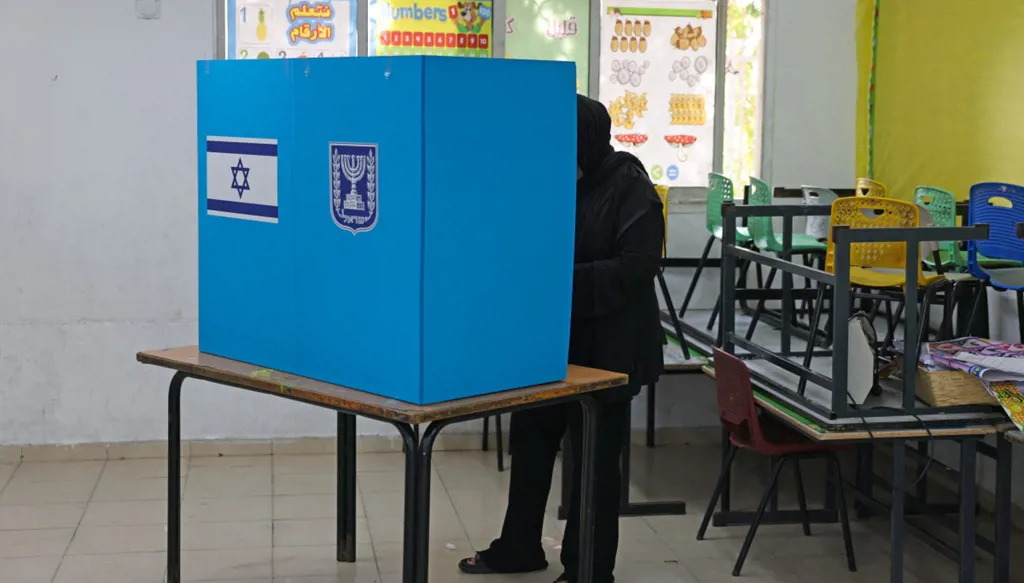
In Israel, accusations of electoral fraud emerged following the gains made by Arab parties in the 2026 Knesset elections, amid increased voter participation in several Arab cities.
Netanyahu's Likud party accused Arab parties of "stealing" the elections, alleging bribery, threats, violence, and vote manipulation, and calling for investigations.
Likud's accusations: The party claimed to possess testimonies and evidence of alleged violations, including bribery, threats, and irregularities at polling stations.
Police stance: Israel Police rejected claims of widespread fraud, stating that they had neither investigative evidence nor intelligence supporting allegations of "election theft."
Arab participation: Turnout increased in several Arab cities. In Umm al-Fahm, participation rose from 38% in 2022 to around 76% in the latest elections.
Government formation calculations: The gains made by Arab parties came as election results and the calculations involved in forming a government became central to the intense competition between political camps.
The main story: In this case, fraud allegations were linked to increased Arab voter participation and the political balances that could emerge from it. However, higher turnout or gains by Arab parties do not, in themselves, constitute evidence of fraud. Likewise, a party's claim that it possesses testimonies does not establish that their contents are proven before the relevant authorities.
The significance of this case lies in the distinction between investigating specific violations, which is a legitimate procedure, and making broad accusations that an election was stolen without sufficient supporting evidence.
Despite the differences between the United States, Brazil, and Israel, several common features emerge in the political discourse surrounding these cases.
First: Questioning the legitimacy of the results. In all three cases, objections sometimes went beyond challenging specific violations to questioning the broader integrity and reliability of the electoral process.
Second: Making allegations before proving them. Fraud claims circulated in contexts where widespread manipulation capable of changing the outcome had not been proven. However, it remains important to distinguish between unsubstantiated allegations and specific violations that investigations may uncover.
Third: Targeting trust in institutions. When leaders repeatedly make accusations against voting systems or election supervisors without sufficient evidence, electoral and judicial institutions themselves become part of the political confrontation.
Fourth: Using accusations in the struggle for power. In the United States and Brazil, doubts emerged in the context of rejecting results that favored political opponents. In Israel, meanwhile, the accusations coincided with gains by Arab parties and the complexity of government formation calculations.
The experiences of Trump, Bolsonaro, and Netanyahu show how debates over electoral integrity can evolve into disputes over the legitimacy of institutions, rather than remaining confined to disagreements over vote counts.
However, comparing these cases does not mean they are identical, nor does every electoral objection necessarily constitute an attempt to undermine democracy. Any assessment depends on the nature of the allegations, the available evidence, and the way institutions handle them.
The fundamental standard is not whether a candidate questions an election outcome, but whether they present verifiable evidence, respect legal procedures, and accept the decisions of the competent institutions. Without these conditions, accusations of fraud can shift from a means of protecting electoral integrity into a tool for undermining public trust in it.