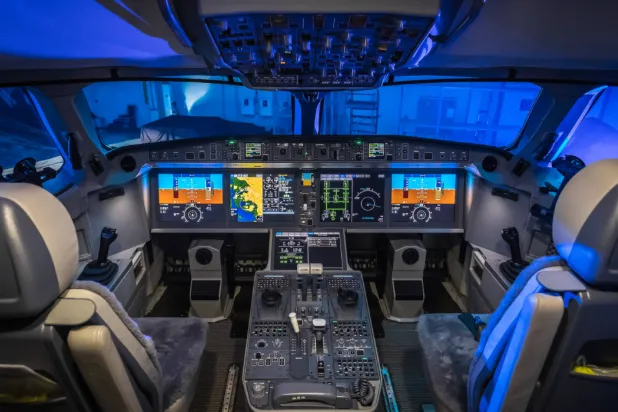
In aviation, flights operate according to carefully defined scenarios, but behind the apparent calm of the cockpit lies a coded digital language capable of changing the situation in the skies within seconds. The recent incident involving a Flydubai flight, during which the emergency codes 7700 and then 7500 were activated, has again drawn attention to the strict and largely unseen protocols used by air traffic control centers to manage complex emergencies. Between the emergency signal for a technical failure and the dramatic shift to the code indicating unlawful interference, how do the "shadow soldiers" on the ground manage a crisis involving an aircraft suspended between the sky and the ground until its wheels reach the safety of the runway? The Silent Code and the Geography of Risk in Air Traffic Control Centers Air traffic control centers monitor air traffic through continuous radio signals transmitted by the aircraft's transponder. When a cockpit crew faces a serious predicament, words can become a burden, and pressing buttons on the aircraft's equipment becomes the fastest means of signaling for help. These distress signals appear on ground radar screens as flashing signals with distinctive colors that immediately draw the controller's attention. Internationally, they are known as "squawk codes," as designated by the International Civil Aviation Organization (ICAO). Code 7700 represents the first technical and operational line of defense. It signals a major general emergency, which may range from critically low fuel or engine failure to serious medical emergencies, requiring an immediate response to secure a landing route. But the danger takes on a different dimension when the code changes to 7500, the code for unlawful interference and hijacking. This alarming signal tells ground operations that the cockpit may have fallen under the control of an outside party, or that the safety of the aircraft and its passengers is under an imminent threat involving weapons or intimidation. An image showing the layout of aircraft cockpits (Wikipedia) The Mystery of Radio Silence and Decoding Code 7600 Between these two dangers is the other well-known code, 7600, which is used to indicate a complete failure of the aircraft's radio communications systems. This code presents a unique challenge. The aircraft becomes "deaf and mute" in the sky, unable to receive instructions from the ground or transmit reports, while remaining visible on radar screens. Air traffic control handles code 7600 based on a clear assumption: controllers assume the pilot will follow the original flight plan precisely and begin clearing the airspace ahead of the aircraft based on its expected route. The greatest danger lies in the overlap between these codes. Code 7600 may result from an innocent electrical failure, but in other scenarios it could be a deliberate maneuver by hijackers who have disconnected communications equipment to isolate the aircraft. This puts air traffic control centers on maximum alert as they work to resolve the ambiguity and determine that it has not developed into a 7500 situation. Airspace Surgery and Securing Clear Routes Once air traffic controllers detect the technical emergency code 7700, they begin what amounts to precise surgery in the surrounding airspace. Controllers immediately stop managing normal commercial traffic flow and focus their full attention on securing a route for the aircraft in distress. All nearby aircraft receive decisive instructions to change altitude and move away from the affected aircraft's flight path, leaving the surrounding airspace completely clear and protected against any potential collision. Ground authorities give the aircraft in distress absolute priority over all other flights and completely exempt it from the standard speeds and altitudes normally used in air navigation. Within minutes, control towers coordinate with ground authorities at the destination airport, positioning firefighting and rescue vehicles along the runway in preparation for a landing that may require urgent mechanical intervention. Concealment Protocol and Management of Security Intervention The situation inside operations centers changes completely if the alert becomes the hijacking code 7500. At that point, the crisis ceases to be a general aviation event and becomes a national security matter subject to the sovereign laws of the countries involved. Strict international instructions require air traffic controllers to follow a protocol of radio silence and concealment. They are completely prohibited from using language over open radio frequencies that could indicate a hijacking or the presence of a security threat, in order to avoid provoking the perpetrators inside the cabin if they are listening to air traffic communications. In such circumstances, the controller resorts to routine, coded messages, asking the pilot to reconfirm the aircraft's squawk code as a verification measure. If the pilot re-enters or confirms code 7500, or is unable to respond while the signal continues, the highest-level security plans are activated, and responsibility for managing the crisis immediately shifts from civilian authorities to air defense and armed forces leadership. The Military Response and the Possibility of Extreme Measures Fighter jets are deployed under what is known as an immediate scramble as soon as the 7500 security code is confirmed, to intercept and surround the civilian aircraft in the air. Military pilots maintain carefully calculated safety distances that allow them to observe the cockpit visually, assess the situation inside, and verify the identity of those flying the aircraft amid the imposed radio silence or a communications failure indicated by code 7600. This military escort is an extremely sensitive precautionary and sovereign measure intended to prevent the aircraft from approaching vital facilities or densely populated major cities. Countries also take into account extreme scenarios. When conclusive evidence indicates that an aircraft has been turned into a flying bomb directed at destroying a strategic facility, a military shoot-down remains a last and painful option available to senior leaders to protect national security. The Isolated Parking Area and the Transfer of Authority on the Ground An aircraft facing a security threat indicated by code 7500 does not take the usual routes toward the airport's main gates. Instead, air traffic control directs it through completely isolated routes toward a remote area within the airport known as the isolated parking area. This area is located at the far edges of the airfield, away from passenger terminals, critical infrastructure, and major fuel storage facilities, in order to minimize losses in the event of an explosion or act of sabotage. Once the aircraft's wheels touch down on this isolated section of the airfield and it comes to a complete stop, the legal and operational authority of air traffic controllers ends. The control tower closes its operational file, and law enforcement forces, counterterrorism units, and security negotiation teams take over on the ground. They begin dealing directly with the hijackers under tactical plans designed to save lives and take control of the cabin. The Sequence of Codes: Between the Reality of the Threat and Human Error The sequence and overlap of emergency codes during a single flight raises a state of heightened alert and deep analysis among aviation experts and investigators. Under aviation conventions, this sequence has two possible explanations. The first points to a genuine escalation of the incident, in which the situation begins with a mechanical or technical failure indicated by code 7700 or a communications failure indicated by code 7600. A party then exploits the resulting chaos or sudden descent to seize control of the cockpit, forcing the crew to escalate the alert to code 7500. The second explanation involves a technical human error under extreme pressure. Because the numbers on the control panel are close to one another, a pilot under intense fear and nervous stress could enter the hijacking code instead of the general emergency or communications failure code. Despite the possibility of error, air traffic control protocols and aviation authorities worldwide require the sequence to be treated as a genuine security threat, and the military and security alert is not lifted until the aircraft has landed, been fully searched, and the safety of its passengers and crew has been confirmed.