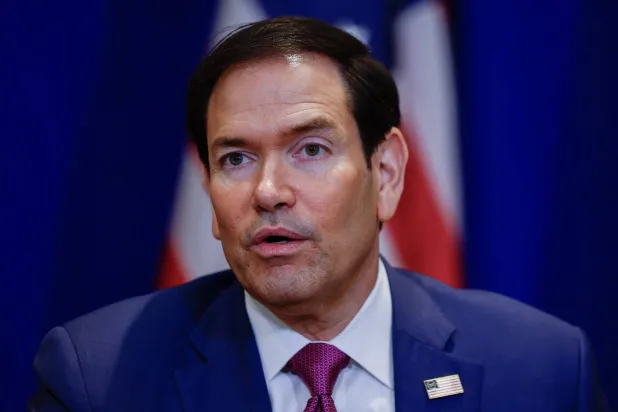
US Secretary of State Marco Rubio on Monday stressed the need for investment in the Arctic while meeting with his counterparts from seven countries in the region, on the eve of signing a security agreement on Greenland. "Allies agreed that Arctic security requires continued investment to safeguard this vital region and deter strategic competitors," State Department spokesman Tommy Piggott said in a readout of the meeting. "Discussions focused on taking greater responsibility for Arctic security by developing sovereign military and economic capabilities, ensuring investment security, and funding resilient critical infrastructure that ensures reliable access and supports our shared leadership in the Arctic." The meeting convened top diplomats from Canada, Denmark, Finland, Iceland, Norway, Sweden, the Faroe Islands and Greenland, at a New York hotel on the sidelines of the United Nations General Assembly. Greenland, Denmark and the United States are due to sign an agreement regarding the Arctic at the UN on Tuesday, the office of Danish Prime Minister Mette Frederiksen said Monday evening. The agreement was announced Friday by US President Donald Trump, and has not yet been made publicly available. But Frederiksen said it recognizes the sovereignty and territorial integrity of Denmark, and the right of self-determination for Greenland's people. Washington said the agreement paves the way to strengthen US military presence in Greenland while ensuring that China and Russia will not be able to establish bases or carry out sensitive investments there without consent. Monday's discussions also touched on cooperation to develop a fleet of icebreakers between the US, Canada and Finland. In October, the United States announced the purchase of 11 icebreakers from Finland for the US Coast Guard to add to its fleet of three aging ships. European Union foreign policy chief Kaja Kallas said recently that Europe needs icebreakers to strengthen its presence in the Arctic, as global warming draws the interest of major powers to the region. Vast natural resources are becoming increasingly accessible in the Arctic as ice melts and new maritime routes open up due to climate change. China, Russia and the United States are reinforcing their presence in the strategic Arctic as a result.