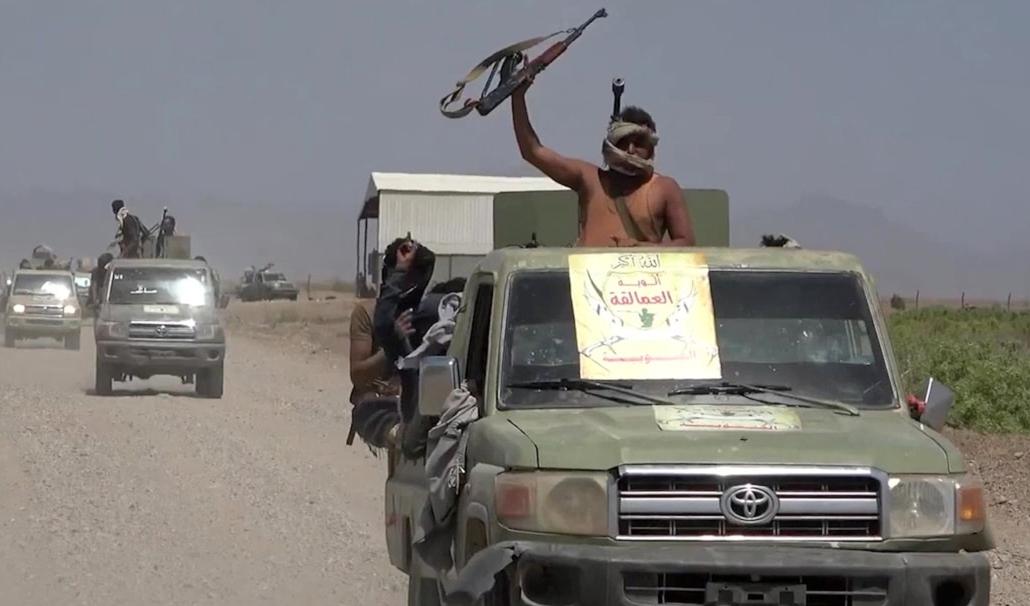
The US and Israel are keen to remain out of the spotlight in Saudi Arabia’s renewed war on Yemen, but they are both involved and closely watching its outcome. Their reluctance to acknowledge this involvement stems from two factors. First, the forces they support could lose, and neither Washington nor Tel Aviv wants to bear responsibility for another defeat after their own direct military campaigns against Yemen failed in previous years. Second, openly declaring their participation would undermine the war itself by exposing its real objectives and weakening the narrative advanced by the parties and factions involved. This war is part of the broader confrontation between the US and its allies on one side, and Iran and its allies on the other. It may be the only remaining outlet for the former to extricate themselves from a conflict whose military and political prospects appear deadlocked. Yet the coalition fighting in Yemen bears little difference from those assembled for previous wars. If repeated direct air campaigns against Sanaa, involving US strategic bombers, Israeli fighter jets and US aircraft carriers, failed to achieve their objectives, what can a Saudi-led air campaign accomplish? Riyadh itself failed to win the eight-year war it led against Yemen, despite having faced better political prospects then than it does today. Even Turkish and Pakistani participation under the Mecca Pact appears unlikely to offer Saudi Arabia much help. The main battlefield is Yemen, not Saudi territory. Ansar Allah’s missile and drone attacks on Saudi oil facilities, military bases, airports and ships are direct responses to Saudi bombardment and its blockade. There is no Yemeni aggression against Saudi Arabia that would justify invoking the pact, which treats an attack on any member as an attack on the other two. Turkish and Pakistani involvement will most likely be limited to defending Saudi territory rather than joining attacks on Yemen. Riyadh’s latest war is unlikely to achieve its objectives. However, if Ankara and Islamabad do participate in offensive operations, their ships, interests and potentially their own territory could come under attack. Such involvement would also be politically sensitive. Türkiye faces strong domestic opposition to becoming embroiled in Yemen, while Pakistan is unlikely to welcome another entanglement. In 2015, its parliament unanimously rejected sending Pakistani troops to Yemen as part of the Saudi-led coalition. Further questions remain about how Iran and its allies would respond to full Turkish and Pakistani participation. The coalition also faces a structural problem. Its local allies are fragmented, and some fight one another more fiercely than they fight Ansar Allah. These groups have also proved vulnerable to infiltration, an arena in which Sanaa has demonstrated considerable skill. Ansar Allah has successfully cultivated tribal alliances, carefully balancing competing interests and framing its battles in ways that resonate with communities accustomed to its willingness to make sacrifices. Most, if not all, of the movement’s wars have been fought in self-defense or for causes it considers just, without yielding narrow material gains. This has strengthened its fighters’ morale, credibility and standing among the tribes. The opposing camp, by contrast, consists of competing factions with conflicting loyalties. Many recruit fighters for modest payments in Saudi riyals or Emirati dirhams. Some invoke genuine causes, including southern separatism, but that cause has largely disappeared from the current war after Saudi Arabia’s actions against the Southern Transitional Council in the south and east. The council’s alliance with the UAE was based on their shared support for southern secession. Meanwhile, the Salafi Nation's Shields Forces and the Giants Brigades are little more than mercenary forces operating under a religious guise. The Islah party’s only common ground with Saudi Arabia is its hostility toward the UAE and Sanaa, while it also competes with the Salafists. Such a fragmented coalition cannot defeat a cohesive force like Ansar Allah. The fact that the participating countries are fighting for objectives that serve only the US and Israel further undermines the Saudi campaign’s popular legitimacy. Despite the extensive media campaign preceding and accompanying the renewed Saudi offensive, it took barely a day for its limitations to become apparent. Riyadh’s latest war is unlikely to achieve its objectives. This time, the consequences of failure could extend beyond Saudi Arabia’s standing, which will suffer most, to the broader regional conflict. This is an edited translation for an article published in Arabic.