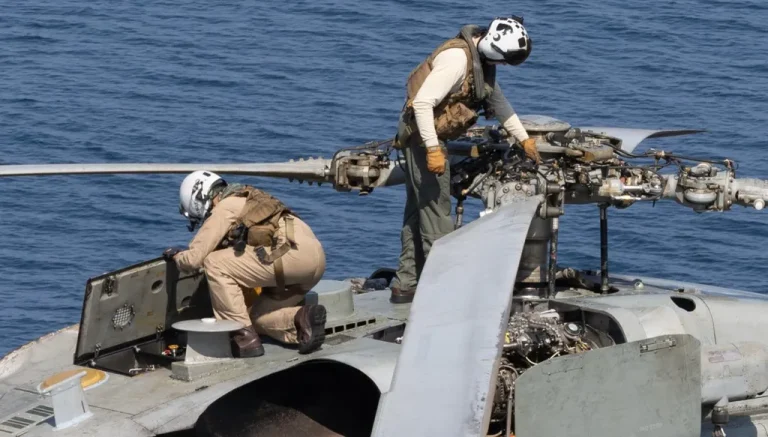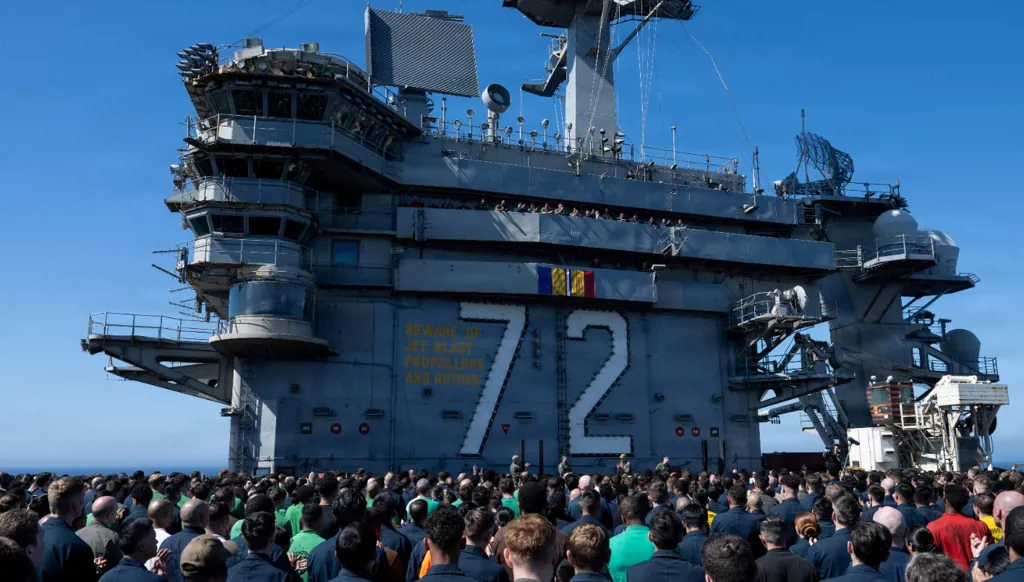
The exchanges of strikes between the United States and Iran have escalated to a level that threatens to spiral out of control and lead to a wider war. On Tuesday, US forces struck a missile launch site on Qeshm Island in the Strait of Hormuz, while Iran responded with attacks on Bahrain for the third time this week. Its response also targeted a US military base in Kuwait for the first time in two months, while an oil tanker was targeted off the coast of the Omani city of Khasab.
There is no exaggeration in describing the situation as a systematic expansion of the scope of attacks by both sides, going beyond the exchange of messages or the management of a conflict that was once believed to be containable, while diplomatic efforts by mediators sought to shape a settlement acceptable to both Washington and Tehran. The current escalation appears to be laying the groundwork for a more dangerous military test, amid a barrage of mutual threats. US President Donald Trump insists that he is taking seriously an intelligence report aired by the US television network CNN, which claimed that Iran had a plan to detonate a "dirty bomb" in Washington, despite Iran's denial.
On the Iranian side, chief negotiator and Parliament Speaker Mohammad Bagher Ghalibaf has warned that Iran would retaliate in kind against any US threat to strike Iranian dams, on the grounds that they contribute to the infrastructure of the Islamic Revolutionary Guard Corps. Iranian Army Commander Amir Hatami also affirmed that his country was prepared to deliver an "even more devastating" response if Iranian territory came under further US attacks.
The current confrontations reflect a political deadlock. Washington will not accept Iran's conditions, while Tehran refuses to meet US demands. Will a major round of fighting be necessary before either side softens its position?
Trump is not opposed to launching a military operation lasting several days, provided it does not deepen US military involvement in an endless war in the Middle East. But once a war begins, it is difficult to predict how it will end. Trump had previously promised that Operation Epic Fury, which he launched jointly with Israel on February 28, would last no more than four weeks. It is now approaching the end of its ninth month.
Trump wants a swift strike that would allow him to declare victory and withdraw before the new Congress, with its Democratic majority, officially takes office in January. The new Congress will bring trouble for the US president. He therefore wants to deliver a quick blow before closing the Iran file. Last week, he announced that he no longer needed an agreement with Iran.
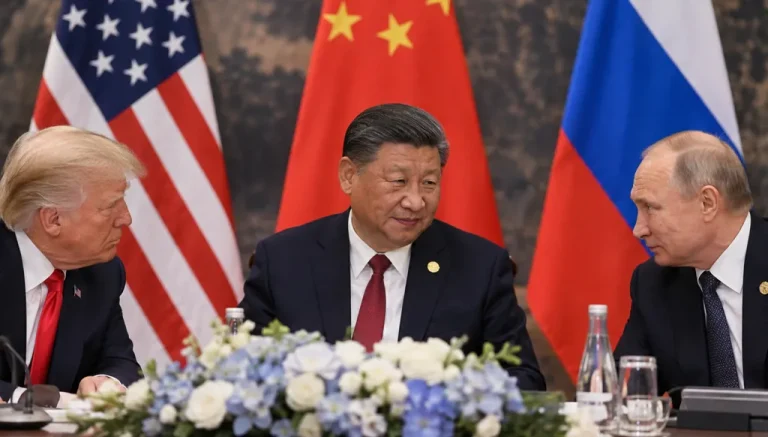
If, following the trilateral summit he is holding today in the Chinese city of Shenzhen with Chinese President Xi Jinping and Russian President Vladimir Putin, Trump concludes that there is no way to persuade Iran to abandon its refusal to put its nuclear programme on the negotiating table before its seven conditions are met, the US president may become more inclined to pursue a military option limited to a matter of days.
Trump cannot accept Iran's seven conditions, as doing so would amount to another political humiliation following the blow he suffered when the Republicans lost control of Congress because of the war. For this reason, ordering a swift strike and closing the Iran file may be the less costly option.
Iran is already threatening to drag the United States into a prolonged war that extends beyond "geographical constraints", in an effort to make Trump think twice before launching a major military operation.
Diplomacy has just a few days to devise a settlement formula that could defuse the looming crisis. The mediators, foremost among them Qatar, Pakistan and the Sultanate of Oman, are aware of the obstacles standing in the way of a possible agreement. For now, Iran continues to give priority to a regional settlement should a solution with the United States prove impossible. This explains Foreign Minister Abbas Araghchi's move from Islamabad to Muscat to meet Sultan Haitham bin Tariq.