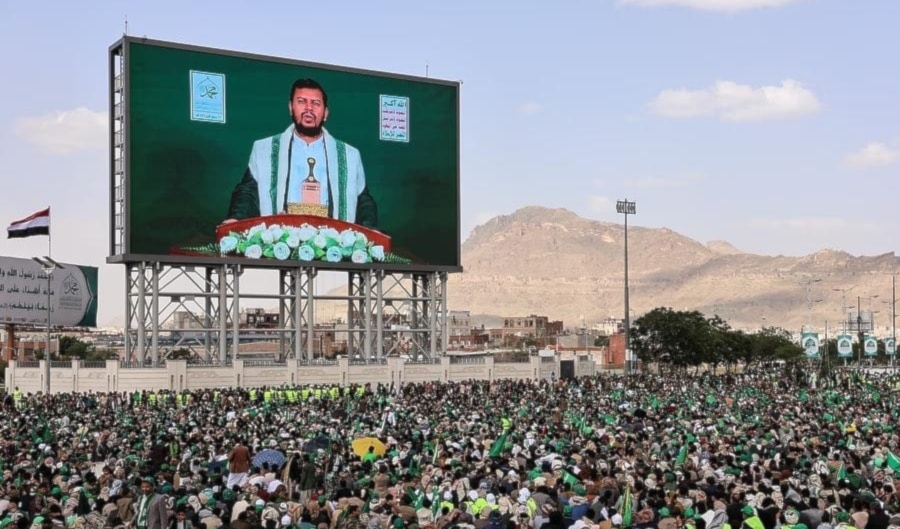
The major gains made by Ansar Allah along Yemen’s western coast, including control of Mokha and strategic sites and islands in the Red Sea, have reshaped regional calculations. The movement has also continued attacks deep inside Saudi Arabia, leaving Riyadh facing a growing security dilemma. Saudi Arabia neither wants nor can confront the threat alone, particularly as Washington remains reluctant to intervene militarily. Israel, meanwhile, appears unwilling to lead the confrontation. According to regional diplomatic sources, it has begun providing Saudi Arabia with intelligence on Ansar Allah through the US. Haaretz reported that the Israeli military advised the political leadership to “avoid launching a preemptive attack on Ansar Allah or placing Israel at the forefront of the confrontation” and instead focus on building an “international and regional coalition.” The newspaper said Ansar Allah’s ability to disrupt maritime trade and navigation meant that a unilateral Israeli strike would not provide a long-term solution. The developments have also alarmed Saudi Arabia and Egypt. Cairo is concerned about their impact on Suez Canal traffic, while Riyadh sees the US response as inadequate. Kan reported, citing a regional diplomat, that Saudi Arabia requested US assistance, which Washington conveyed to Israel. Israel then began providing intelligence on Ansar Allah through the US, viewing the movement as a “broader regional problem.” Walla also reported on Saudi-Israeli talks, mediated by US Central Command, to provide intelligence assistance to Riyadh. For now, the US-Israeli-Saudi effort appears limited to intelligence cooperation and regional security arrangements. Efforts are also underway to expand the cooperation into a broader regional framework. Kan reported that US officials proposed in Cairo a “joint regional security mechanism integrating Israeli expertise.” Axios reported that Israeli military chief Eyal Zamir met last week in Germany with the chiefs of staff of Saudi Arabia, the UAE, Bahrain, Kuwait, Qatar, Jordan and Egypt. The closed-door meeting, organized by US Central Command, discussed the war with Iran and the escalation with Ansar Allah. Riyadh’s need for such cooperation has grown after US President Donald Trump reportedly rejected military intervention against Ansar Allah, according to US and Saudi officials cited by The New York Times. Saudi Arabia also fears that Ansar Allah’s control of Bab Al-Mandab, alongside continued tensions in the Strait of Hormuz, could threaten regional trade. It is also concerned that a US understanding with Iran and Ansar Allah could leave the kingdom facing the threat alone. Israel’s reluctance to lead the military confrontation therefore coincides with Saudi Arabia’s desire to avoid fighting it alone. Washington is serving as the link between the two sides while seeking to expand intelligence cooperation into a wider regional security framework. The emerging Israeli approach appears centered on internationalizing the Ansar Allah issue and tying it to maritime security, global trade and the confrontation with Iran. For now, the US-Israeli-Saudi effort appears limited to intelligence cooperation and regional security arrangements. This is an edited translation for a report published in Arabic.