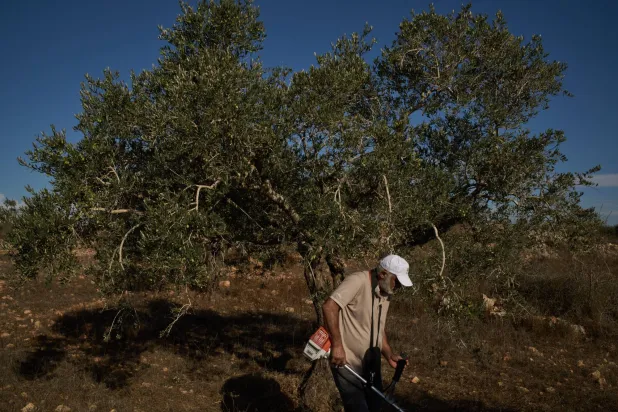
Just three percent of the cropland in Gaza remains accessible and undamaged, the UN's Food and Agriculture Organization warned Tuesday, citing an analysis of satellite images. The report found that since October 2025, when a fragile ceasefire between Israel and Hamas took hold, the area of accessible and undamaged cropland had fallen to 448 hectares from 601 hectares, a reduction of 25.5 percent, said AFP. Another 3,643 hectares of cropland are accessible but too damaged to be farmed without rehabilitation, the FAO said. "Without urgent action to restore safe access and provide farmers with the support they need, opportunities to restore local food production will continue to diminish," said Rein Paulsen, director of the agency's Office of Emergencies and Resilience. Restrictions on the import of agricultural goods are also hampering recovery, with livestock farmers struggling to obtain animal feed and veterinary supplies. Greenhouse availability has also declined, dropping 17.3 percent since October 2025 to 224 hectares that are accessible and undamaged. The FAO said the reduced access could be explained mainly by the westward expansion of the so-called "Yellow Line" that separates the ceasefire zone from the area controlled by the Israeli military. The Palestinian militant group Hamas launched an attack on Israel on October 7, 2023, that resulted in the deaths of 1,221 people, according to an AFP tally based on official Israeli figures. Militants also took 251 hostages to Gaza. Israel's retaliatory military campaign in Gaza has killed more than 73,000 people, according to the territory's health ministry, which operates under Hamas authority and whose figures are considered reliable by the United Nations. A ceasefire took hold in October 2025 but progress on permanently ending the war has stalled, and Israeli forces currently control nearly 70 percent of the territory. Before October 2023 agriculture accounted for about 10 percent of Gaza's economy and supported the livelihoods of more than 560,000 people, according to the FAO.