Add as preferred on Google
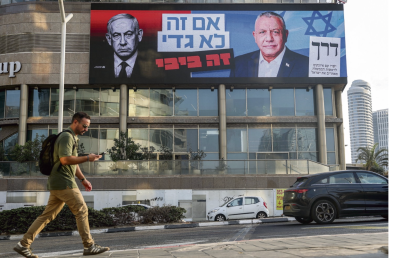
An election poster for the Yashar party, led by Gadi Eisenkot, the main rival of outgoing Israeli Prime Minister Benjamin Netanyahu, in Tel Aviv, on Oct. 25, 2026. (Credit: Jack Guez/AFP)
Add as preferred on Google Gadi Eisenkot appears set to be asked by Israeli President Isaac Herzog on Sunday, Nov. 8, to form a government. But the next steps are likely to be just as complicated. Coalition talks, which must secure the support of at least 61 lawmakers, are still at an early stage and are already proving particularly delicate, with the main leaders of the “change bloc” sharply divided over how to proceed. Two possible paths to a majority are emerging: relying on the Arab parties or seeking to bring the ultra-Orthodox factions on board.Recent remarks by Avigdor Lieberman, leader of the secular right, have stirred controversy. He is firmly opposed to any agreement with either of the two Arab blocs, even one involving their external support. His comments have, in turn, brought the possibility of an alliance with the ultra-Orthodox parties back... You have reached your article limit.Stay informed as events unfold across a region in flux.Subscribe for $0.5/month for the first 3 months. Subscribe now Log in This article is only available to L’Orient Today subscribers. Subscribe now Log in Create a free account to continue reading this article. You’ll also receive The Morning Brief, our must-read daily digest of Middle East news. Opt out anytime Email Address Password Email Address Password I would like to receive special offers from L'Orient Today as well as selections of the best articles. Register By creating an account, you agree to the terms and conditions of use and our privacy policy. Register Or register with: Facebook
Already have an account? Login here