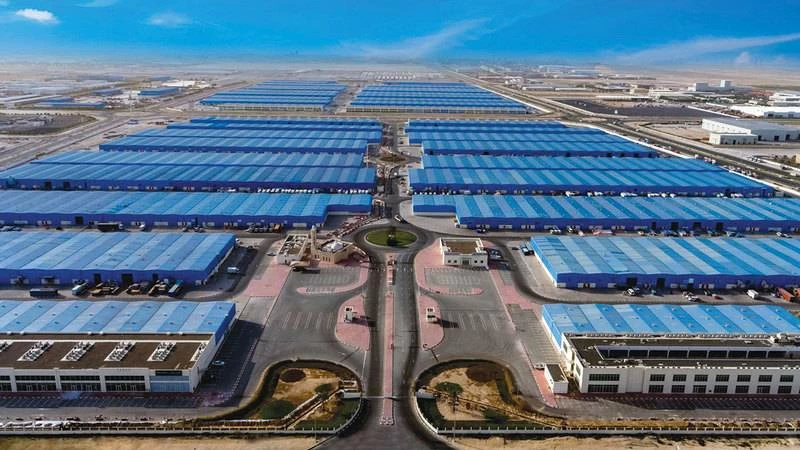
Dubai: Industrial real estate in the UAE recorded strong and sustained demand during the third quarter of 2026, driven by new companies entering the market and the expansion of existing companies.
They pushed occupancy rates in prime industrial areas in Dubai and Abu Dhabi to near-full levels, given the limited supply of high-quality spaces, according to the latest report from JLL, a real estate consultancy and investment firm, on market performance, which revealed a 25.7% year-on-year increase in new leases for industrial properties in Dubai.
The report data showed that the sector maintained its resilience despite regional geopolitical challenges, based on the expansion of global and regional companies operating in the logistics and e-commerce sectors, and their increased investments in operational facilities and supply chains.
According to the report, the rise in new lease contracts for industrial properties in Dubai by 25.7% year-on-year reflects the growing actual demand for industrial spaces, while contract renewals declined during the third quarter by 8.9%, as a result of some tenants moving to new locations or developing their existing facilities, although the number of renewed contracts remained 9.5% higher compared to the same period last year.
Average rents for industrial properties in Dubai reached AED 50 per square foot, an annual increase of 5.9%, driven by a decrease in the supply of modern warehouses and high-quality industrial spaces, amid continued demand for advanced logistics facilities, and expectations that future projects of Class A warehouses will contribute to easing the pressures of limited supply.
Average rents in Abu Dhabi reached AED489 per square meter, achieving an increase of 1.6% year-on-year and 0.6% compared to the previous quarter. The report attributed this more moderate growth to the impact of regulatory restrictions related to rent increases, with exceptions for some properties and new projects. The report also noted the growing investments in logistics infrastructure in the Emirate of Abu Dhabi.
Abhishek Mittal, head of industrial real estate consultancy for the Middle East and Africa at JLL, confirmed that market activity during the third quarter reflects a shift in the nature of demand, with new companies entering the UAE and existing ones moving to better-spec facilities, in addition to redesigning supply chains to enhance their resilience and ability to cope with disruptions.
Mittal said the industrial real estate market has become more developed and interconnected, noting that the multimodal logistics connectivity projects being developed in the region – including the ‘Safe Customs Corridor’ linking Abu Dhabi Ports Group and Etihad Rail – will contribute in the long term to accelerating land transport across the GCC countries and enhancing the UAE’s position as an interconnected regional logistics gateway.