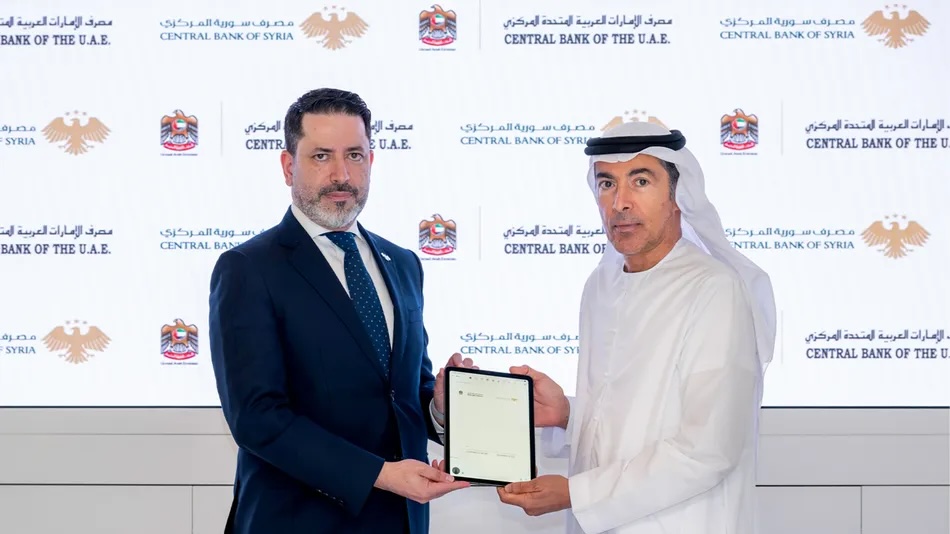
RIYADH: The central banks of the UAE and Syria signed a memorandum of understanding on financial and technical cooperation, as the two countries seek to strengthen banking ties and exchange regulatory expertise.
The agreement was signed by Khaled Mohamed Balama, governor of the Central Bank of the UAE, and Mohammad Safwat Abdel Hamid Raslan, governor of the Central Bank of Syria, according to the Emirates News Agency, or WAM.
The MoU provides a framework for cooperation on institutional capacity building, technical expertise and regulatory frameworks, with the two central banks set to exchange knowledge in areas of mutual interest.
The agreement comes as Syria seeks to expand its banking sector and attract foreign investment. In September, Raslan said foreign capital for establishing new banks was expected to exceed $1 billion, as the country seeks to restore links with international financial networks.
The comments followed growing interest from regional financial institutions, with seven delegations expressing interest in establishing banks in Syria, according to the central bank. The bank has also been working to restore correspondent banking relationships and expand access to regional financial networks.
The UAE-Syria agreement also comes as broader economic ties between the two countries deepen. In May, the first Syrian-Emirati Investment Forum in Damascus brought officials and business leaders together to discuss investment opportunities across sectors including tourism, real estate, agriculture, energy, aviation, logistics, healthcare and technology.
In a press statement, Balama said: “The MoU reflects our shared interest in advancing cooperation in financial and regulatory areas, as part of efforts to support the resilience of the financial system, enhance the efficiency of the financial infrastructure, and keep pace with developments in the financial technology sector.”
He said the cooperation could create broader opportunities for financial institutions in both countries and strengthen the financial sector’s role in supporting economic growth and development.
The MoU covers payment systems, monetary policy, cash management and innovative financial technologies, as well as climate-risk management and sustainable finance.
It also includes cooperation on financial inclusion, financial literacy, credit information systems, reporting and risk-management frameworks.
The central banks will exchange expertise on licensing financial activities and institutions, regulatory enforcement, compliance and consumer protection.
Raslan said the agreement would support deeper cooperation in banking supervision and regulation, payment and transfer systems and the development of banking infrastructure.
“We attach particular importance to the opportunities provided by the Memorandum to advance financial inclusion, build institutional capacity, and strengthen regulatory and supervisory frameworks,” Raslan said.
He said the agreement would provide a foundation for practical cooperation that could improve banking services, support monetary and financial stability and create broader opportunities for banking partnerships between Syria and the UAE.
The agreement marks another step in efforts to strengthen financial and economic links between the two countries as Syria works to develop its banking infrastructure and integrate more closely with regional financial markets.
Stay on top of the issues that matter to you the most.