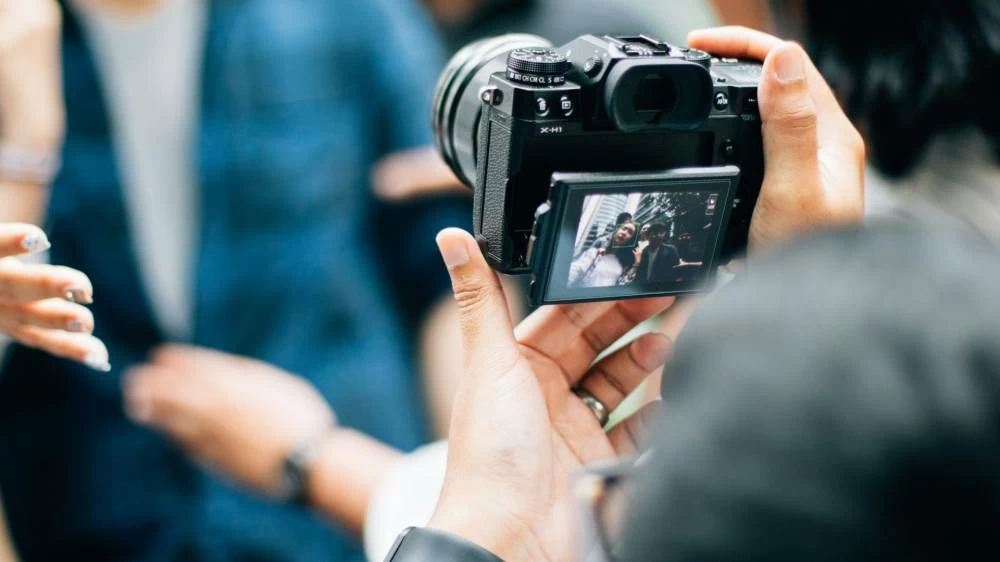
Dubai: The UAE has some of the most Instagram-worthy tourist spots in the world, but what are the rules around photography and videography in public, in the country?Stay informed by learning what UAE’s law permits and prohibits, the fines involved, and how take photos and videos legally.Is photography in public spaces permitted?In general, filming or taking pictures in public places is allowed in the UAE, but it comes with certain caveats.Awatif Al Khouri, senior Emirati advocate and founder of Awatif Mohammad Shoqi Advocates and Legal Consultancy, explained: “Photography and videography in public places may generally be permitted, provided they do not violate another person's privacy or applicable restrictions.”The UAE has robust protections in place for privacy and personal information, so ensuring you have the express consent of individuals who appear in your picture or video, is vital. Similarly, the country also has clear regulations for filming in restricted locations, and taking pictures or videos of security incidents and accidents.What does UAE law say about filming in public?Below, we break down each scenario and the rules that regulate it, as well as any related fines for violators:Taking pictures or videos of people without their consentUnder Federal Decree-Law No. 34 of 2021, also known as UAE’s Cybercrime Law, individuals have a legal right to control their image, even in public. Article (44), which pertains to Revealing Secrets and Invasion of Privacy, highlights the following scenarios as a violation of the law:Taking photos of third parties in any public or private place, without their consent, or preparing, transferring, disclosing, copying or keeping electronic photos.Publishing news, electronic photos, images, scenes, comments, data or information, even if it is true and genuine, with the intention of harming the person.This is why Awatif urged special caution when filming in crowded, public places, as you may accidentally violate someone’s rights by including them in your picture or Reel: “Filming individuals without their consent, particularly in circumstances that infringe their privacy, may constitute a criminal offence under UAE law. Individuals should exercise caution when photographing or filming in public places. Obtaining consent before photographing individuals and avoiding the unauthorised recording or sharing of images and videos may help prevent privacy violations and potential legal consequences under UAE law.”If you have been on the receiving end and feel your privacy has been violated, you are well within your rights to report it to the authorities. Awatif said: “Individuals who believe their privacy has been violated may report the incident to the police or through the relevant police authority's official reporting channels. They should preserve available evidence and avoid confronting the individual or sharing the footage publicly.”Penalty: Violators who breach individuals’ privacy receive a punishment of imprisonment for at least six months, and/or a fine of not less than Dh150,000 or more than Dh500,000.Taking pictures of children at schoolsIt might be tempting to take pictures of your child on his/her school premises, but this action recently came under fire, with private school administrations banning parents from photography in schools over privacy concerns.Aside from the protections against invasion of privacy, offered by Article (44) Federal Decree-Law No. 34 of 2021, children’s images are also protected by Federal Law No. 3 of 2016 concerning Child Rights, commonly known as Wadeema’s Law.Article (5) of Wadeema’s Law states: “The child's privacy shall be respected in accordance with the public order and morals together with taking into account the rights and responsibilities the legal custodian.”It’s important to check the school’s photography policy, particularly during school events, to clarify when you may be able to click pictures or take videos, in order to avoid violating the law.Penalty: Violators who breach children’s privacy receive a punishment of imprisonment for at least six months, and/or a fine of not less than Dh150,000 or more than Dh500,000.Taking pictures of accident sites or security incidentsFilming accidents, crime scenes, and related victims, is considered a serious offence in the UAE, where the country’s Cybercrime Law enforces the same punishment for both taking pictures, and posting or circulating them in social groups.The following aspects should be taken into consideration:Privacy of victims: Filming or taking pictures at accident or crime scenes is considered a serious breach of privacy of the individuals involved. Publishing or circulating images and videos is a violation of the individual’s dignity, and may be a source of emotional distress for their families.Interference with investigations: In March 2026, the Dubai Police warned that sharing rumours, false information, and any content that contradicts official announcements or that may cause public panic or threaten public safety, order, or health is prohibited. Circulating unauthorised photographs, and sharing sensitive videos of security incidents on social platforms during ongoing investigations, can unintentionally reveal critical details, put civilians and emergency responders at risk, and interfere with law enforcement operations, and so, must be strictly avoided.Public order: During the recent regional tensions, the National Media Authority urged the public to avoid filming security incident sites or sharing unverified information on social media. Such posts can provoke public concern and contribute to spreading rumours, which is a violation that carries hefty penalties under Article (52) of UAE’s Cybercrime Law. The Dubai Police also shared public awareness messages, urging residents to act responsibly, stating on the X platform: “Photographing or sharing security or critical sites, or reposting unreliable information may result in legal actions and compromise national security and stability.”Penalty: Violators who use photography and videography to spread rumours and false news receive a punishment of imprisonment for at least one year, and a fine of not less than Dh100,000.Taking pictures in restricted locationsWhile the UAE is generally tolerant of photography and videography in public areas, certain locations are off-limits for security reasons. In most cases, official approval and special clearance is required for photography.Article (175)2 of Federal Decree-Law No. 31 of 2021 Promulgating the Crimes and Penlaties Law provides the framework for this legislation, and states: “Anyone who photographs or makes drawings or maps or coordinates of sites or places contrary to the prohibition issued by the competent authorities” is in violation of the law.Such locations include:Airports: According to Dubai Airports’ website, all filming and photography at Dubai International (DXB) and Dubai World Central – Al Maktoum International (DWC) need a series of written approvals and permits and/or airport security passes depending on their location. Filming in certain high-security areas, like checkpoints, immigration counters and customs areas, are strictly prohibited.Government buildings, foreign diplomatic missions, and military bases: Such as court buildings, public prosecution offices, embassies, ministries, and military or defence sites.Presidential palaces and royal residencesPolice stations and secure facilitiesPenalty: Violators receive a punishment of imprisonment for a period of not less than six months and not exceeding five years, and/or a fine of not less than Dh100,000.