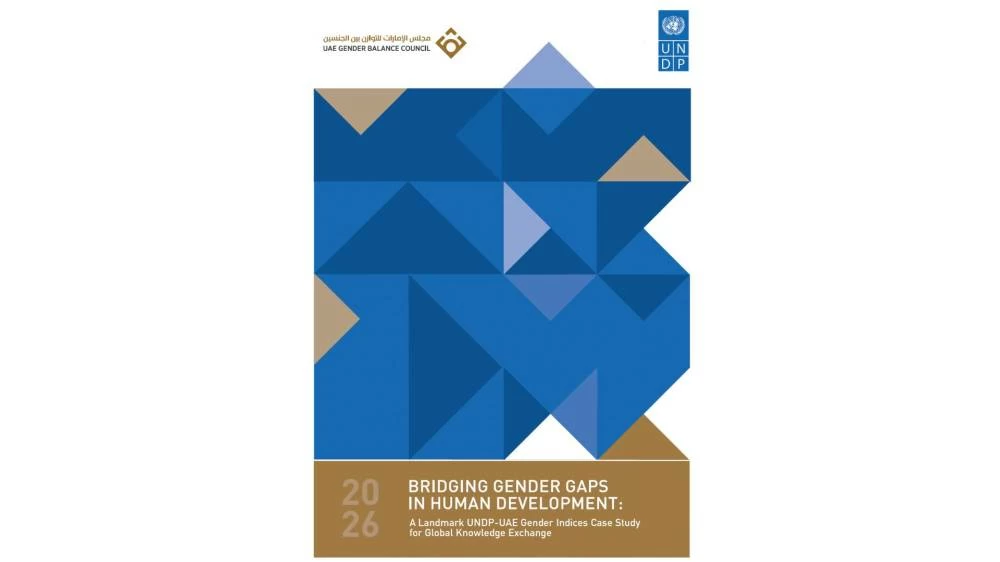
Dubai: The UAE Gender Balance Council and the UNDP’s Human Development Report Office (HDRO-UNDP) have jointly launched Bridging Gender Gaps in Human Development: A Landmark UNDP–UAE Gender Indices Case Study for Global Knowledge Exchange. It is the first publication jointly developed by HDRO-UNDP and a member state that connects Human Development Report indicators to the national policies and reforms that drive measurable development outcomes.Beyond international rankings, the publication examines the policy architecture underpinning the UAE's progress in human development and gender balance. The publication combines the analytical expertise of HDRO-UNDP and the UAE Gender Balance Council's national policy perspective. It demonstrates how leadership, legislation, institutional reform and evidence-informed policymaking have translated national priorities into measurable results, while establishing a practical framework for international policy dialogue and mutual learning.The case study presents the UAE’s integrated development model built on sustained leadership commitment, forward-looking legislation, coordinated institutions, investment in people, data-informed policymaking and continuous review. The UAE has embedded gender balance within its broader approach to human development, economic competitiveness and institutional excellence, with the model continuing to evolve in response to emerging opportunities and challenges.The publication traces the UAE's development journey over more than three decades, illustrating how reforms across education, women's leadership, political participation, institutional governance and legislative development have contributed to measurable progress. Among the milestones highlighted is the achievement of equal representation of women and men in the Federal National Council, alongside sustained investment in education, healthcare and policies that support women's participation in public life and the economy. These reforms have helped position the UAE 15th globally and the first in the MENA region in the latest Human Development Index. The country also ranks 13th globally and is the first in the MENA region in the latest Gender Inequality Index.Her Highness Sheikha Manal bint Mohammed bin Rashid Al Maktoum, President of the UAE Gender Balance Council, said: “This first-of-its-kind publication highlights the UAE’s leadership in building an integrated development model and how national policies and legislation have driven tangible progress in human development and gender balance. It reinforces our model as a global reference for sustainable development, grounded in partnerships, evidence and knowledge exchange that strengthen policy effectiveness and support lasting impact. We are pleased to share our experience while learning from other countries, supporting practical, two-way exchange that advances inclusive and sustainable development in line with each country’s national context.”Her Excellency Mona Ghanem Al Marri, Vice President of the UAE Gender Balance Council, said: "The value of this case study lies in making the policy architecture behind the indicators visible. It explains how the UAE translated national priorities into measurable progress and shares practical insights that can support policy dialogue, mutual learning and future cooperation.Pedro Conceição - Director of the Human Development Report Office, UNDP, said: “This collaboration reflects a shared commitment by the Human Development Report Office of HDRO-UNDP and the UAE to advancing human development through evidence, policy innovation and international knowledge exchange. By bringing together global expertise and national experience, it strengthens understanding of how gender equality can be embedded within broader development strategies and translated into measurable progress. Partnerships of this kind enable countries to learn from one another, adapt successful approaches to their own contexts, and accelerate lasting improvements in people’s lives.”The collaboration reflects a shared commitment to practical policy exchange and international cooperation. It enables the UAE to share its development experience and lessons learned, while drawing on the experiences, innovations and best practices of other nations. This two-way knowledge exchange supports evidence-informed policymaking and contributes to more effective development solutions across diverse national contexts.A defining strength of the UAE model is its commitment to continuous measurement, evaluation and adaptation. The case study identifies opportunities to further strengthen women's economic participation and leadership, while reinforcing the importance of regularly reviewing policies and outcomes as circumstances evolve. The publication establishes a platform for continued international policy dialogue, mutual learning and practical knowledge exchange, enabling the UAE Gender Balance Council and HDRO-UNDP to deepen cooperation, share policy experience and learn from successful practices around the world. The report also supports countries in developing context-specific approaches to human development and gender equality and has inspired a broader HDRO-UNDP series exploring national policy experiences.