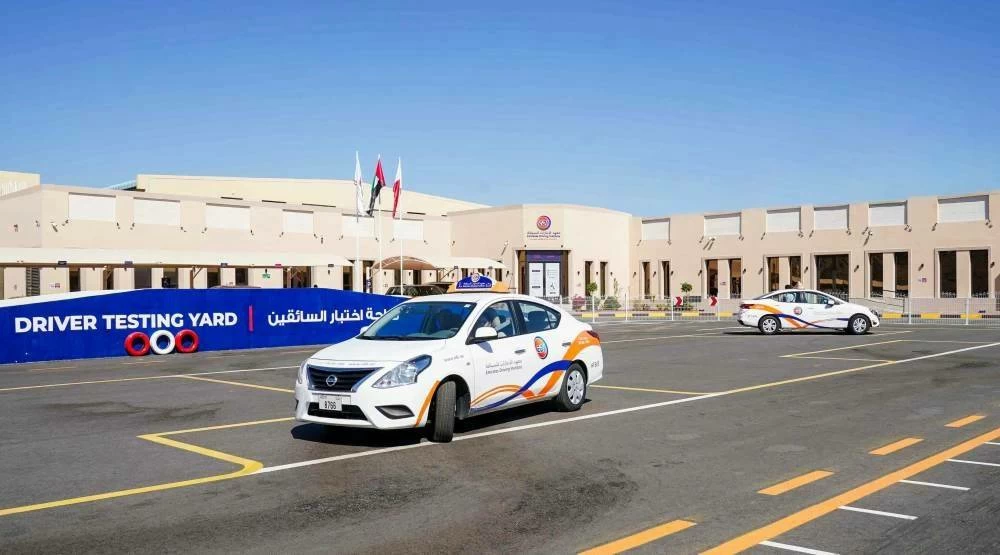
Dubai: Driving learners will have a set of new regulations to keep in mind from next year, from ensuring they score at least 75 per cent on their practical and theory tests, and ensure they steer clear of some key driving mistakes.
The new regulations are part of Cabinet Resolution no. 174 of 2026, which was issued earlier this month, and comes into effect from January 1, 2027.
The Resolution lays out various traffic rules and regulations, including details of driving licence assessment tests.
Eye tests
According to the Resolution, learners need to first take an eye test, with the legislation providing detailed rules on the minimum visual acuity of learners in various situations.
According to Article 62, individuals must have a visual acuity of at least (18/6), with the use of corrective lenses permitted.
The corrective lenses could be eyeglasses, contact lenses or other medically approved means of vision correction, according to the Article.
Where vision differs between the two eyes, the law also specifies acceptable combinations of visual acuity in each eye.
Drivers with vision in only one eye must have at least 6/6 vision in the functioning eye.
Theory tests
After the eye tests, the next assessment, as is the current practice as well, will be of the learner’s theoretical knowledge of driving.
According to the legislation, the learner will be assessed on his/her understanding of various road and traffic rules and etiquette, and must get at least 75 per cent marks, in order to pass the theory test.
Practical driving test
Once a leaner passes their theory test, the next assessment is the practical driving test. According to the new legislation, the practical test will assess workers on the following aspects of driving:
Starting the engine.
Moving the vehicle forwards and backwards under normal and emergency conditions, and on slopes.
Using the gearbox when starting off and while driving.
Normal and sudden stops, and stopping on slopes.
Parking the vehicle along the kerb and between other vehicles, on slopes, and between specific signs or lines.
Changing lanes and turning right and left.
Using the appropriate signals at the appropriate time when changing lanes.
Compliance with traffic signals, signs and road markings, as well as signals given by the driver of another vehicle, and the extent to which the learner pays attention to and responds to the examiner’s instructions and commands.
Passing through road junctions, squares and roundabouts.
Manoeuvring the vehicle within a confined section of the road.
Overtaking a vehicle and encountering another vehicle overtaking you on the road.
Leaving the vehicle parked on a slope.
Use of the parking brake.
Use of side and rear-view mirrors.
Maintaining a sufficient safe distance between your vehicle and the one in front.
Each of these criteria will have a specific mark assigned to it, which will be determined by the licensing authority.
A student needs to achieve at least 75 per cent marks in total in order to pass the practical driving test.
Mistakes that can lead to an immediate ‘fail’
However, the legislation also states that even if a candidate scores 75 per cent marks during the practical test, he or she may still be deemed to have failed, if they cause actual or potential danger to themselves or to others, even if that danger was averted as a result of the examiner’s verbal or practical intervention.
As per Article 68 (3) of the resolution, any of the following actions are regarded as a potential risk:
If any part of the vehicle’s body or its wheels comes in contact with boundaries or barriers that are in place.
Losing control of the vehicle as it starts to move.
If an error is made during the gear-changing process.
Failure to stop or park the vehicle in the designated area.
Failure to comply with traffic signals and signs.
In case of a practical test for a motorbike licence – the learner’s foot touching the ground whilst riding.
Driving test retakes and application validity
Applicants who fail their practical driving test will be given another date to retake it. However, as per Article 70 of the new legislation, if they do not take the test within six months of their last scheduled test appointment, their driving licence application will be cancelled. They will then need to reactivate it according to the licensing authority’s procedures.