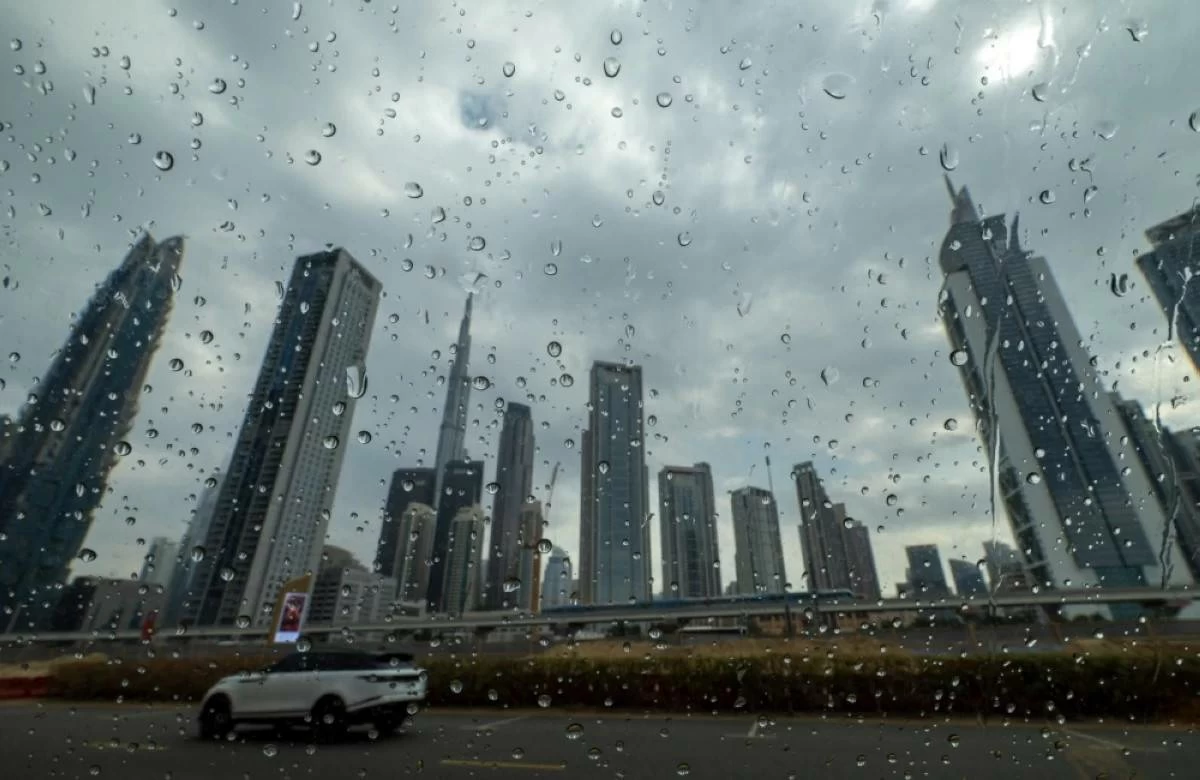
Dubai: Ibrahim Al Jarwan, Chairman of the Board of Directors of the Emirates Astronomical Society and member of the Arab Union for Astronomy and Space Sciences, said that the impact of the El Niño phenomenon on the UAE is represented by above-average rainfall.
He explained that the average rainfall in the country ranges between 100 and 120mm annually, but the expected rainfall is above average if it is concentrated over a few days and may be heavy or very heavy. However, If it is distributed over a long period of time, the heaviness may not be clearly noticeable. He noted that the rainfall during the past years has exceeded 200mm in some cases, in one month.
He added that El Niño affects large areas of the world, including the UAE and the Arabian Peninsula, and therefore receives great global attention. He explained that the World Meteorological Organisation expects the average temperature of the El Niño phenomenon during the period from October to December to reach +3.7 degrees Celsius, with the peak in December; it exceeds the previous record of +2.6 degrees Celsius recorded during the years 2015-2016.
He pointed out that there is a 38% probability that this event will be historic and stronger than any El Niño phenomenon previously recorded.
Ibrahim Al Jarwan, Chairman of the Board of Directors of the Emirates Astronomical Society and member of the Arab Union for Astronomy and Space Sciences. Picture credit: SuppliedImpact on Gulf region
Al Jarwan said that the Gulf Cooperation Council (GCC) countries are currently experiencing a state of atmospheric instability, as a result of the region being affected by a low-pressure system accompanied by a relatively cold air mass and rainy thunderclouds.
He explained that many areas are experiencing moderate to heavy thunderstorms leading to flash floods, accompanied by hail showers and active winds that stir up dust and sand. The waters of the Arabian Gulf are also experiencing significant disturbance, with wind speeds ranging between 20km/h and 45km/h and reaching more than 50km/h with thunderstorms, and waves rising to more than two meters, making the sea state moderate to rough.