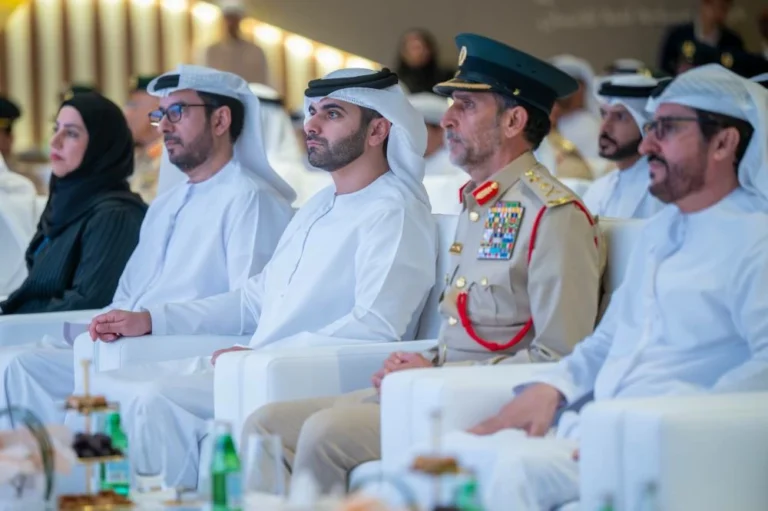
Dubai: The UAE is accelerating plans to expand port capacity on its east coast, strengthen pipeline and railway networks, and develop alternative corridors for goods following lessons from the recent regional crisis, His Excellency Dr Anwar bin Mohammed Gargash, Diplomatic Adviser to the UAE President, said on Monday.The measures are aimed at ensuring that the UAE’s energy exports, trade and wider economic activity are not vulnerable to disruption, with Gargash saying the country is taking a proactive approach based on advance planning and rapid implementation.Gargash was speaking at the opening of the third annual Hili Forum, organised by the Emirates Centre for Strategic Studies and Research and the Anwar Gargash Diplomatic Academy in Abu Dhabi under the theme, ‘Gulf at Crossroads: Conflict, Consequences and Course Correction’.The forum brings together 75 speakers and around 1,000 participants from 35 countries, including senior officials.Many of these plans were already in place before the crisis, he said, but recent events have accelerated their timelines and increased the urgency of their implementation.The moves come after what Gargash described as an unprecedented challenge for the UAE over the past six months.3,300 missiles and drones launched towards UAEGargash said Iran launched around 3,300 missiles and drones towards the UAE, the vast majority of which targeted civilian infrastructure and civilians.He said the attacks destroyed, within hours, bridges in relations that had taken many years to build.Gargash described the recent conflict as “a war we worked hard to avoid”, warning that major conflicts do not end simply when military operations stop, but leave behind political, security and strategic consequences that can last for years or even decades.He praised the UAE Armed Forces for their response to the attacks.“I can simply describe this as a military achievement, and indeed it was a remarkable achievement, for which we pay tribute to our highly capable Armed Forces,” Gargash said.But he stressed that the UAE’s response went beyond military success and reflected comprehensive national readiness that helped protect the country’s achievements and safeguard citizens and residents.The UAE faced the challenge “with confidence and determination”, he said, drawing strength from its leadership, the professionalism of state institutions and the unity of its people.Gargash was speaking at the opening of the third annual Hili Forum, organised by the Emirates Center for Strategic Studies and Research and the Anwar Gargash Diplomatic Academy in Abu Dhabi under the theme, ‘Gulf at Crossroads: Conflict, Consequences and Course Correction’.The forum brings together 75 speakers and around 1,000 participants from 35 countries, including senior officials.UAE economy continued to growDespite the security challenges, Gargash said the crisis had not prompted the UAE to lower its ambitions or change its development goals.“The UAE’s non-oil foreign trade grew by 13 per cent in the first half of the year compared with the same period last year,” he said.While some sectors had naturally been affected, the economy had not stalled, he said, but continued to grow and expand, particularly in sectors on which the country’s future depends.Despite the exceptional circumstances, Gargash said the UAE had also continued to meet its commitments to citizens, residents and visitors, maintaining its promise to provide a safe, stable and prosperous environment for those who choose to build their lives in the country.Strategic autonomyGargash said the past six months had reshaped the region’s strategic landscape and created a Gulf environment that was “more complex and uncertain” than before.Strategic autonomy, he said, was no longer simply a slogan but had become a “rational political reality” based on what it practically delivers for national security and interests.For the UAE, this means maintaining economic growth, ensuring the safety of its people and preserving independent national decision-making.The Iranian attacks on Gulf states had also reordered strategic calculations across the region, bringing maritime security, trade and energy security back to the forefront, he said.At the same time, Gargash stressed that strategic autonomy did not mean strategic isolation.Long-term partnerships, particularly the UAE’s partnership with the United States, remained an essential part of the country’s security and an important source of strength, he said.Relations with IranGargash said dealing with Iran remained a central issue for all Gulf states because geography makes Iran a neighbour that cannot be ignored.At some point, countries in the region would need to find a way to restore “what can be restored” in their relationship with Iran, he said.However, he stressed the distinction between rebuilding a necessary, functional relationship and rebuilding trust, which had been severely damaged.Gargash said Iran’s launch of thousands of missiles and drones against the UAE and other Gulf and regional countries, despite those countries not attacking Iran, was not simply a reckless reaction or a decision made within 24 or 48 hours.Rather, he described it as “a premeditated war of choice launched against its neighbours in direct violation of international law”.He called the move a “catastrophic failure of strategy and statecraft”, saying it had severely damaged bridges that had taken decades to build between Iran and its Gulf neighbours.A functional relationship could be restored, he said, but rebuilding trust would take much longer — potentially years or decades.Regional response ‘ineffective and disappointing’Gargash called for an honest assessment of regional and international responses to the crisis, describing them overall as “ineffective and disappointing”.This applied, he said, to efforts to prevent the war, protect the flow of energy and maritime trade, and contain the wider regional crisis.Cooperation between Gulf states had existed and remained important, but the region collectively had not risen to the strategic challenge to the same extent as during previous crises, including the invasion of Kuwait and the repercussions of the Arab Spring, he said.The problem was not a lack of understanding of the Iranian challenge, Gargash said, but the failure to translate that shared understanding into a “unified and sufficiently strategic response”.‘A storm within a storm’Gargash said the Gulf crisis was unfolding against wider disruption in the international system across political, economic and technological spheres, describing the situation as “a storm within a storm”.The war had raised fundamental questions about the effectiveness of dialogue and de-escalation channels, the ability of states to exercise restraint during crises and how adherence to international law and the UN Charter could be strengthened.The crisis had also exposed the “limitations of the international system itself”, he said, adding that the United Nations had been unable to play an effective role in preventing escalation, containing the conflict or protecting some of the basic principles underpinning the international system.Strait of HormuzGargash said the Strait of Hormuz was at the heart of the current confrontation and must be treated as an international waterway of global importance.Freedom of navigation through the strait could not be subject to coercion, he said, and no single country should treat it as a strategic privilege that could be disrupted.He warned that threats to commercial vessels and tankers through mines, drones or missiles could not be allowed to become acceptable.Around a quarter of the world’s seaborne oil passes through the strait, alongside a significant share of the fertilisers relied upon by farmers around the world, Gargash said.“Fertiliser is next year’s harvest,” he said, arguing that disruption to the waterway was therefore not merely a regional problem, but one affecting global energy, trade and food security.Freedom of navigation “is not a concession to be granted, nor a principle to be renegotiated under pressure”, he said, but an established principle of international law that the international community must be prepared to defend.Four prioritiesGargash outlined four priorities for the next phase: sustainable stability through de-escalation; treating the Strait of Hormuz as a global waterway; adopting an economic approach that safeguards regional stability through genuine guarantees; and dialogue centred on state sovereignty and non-interference.He also called for credible guarantees to prevent a repeat of Iranian attacks against Gulf states.Decisions of war and peace, he said, should not be in the hands of militias or armed non-state actors but should rest with legitimate state institutions.Addressing Iran’s nuclear programme would also require a clear framework, with its conditions, verification mechanisms and consequences for non-compliance clearly defined.Deterrence alongside dialogueGargash said the crisis had reinforced an important lesson: relying on national capabilities ensures a country places its own security at the top of its priorities, while it cannot always assume others will do the same.Alongside deterrence, however, he stressed the need to remain committed to dialogue and diplomacy.Dialogue with Iran should move beyond immediate and transactional issues to address major strategic questions affecting Gulf security, including regional interference, freedom of navigation, economic cooperation and rebuilding trust.Iran’s intentions, Gargash said, should ultimately be judged by its actions rather than solely by its words and declarations.Despite the challenges, he said the Gulf remained one of the world’s most important and promising regions.Establishing a lasting principle of non-aggression and mutual respect could unlock significant economic opportunities and help create a more prosperous regional space.Iran, he said, must recognise that aggression against Gulf states represented a “serious strategic miscalculation” that had damaged its relations with its neighbours and deepened its isolation.The way out of the crisis was not through threatening neighbours or burning bridges with them, he said, but through rebuilding those bridges, continuing de-escalation and working towards a lasting political settlement.Gargash said the UAE intended to continue playing a constructive and confident role in navigating the next phase, with its national preparedness, strategic autonomy, international partnerships and commitment to dialogue remaining central to its approach.He stressed that the past six months constituted a real test for the UAE, but it emerged from them "stronger, more aware of the regional environment around us, and more determined about the future we intend to achieve".