Okinawa-based unit included amid ground combat speculation, political risks for Trump
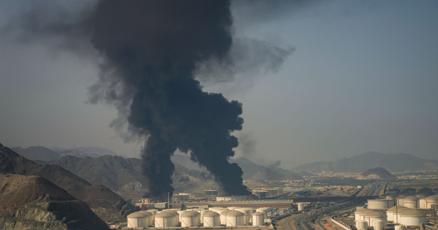
The U.S. decision to deploy approximately 2,500 ground-combat-capable Marines and amphibious assault ships to the Middle East has drawn attention to the potential roles these forces may play. Following the bombing of Kharg Island — a core hub of Iran’s oil supply network and the regime’s lifeline — speculation emerged that U.S. ground combat operations could be imminent. While U.S. President Donald Trump hinted at the possibility of an early end to the conflict, the war shows signs of protraction.
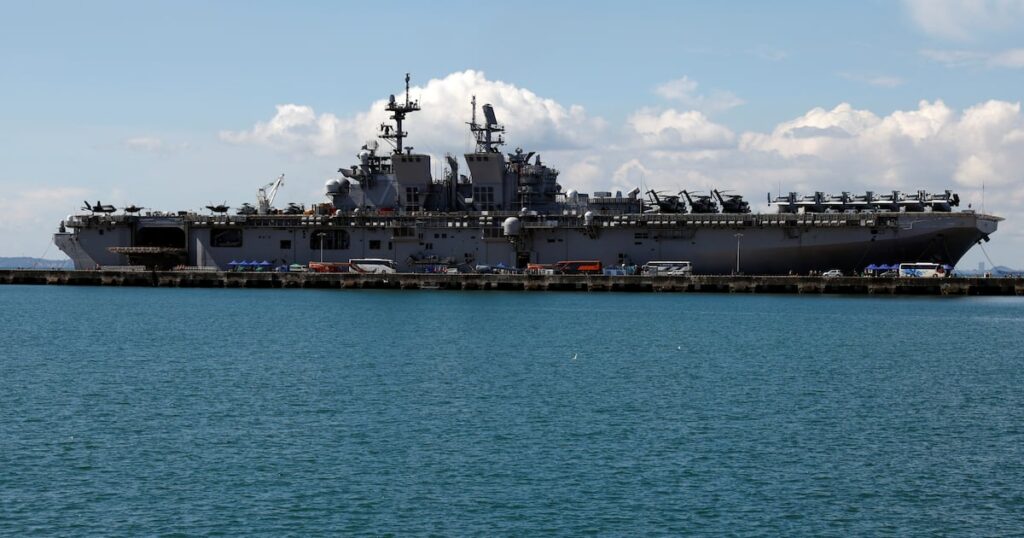
The New York Times (NYT) reported on the 15th that up to three ships carrying around 2,500 Marines from the Indo-Pacific region would join approximately 50,000 existing troops in the Middle East. The reinforced forces include the 31st Marine Expeditionary Unit, based at Hansen Camp in Okinawa, Japan, and the USS Tripoli, an amphibious assault ship homeported in Sasebo, Nagasaki Prefecture. The 31st Marine Expeditionary Unit is the only forward-deployed expeditionary force in the U.S. Marine Corps, tasked with rapid deployment to the Korean Peninsula in emergencies. It is equipped to advance inland and strike key facilities using amphibious ships and air assets. It recently participated in the annual U.S.-Japan joint exercise ‘Iron Fist.’
Axios reported that while the Marine expeditionary unit is capable of ground operations, a U.S. official declined to comment on such possibilities. There is speculation that a large-scale ground troop deployment could impose significant political burdens on Trump. Within the MAGA (Make America Great Again) faction, which supports Trump, there is strong aversion to foreign military interventions, particularly the deployment of ground forces in the Middle East. Since the Marines could also be tasked with embassy security, disaster relief, or civilian evacuation support, the troop movement cannot be definitively interpreted as a signal of imminent ground combat.
In a Fox News Radio interview on the 13th, Trump stated that the U.S. would “hit Iran very hard” over the coming week. This reflects his intent to neutralize Iran’s resistance capabilities and secure a favorable position for an early end to the conflict. Regarding the timing of a ceasefire, he remarked, “It’s not far off,” but added, “I’ll know when I feel it in my bones.”
Both the U.S. and Iran have reportedly rejected third-party mediation efforts, fueling observations that both sides are preparing for a prolonged conflict. Reuters reported that Oman and Egypt, which previously mediated between the U.S. and Iran, attempted to reopen dialogue channels but made no progress. The U.S. State Department has offered a reward of up to $10 million (approximately 15 billion Korean won) for information leading to the arrest of Mojtaba Khamenei, newly elected as Iran’s supreme leader, while Iran remains resolute in its resistance.