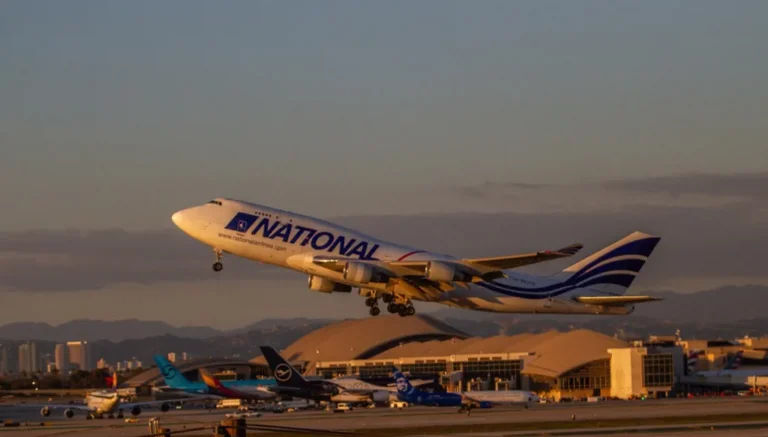
The head of the U.S. Federal Aviation Administration announced that air travel in the United States would not return to normal schedules until late Sunday, as the aviation system gradually recovers from a nationwide flight halt. Officials said the disruption was caused by routine maintenance that went wrong.
By 9:35 p.m. Eastern U.S. time (0235 GMT), airlines had canceled more than 6,400 flights in the United States and delayed more than 8,000 others on Saturday, according to FlightAware, a flight tracking website.
This followed the cancellation of about 9,200 flights and the delay of 7,500 others on Friday, after the FAA ordered a nationwide grounding due to disruptions in air traffic control communications. The website noted that more than 875 flights scheduled for Sunday had already been canceled.
FAA Director Brian Bedford said on Saturday that he expects airline operations to largely return to normal late Sunday. He apologized for the disruption, stressing that the system remains stable.
The FAA issued a nationwide flight ban order on Friday, grounding almost all departing flights for about five hours. This was the longest nationwide flight halt since the September 11, 2001 attacks and one of the worst travel days in U.S. history.
The disruption prompted the White House to hold an emergency Situation Room meeting on Friday, while federal agencies launched intensive efforts to determine whether it was related to a cyberattack.
However, Transportation Secretary Sean Duffy said on Saturday that the issue was linked to L3Harris, an FAA contractor, installing at least one new router at a remote facility.
During a press conference, Duffy stated: "We are working to determine whether it was an incompetence issue, a user error, an error by the L3Harris installer, or if they installed a faulty router. We have not yet determined the cause of the malfunction."
The Professional Aviation Safety Specialists union, which represents FAA safety employees, said the issue was limited to two routers updated on Friday. A Reuters official said they believed the routers were located in Arkansas and Texas.
An FAA official confirmed that the agency conducted a safety assessment before the work was carried out, while the union said that no technicians represented by it participated in the updates that led to the grounding.
L3Harris said it is taking the issue seriously and is supporting the FAA in its investigation. Its shares dropped by about four percent in after-hours trading on Friday.
Transportation Secretary Duffy explained that the issue began on Friday afternoon, when air traffic control centers experienced disruptions to radar and communication systems. Officials indicated that the router issue overwhelmed other communication centers with data.
The communication centers received more than a thousand contact attempts every four to five seconds, causing communication issues with aircraft.
These disruptions also affected some radar operations.
Communications were disrupted at 17 of the 22 flight centers nationwide, facilities controlled by the FAA that manage aircraft during the en-route phase of flight.
The FAA ordered an airport takeoff halt in anticipation of losing one communication center entirely, but no facility was completely shut down.
The FAA is currently conducting additional testing with L3Harris to determine whether there are any additional risks.
United Airlines, Delta Air Lines, and American Airlines canceled about 25% of their flights on Saturday, while JetBlue canceled about 45%. The airlines issued waivers allowing passengers to rebook their flights for later dates at no additional cost.
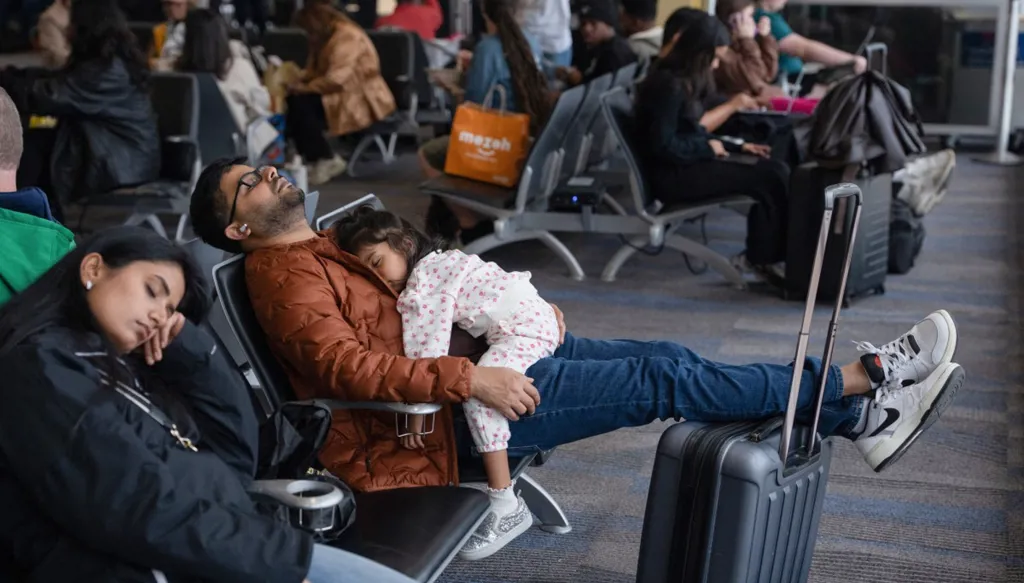
Although the FAA lifted the flight halt order on Friday evening, disruptions continue to affect passengers, with tens of thousands remaining stranded at airports nationwide. Airlines are trying to mobilize flight crews and staff to resume operations following the major disruption.
The disruption also stranded some college football teams on Friday ahead of scheduled games on Saturday.
Friday's disruption represents the latest and most visible sign of the pressures facing the U.S. air traffic control system, which is suffering from aging technology, equipment and communication issues, as well as a shortage of several thousand air traffic controllers.
The Transportation Secretary called on Friday for $50 billion to be allocated to upgrade air traffic control systems, an increase from the $30 billion previously requested after Congress approved $12.5 billion last year.
House Speaker Mike Johnson told Fox News on Saturday that he supports approving more funding for air traffic this year. Republicans led by Johnson control Congress until next year, when Democrats take over following their gains in the November 3 midterm elections.
U.S. Representatives Rick Larsen and André Carson, Democrats set to chair the House Transportation and Infrastructure Committee and its Aviation Subcommittee respectively next year, said in a joint statement on Saturday that their committees would "hold the administration accountable for what happened to ensure this chaos doesn't happen again."
Larsen and Carson added that since receiving $12.5 billion last year, the Department of Transportation has awarded contracts worth $4.3 billion but spent only $1 billion.