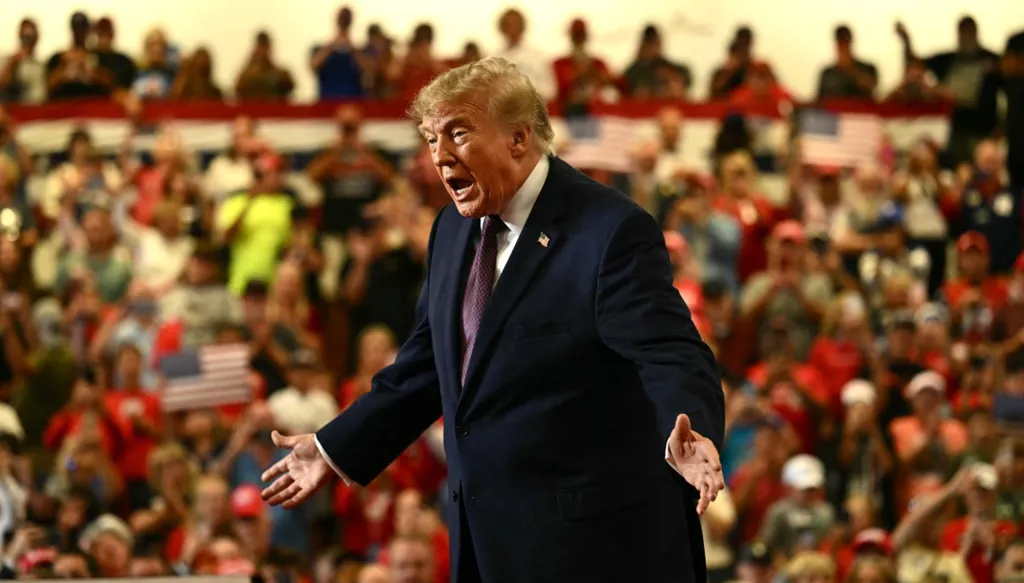
On November 3, Americans will head to the polls to elect a new Congress, with the outcome potentially granting Donald Trump another political victory or dealing him a defeat that reshapes his calculations in the second half of his term. Although the president himself is not on the ballot, his presence looms large over the contest between Republicans and Democrats. Since returning to the White House, Trump has expanded his executive powers, engaged in domestic political battles, and drawn the United States into a war with Iran. Now, the time has come to test his ability to maintain the congressional backing that gives him greater room to pursue his agenda.
The elections come amid economic and political turmoil. The war with Iran has brought some of its costs home, driving up energy prices and putting further pressure on household budgets. Concerns over the cost of living, immigration, and public spending are increasingly intertwined with voters' views of Trump's handling of the war and his foreign alliances. Polls show Democrats gaining ground in voting intentions for the House of Representatives, while the Senate race appears more complicated. However, polling does not necessarily capture the balance of power in key districts.
Republicans are fighting to retain their majorities in both chambers to preserve their ability to advance the president's agenda, while Democrats are seeking to regain legislative and oversight powers. If Republicans lose control of the House of Representatives, Trump could find his administration facing tougher congressional investigations and repeated confrontations over budgets and government spending. A shift in Senate control to the opposition would make confirming appointments and passing legislation more difficult, ushering in a period of negotiations and confrontations in Washington. Conversely, retaining control of both chambers would hand Trump a political victory, strengthen his standing within his party, and give him renewed legislative momentum to pursue his program.
Nevertheless, the presidential system itself will remain unchanged by the vote. Trump will retain his position as commander-in-chief of the armed forces, along with broad executive powers and the right to veto legislation. The new Congress's strength will depend on its ability to effectively exercise its powers and on the cohesion of the majority emerging from the elections. This balance becomes particularly sensitive as battles over government funding approach, amid deep partisan polarization and growing mutual distrust over the legitimacy of decisions and institutions.
Beyond America's borders, Middle Eastern capitals are watching the elections as an indicator of the political room Trump will have to maneuver. The war with Iran, relations with Israel, policies toward the Palestinians, and prospects for regional escalation or de-escalation all depend, in part, on the administration's ability to secure funding for its decisions and defend them on the domestic front.
These calculations come as the Israeli elections have left the parliamentary landscape open to difficult negotiations. The period between the November vote and the new Congress's swearing-in on January 3 could bring additional political calculations, as the current majorities will retain decision-making power throughout that interval.
The stakes extend beyond the president himself. Republicans will interpret the results as an indication of MAGA's future and the limits of its appeal beyond Trump's core support base. Democrats, meanwhile, will face questions about the balance between their progressive and centrist wings, as well as who can lead the party into the 2028 presidential elections. A close result could also open the door to widespread political and legal disputes, as the battle over electoral rules intensifies.
Trump will not lose his executive powers if Republicans lose control of Congress, just as a Republican victory will not eliminate the challenges facing his administration. However, the results will reshape the balance of power in Washington for the next two years, determining how much the president can achieve and where he may be forced to retreat. Between a victory that strengthens his authority and a defeat that constrains his influence, American voters have the opportunity to redraw the political course of the world's most powerful country.